
The figure covers about 6,000 bookings on a single benefits platform. That makes it useful to employers and misleading as a national statistic.
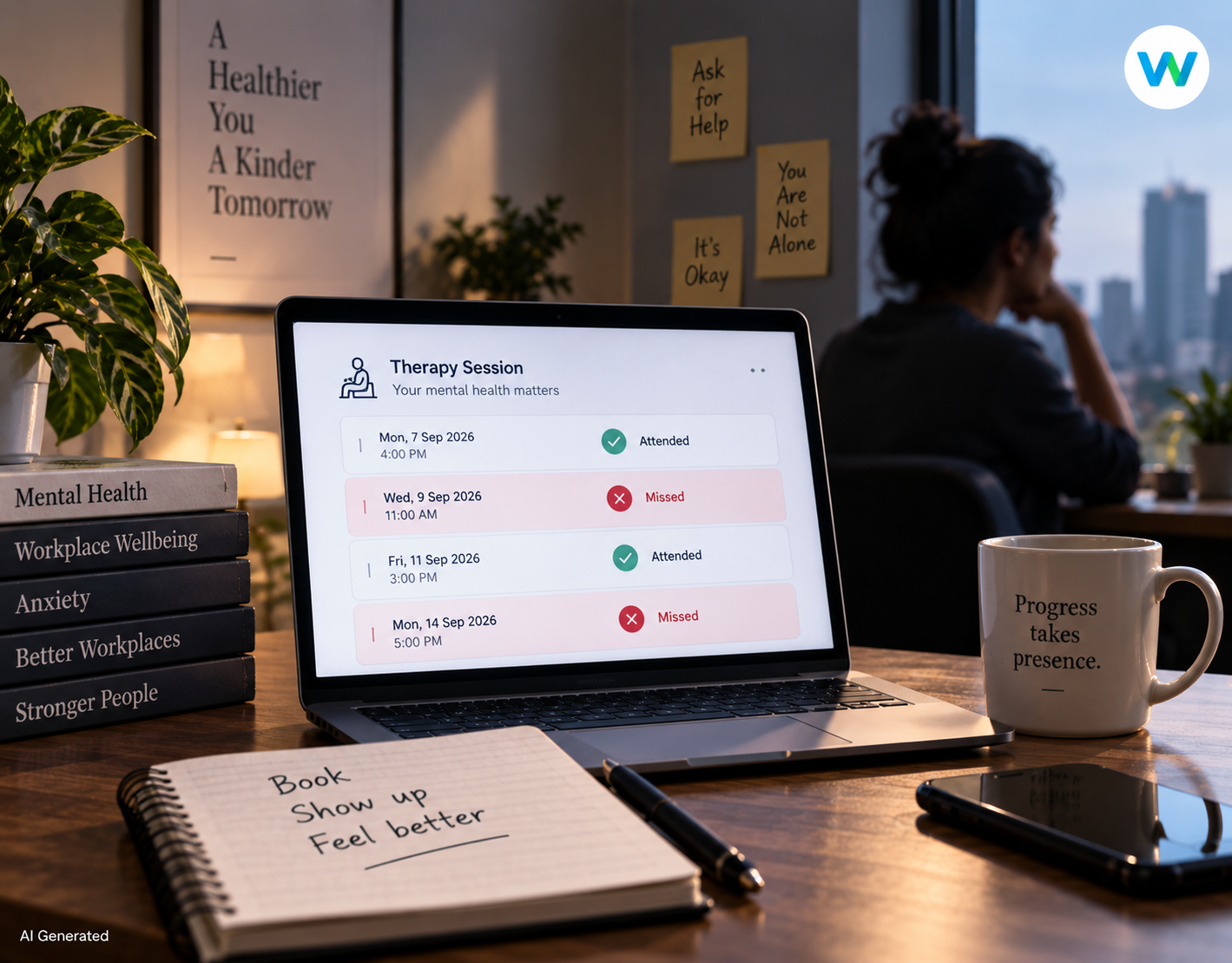
A report published in May 2026 found that 26.6 percent of employees who booked a counselling session did not attend it. The company behind it is ekincare, a corporate health benefits platform. The number travelled fast. It was usually retold as one in four Indians who ask for help never turning up. The report is called From Silence to Signal, and how it was put together changes what workplace counselling India numbers like this can tell you.
It Is a Ledger, Not a Survey
The findings come from roughly 6,000 counselling sessions booked through one platform between 2023 and 2026. All of them sit inside the companies that are its clients.
So this is a record of what one defined group did. It is not a sample of Indian workers. Everybody in it already worked somewhere that pays for counselling. They already knew the benefit existed. They had already taken the step of booking.
That population is much narrower than the headline suggests, and it is narrower in a direction that matters.
The Numbers That Need a Comparison
The report also records a 44 percent rise in people using the service since 2023. Bookings on a growing platform rise partly because the platform is growing. That figure carries two effects at once.
The no-show number has a different problem. Missed appointments are common across outpatient healthcare everywhere in the world. So 26.6 percent means very little on its own. You would need a comparison figure from Indian outpatient psychiatry, or from another employer scheme. The report does not publish one.
What Workplace Counselling India Data Is Genuinely Good For
Read as what it is, an operations record, the report is useful. It tells an HR team where its own programme leaks. The leak is between booking and attending, not between distress and asking for help. Those are different problems with different fixes.
The other findings deserve the same reading. The report says 44 percent of sessions among employees aged 35 and over relate to anxiety, depression or mood. That describes how sessions were filed, not how many people carry a diagnosis.
The gender finding works the same way. The report records men at 38 percent and women at 32 percent on anxiety and depression. It attributes part of that gap to men describing distress in broader language. That is a statement about how sessions get coded. It is not a statement about who is unwell.
The Wise Take
Workplace counselling India has grown fast as a benefit. Almost nothing about how these schemes perform reaches the public. In that vacuum one vendor’s internal data becomes the national statistic by default, which is unfair to the vendor and unhelpful to everyone else.
The useful response is not to distrust the number. It is to ask for its neighbours. Attendance rates from other company schemes, from the district mental health programme and from private practice would settle it. They would show whether 26.6 percent is a workplace problem or simply what happens when an appointment is free and easy to book. A free national helpline already produces data at scale, and nobody has put the two side by side.