
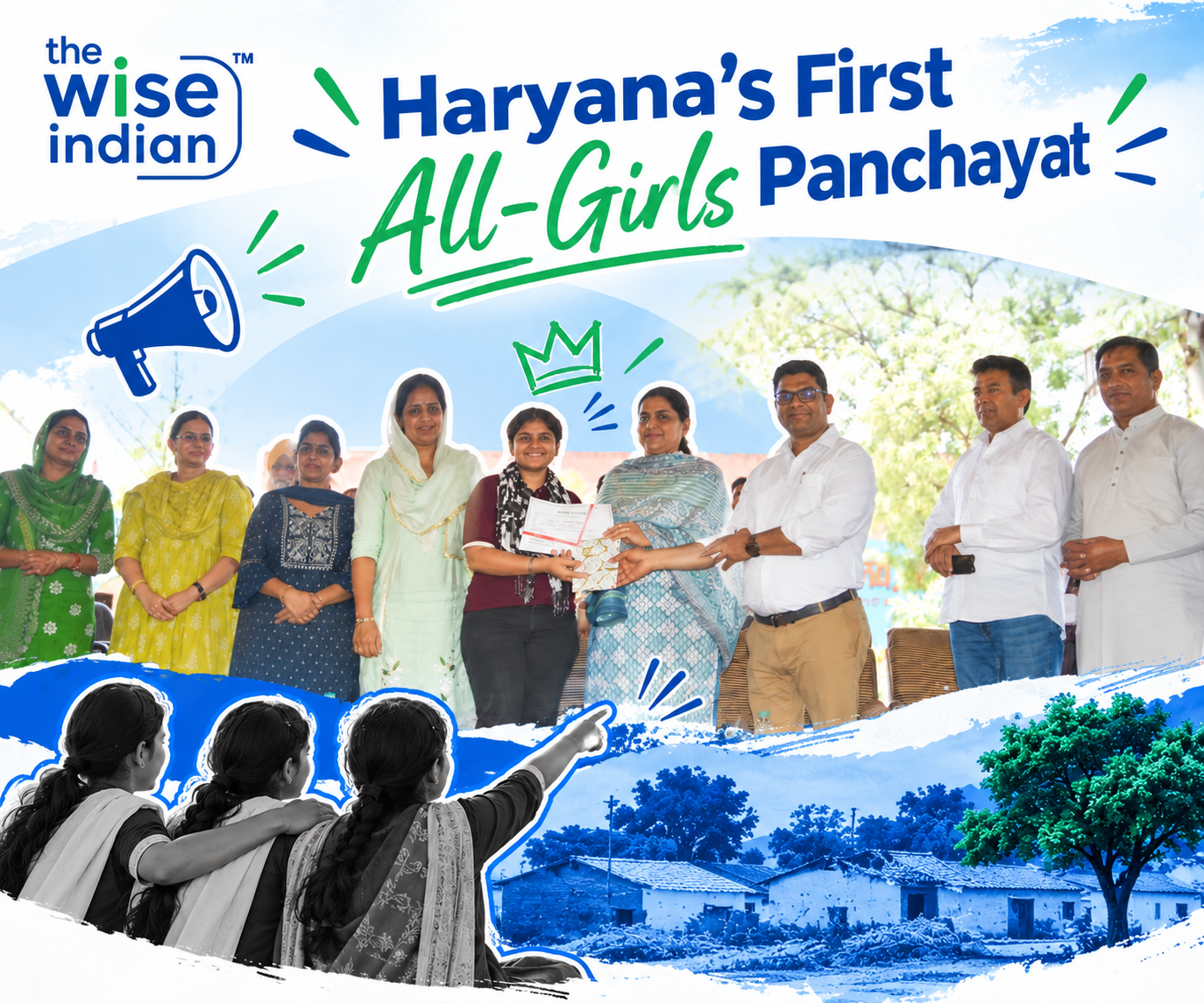
A village in Haryana has handed its young girls a political stage of their own. In Barseen, girls aged 11 to 21 chose a sarpanch and formed a Girls’ Panchayat. However, the body holds no official powers. So what does it actually do, and why does it matter?
What Exactly Is a Girls’ Panchayat in Barseen Village?
A Girls’ Panchayat is a symbolic village council run by girls. It copies the regular gram panchayat, but only girls vote, contest and lead. A regular gram panchayat governs a village, and its head is the sarpanch. The girls’ version follows the same pattern, with its own elected sarpanch. Barseen, in Haryana’s Fatehabad district, now has one such body. The election took place at the Government Senior Secondary School. Girls between the ages of 11 and 21 took part in the vote.
Fatehabad Deputy Commissioner Mandeep Kaur then handed the election certificate to the winner. Officials, school staff and villagers also attended the event and welcomed the move. Think of it as a practice council where girls learn how local government works. The two bodies differ in clear ways. A regular gram panchayat has adult members, legal authority, and a five-year term. In contrast, the girls’ version has young members and an advisory role only.
How Astuti Kamboj Won the Sarpanch Seat With 22 Votes
Astuti Kamboj now leads the group as its sarpanch. She won the post after receiving 22 votes. Also, the result came through an election, not a nomination. At 21, she sits at the top of the group’s age range. Now, she is the face of a new idea in Haryana’s villages. The initiative is a pilot project. A pilot project is simply a small trial run. Pilot projects often expand when early results look promising. Moreover, plans call for similar bodies in every village of the district.
The aim is to promote Beti Bachao, Beti Padhao, gender equality and young leadership. Beti Bachao, Beti Padhao is a national campaign launched in 2015 to protect and educate girls. In addition, Zila Parishad Chairperson Suman Khichar says early leadership builds confidence and independent decision-making. She also expects the step to bring positive change to the Panchayati Raj system. That system is India’s three-tier network of village, block and district councils.
What Can These Young Leaders Actually Do for Their Village?
A gram sabha brings together the village’s registered voters to discuss local matters. The girls will attend these meetings and share suggestions on key issues. Those issues include education, health, safety, sanitation and equal rights. In other words, their role is to advise, not to decide. These topics touch daily life. Education, for example, shapes how far girls can go in school. Safety affects how freely they can move around the village. Health and sanitation matter to every household, too. Girls also know these problems first-hand, so their input adds a fresh view.
The group’s purpose is to build leadership and civic awareness among young girls. As a result, a Girls’ Panchayat acts like a training ground for future leaders. Girls can learn how meetings run, how votes work and how to speak up. Later, some of them may contest real panchayat elections. Over time, such practice can build a steady supply of confident local leaders. The wide age range also helps, because younger girls can learn from older peers. Meanwhile, older girls gain real experience in leading a group.
Does a Girls’ Panchayat Hold Real Power or Symbolic Value?
Legally, a Girls’ Panchayat holds no official power. It cannot pass binding orders, and the regular gram panchayat still makes village decisions. Still, its voice reaches the gram sabha, where villagers debate local issues. So its impact depends on community goodwill, not legal force. Advice can still shape outcomes. When girls raise issues together, villagers and officials may pay closer attention. Besides, a shared agenda carries more weight than one lone voice. Real authority matters because reserved seats have not always given women actual control. The 73rd Amendment gave panchayats constitutional status and reserved seats for women.
Haryana reserves half of its panchayat seats for women, yet challenges persist. In some places, husbands of elected women wield the real power, which critics call ‘sarpanch pati’ culture. One editorial in The Tribune argues that real participation must replace symbolic representation. So, preparing girls early could help change that pattern. Meanwhile, a similar model already exists in Hisar district. In Sarsaud village, the Selfie With Daughter Foundation organised a Balika Panchayat election. Nine girls contested for sarpanch, and turnout among child voters reached 94 per cent. Kumari Tamanna won the sarpanch post with 169 votes, and 17 girls became panch members.
Together, Barseen and Sarsaud show that the idea is gaining ground in Haryana. The foundation hopes to set up 75 such bodies across India. A Panchayati Raj Ministry official observed the vote and urged other states to copy the model.
The Wise Take
This young body has no legal power, yet it still carries meaning. It gives girls a seat at the table, a title and a voice. However, a voice only counts when someone listens. Reports so far do not say how often the group meets or how officials will respond. Those details will decide whether Barseen’s experiment becomes a model or stays a gesture.
For now, the lesson is simple. Leadership is a skill, and skills grow only with regular practice. So, a girl who leads a village body at 15 may lead a real one at 25. Meanwhile, parents, teachers and villagers can help by backing the girls’ ideas. That is why the Girls’ Panchayat idea deserves patience, support and real follow-up from officials.
Also read our other article on SARAS Mela Vijayawada Opens: 1,500 SHG Women Showcase Their Products at the First National Fair Outside Delhi
Follow The Wise Indian for more stories about the people and ideas quietly reshaping India.