Vijayawada has become a giant marketplace for rural India this week. The SARAS Mela Vijayawada brings self-help group women face-to-face with city buyers. It is the first time this national fair has left the Delhi region. Moreover, one SHG entrepreneur’s journey shows why such fairs matter.
Why the SARAS Mela Vijayawada Marks a First Outside Delhi
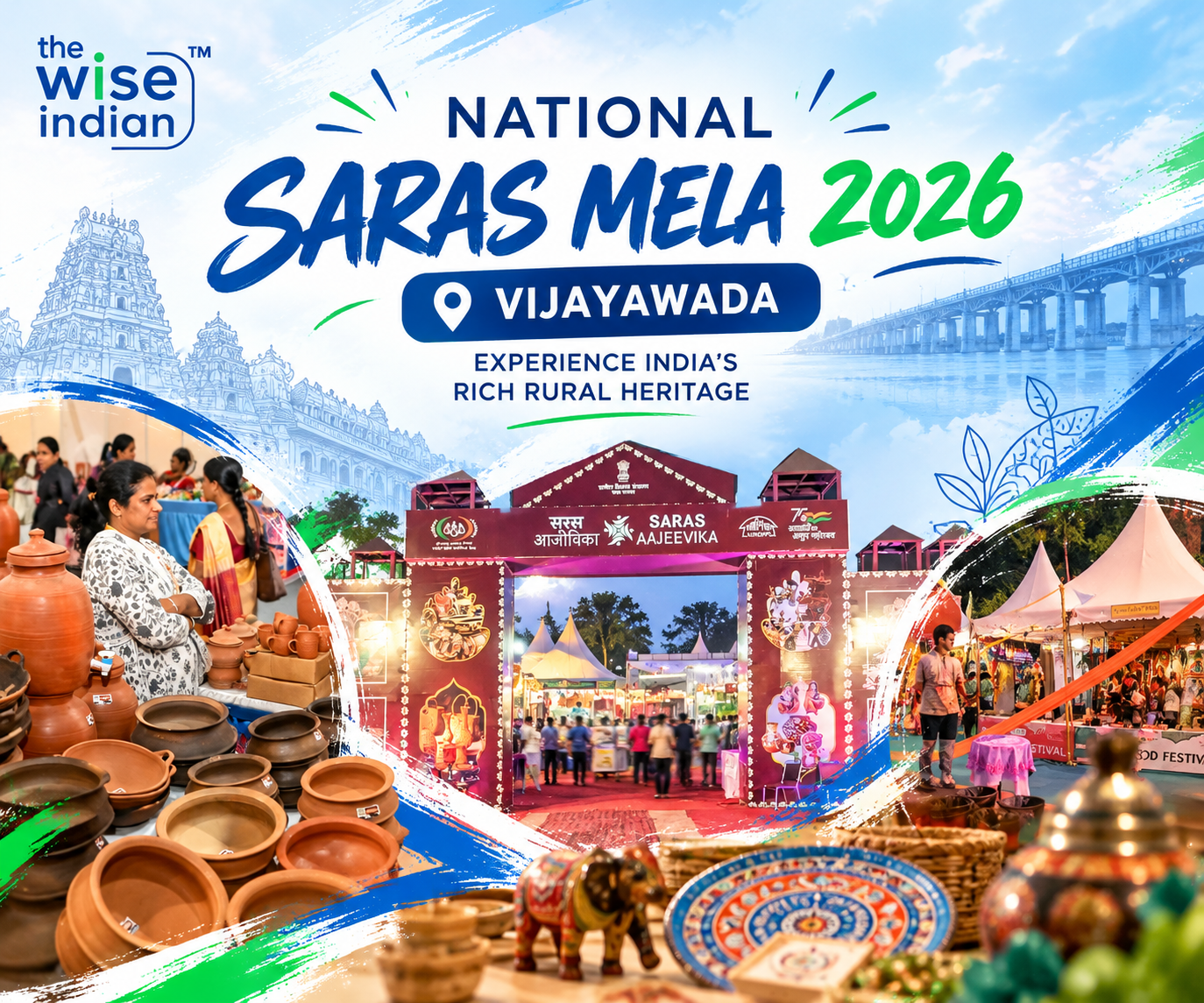
The SARAS Mela Vijayawada began on 13 October at Punnami Ghat. According to the Ministry of Rural Development, it is the first National SARAS Mela outside Delhi-NCR. The ministry runs it with the Society for Elimination of Rural Poverty, Andhra Pradesh. In addition, the fair continues until 31 October. It also overlaps with the Dasara Sharannavaratri Utsavams and Vijayawada Utsav 2.0. As a result, festival crowds can walk straight into the stalls. The ministry says the fair aims to connect women-led enterprises with consumers, markets and institutions. Its larger goal is stronger rural livelihoods and lasting financial independence.
More than 1,500 women from self-help groups have travelled to the city. They come from over 30 states and Union Territories. Furthermore, NABARD and NIRDPR support the event. A 16-foot installation, named SHAKTI, the Spirit of Lakhpati Didi, stands tall at the venue. It symbolises the combined strength of women who turn their skills into livelihoods.
What Visitors Can Buy, Taste and Learn at the Fair
The stalls sell handicrafts such as Meenakari, Dokra, brasswork, woodcraft and traditional paintings. Besides that, artisans demonstrate crafts and handloom weaving live. A food court with 50 stalls serves regional dishes from across India. So, a single visit can cover shopping, lunch and a craft lesson. Cultural programmes add more colour to the venue. Visitors can also hear directly from the women behind these products.
Moreover, the fair does not end at its gates. The SARAS Aajeevika Gallery and the eSARAS digital platform help women reach buyers online. Therefore, women can keep selling long after the mela closes. This matters because many rural producers struggle to find customers beyond their own districts.
What President Droupadi Murmu Said at the Inauguration About Rural Women
President Droupadi Murmu inaugurated the SARAS Mela Vijayawada on 15 October. According to Telangana Today, she said rural women are no longer only beneficiaries of government schemes. Instead, she called them wealth creators and drivers of development. She also noted that the number of women in SHGs has crossed 10 crore in about 12 years. In addition, she said digital services and renewable energy now open new skill paths for rural women.
Furthermore, she urged officials to aim higher than Lakhpati Didis. In her view, the next goal should be Crorepati Didis. The Lakhpati Didi initiative helps rural women earn over Rs 1 lakh a year through SHGs and small enterprises. She described SARAS Melas as progressive rural marketplaces that link women directly with urban buyers. Later, the President toured the stalls and spoke with Lakhpati Didis.
Union Minister Shivraj Singh Chouhan spoke too. He said Andhra Pradesh has 11 lakh SHG groups and leads in creating Lakhpati Didis. Besides, he promised more SARAS Melas in other states, so the fair will no longer stay limited to Delhi. He also said the government will apply the Andhra Pradesh model for marketing women’s products.
How One SHG Woman Entrepreneur, Mamata Nath Sharma, Turned a Rs 30,000 Loan Into a Thriving Business
Behind every stall stands a story like Mamata Nath Sharma’s. She is not part of the Vijayawada fair. Still, her journey shows what SHG support can do. She comes from Tardipal village in Kendrapara district, Odisha. Last year, the National Lakhpati Didi Conference in Bhubaneswar honoured her. In 2011, her family barely managed two square meals a day, according to ETV Bharat. Then she joined a self-help group and borrowed Rs 30,000. She used the money to buy a wheat threshing machine. Soon, farmers from seven nearby villages brought their harvest to her.
As a result, she repaid the loan and borrowed again. Later, banks, SHG federations and the Mahasangh gave her more loans. ETV Bharat reported in 2025 that she runs a variety store, an oil press and a spice grinder. She also runs a pulse peeler and a chhatua-making unit. Moreover, she employs three to four people and earns over Rs 4 lakh a year. Meanwhile, 12 other women in her SHG run units such as tailoring and turmeric products. She also grows paddy, urad dal, moong and seasonal vegetables on her own land. Her husband backs her work, the report says. Even so, she calls her success a collective one.
The Wise Take
Mamata’s story shows that a small loan can start a big change. However, a loan alone cannot keep a business alive. Women also need buyers, and that is where the SARAS Mela Vijayawada helps. Here, a woman from a small village can meet customers from across the country. Chouhan said the government will set up SHE Marts in every district. Therefore, the push for permanent markets is clearly growing.
SHG women need steady demand and fair prices. Still, the real test will be repeat sales after the crowds go home. For readers, the message is simple. If you live nearby, visit the fair before 31 October. If you cannot, look for products made by SHG women near you. Every purchase supports a rural family directly. In the end, a fair like this works best when buyers return, not just when crowds gather.
Also read our other article on India Has Extended Its Electric Two-Wheeler Subsidy to 2028. Here Is What Changed.
Follow The Wise Indian for more stories about the people and ideas quietly reshaping India.