
Disease and rainfall did damage the cane. Two policy levers moved more sugar than the weather did, and both are pulled in Delhi.
The official reason for rising sugar prices India is the crop. Red rot and top borer hit cane in Uttar Pradesh, Maharashtra and Karnataka. Heavy rain and waterlogging damaged growth in the western states. All of that is on record. It is also incomplete. In the same season the government banned exports. Then it opened a duty free import window. Prices still rose by about 40 percent in two months.
The Same Season Was Called a Glut
In July 2025 the Indian Sugar and Bio-Energy Manufacturers Association expected output to rise about 18 percent in 2025-26. The association asked the government for a 2 million tonne export quota. Everyone expected a season long on sugar.
The government allowed 1.5 million tonnes of exports for 2025-26. The season before, it allowed 1 million tonnes. Only 0.8 million of that actually shipped.
Then the association cut its own output estimate by 2 million tonnes, to 32.4 million. The glut story went with it.
The Two Levers That Are Not Weather
The first lever is ethanol. Mills divert cane juice and syrup into fuel ethanol, and policy shapes how much they divert. The association cut its diversion estimate for 2025-26 from 5 million tonnes to 3.4 million. That single revision put more sugar into the market than most crop losses take out of it.
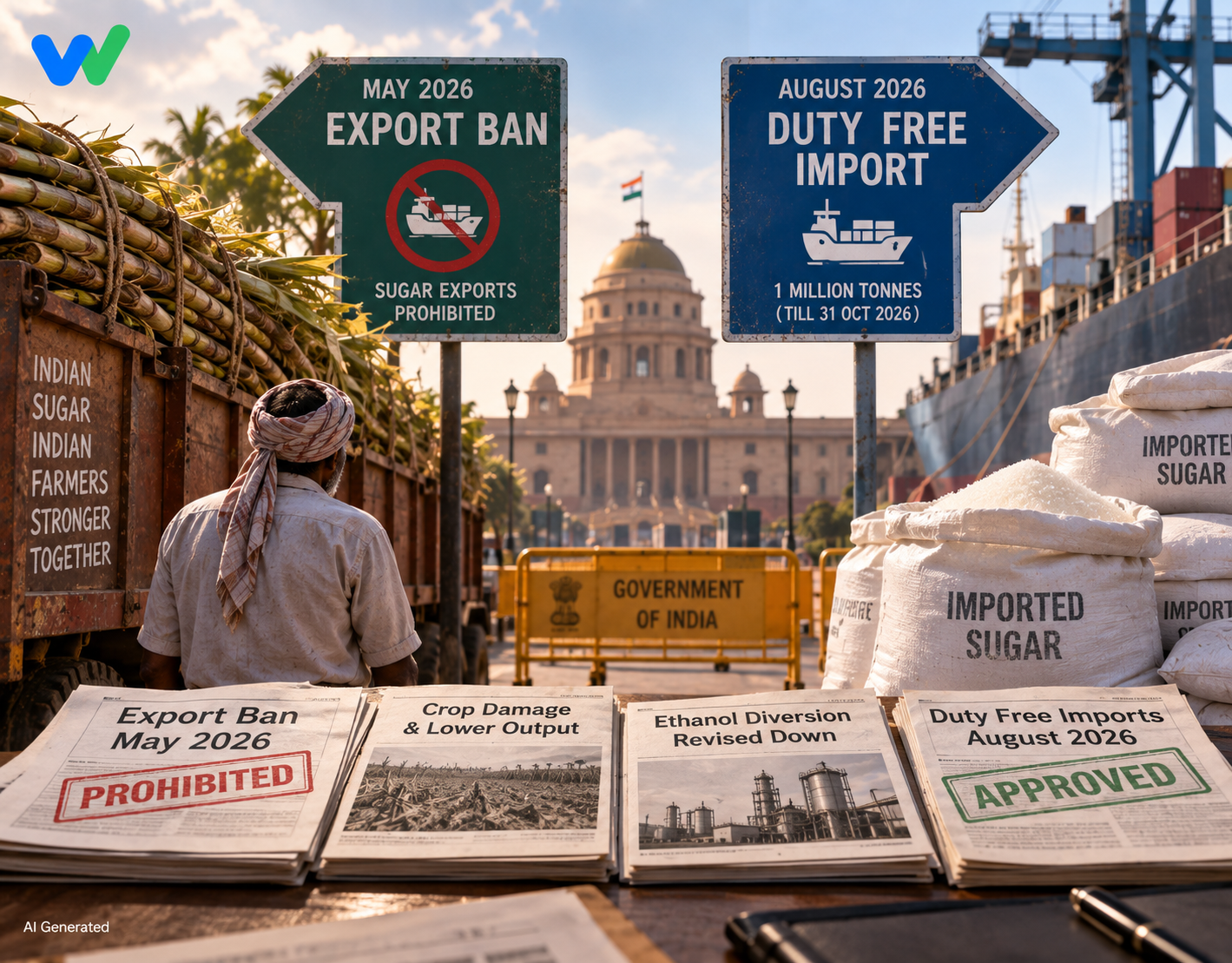
The second lever is trade. This year it swung twice. In May 2026 the Ministry of Commerce banned exports and moved sugar categories to the prohibited list. On 20 August 2026 the Directorate General of Foreign Trade allowed 1 million tonnes of raw sugar in duty free, under a tariff rate quota running to 31 October 2026.
So India banned selling sugar abroad and started buying it from abroad, inside four months. The government also put stockholding limits on dealers from 1 August to 30 November.
What to Check Before You Accept Any Explanation of Sugar Prices India
Four numbers settle most sugar price arguments in this country.
Gross production, which the crop affects. Ethanol diversion, which policy sets. The export quota or ban, which the commerce ministry issues. And the import window, which the trade directorate opens.
A fifth is quieter. The recovery rate is how much sugar a mill gets from a tonne of cane. Officials cut that figure this year. Net production fell even where the cane did reach the mill.
Underneath all of them sits the price mills must pay farmers for cane. The Centre sets a fair and remunerative price, and several states set a higher one. That floor shapes how much cane gets planted next year, which is the supply two seasons out.
The Wise Take
Food price explanations reach the public in one sentence, and the sentence is almost always about weather. Nobody can be blamed for weather. It is usually true and it is rarely the whole reason. Sugar prices India are a clean example.
In sugar the government is at once the regulator of how much cane becomes fuel, the issuer of export bans and import quotas, and the setter of the price mills pay for cane. Those decisions are all published. The same pattern shows up in how India funds its payment system, where the visible price hides the decision behind it. Reading the trade notifications alongside the crop report takes an afternoon. It is the difference between knowing that prices went up and knowing why.