

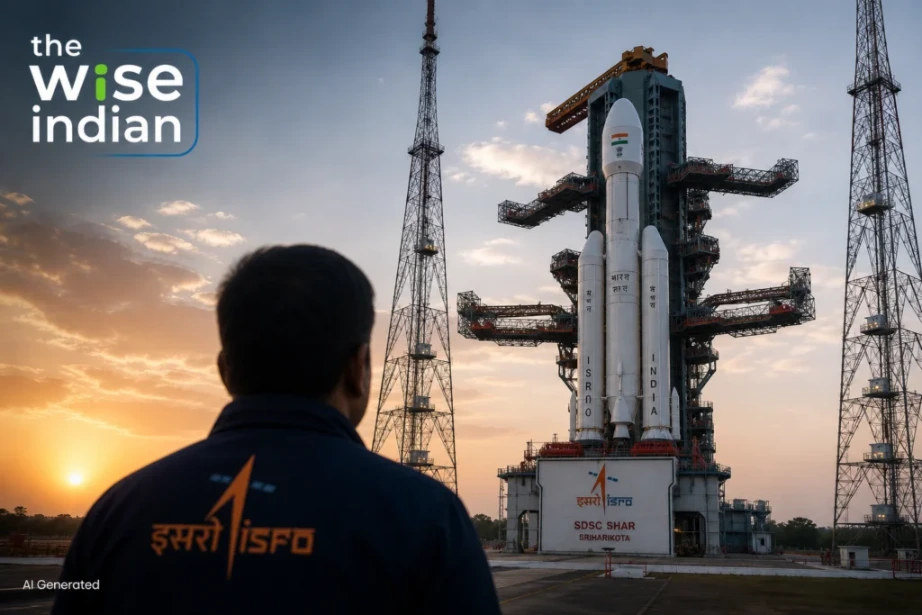
ISRO is working towards the uncrewed G1 mission, with a humanoid named Vyommitra in the crew seat. The shifting timeline says more about human spaceflight than about the programme.
India’s human spaceflight programme has spent 2026 in a phase that produces few photographs and a great deal of data. The first uncrewed Gaganyaan test flight, known as G1, has been repeatedly re-targeted, and each revision has been read in some quarters as a setback.
That reading misunderstands what is happening. Human rating a launch vehicle is a fundamentally different discipline from launching satellites, and the schedule reflects that difference rather than a loss of momentum.
What G1 Is Meant to Prove
The G1 mission is designed to validate the full mission sequence before any astronaut flies. That includes aerodynamic characterisation of the human-rated launch vehicle, operations of the orbital module, and the re-entry and recovery of the crew module.
In the crew position will be Vyommitra, a half-humanoid robot built to simulate aspects of human presence and return data on life support and cabin environment systems. Vyommitra is not a passenger in any meaningful sense. The robot exists to generate the kind of continuous instrument data that an empty capsule cannot, without placing a person at risk to obtain it.
A Timeline That Keeps Being Refined
ISRO Chairman Dr V Narayanan indicated in late June 2026 that the agency was working towards the uncrewed G1 mission by the end of the year. Union Minister of State Dr Jitendra Singh briefed Parliament on human-rating milestones in August 2026.
Reported target windows have shifted more than once across the year. The first crewed flight is now indicated for 2027, following further uncrewed missions.
Why the Ground Testing Matters More Than the Date
The abort system, the parachute sequence, the crew escape mechanism and the environmental control loop each have to be demonstrated separately and then together. ISRO has reported thousands of ground tests across the programme.
A satellite failure costs money and a mission. A human-rated failure costs lives, which is why the sequencing is deliberately unforgiving and why flight follows data rather than the calendar. ISRO has also conducted test flights validating the crew escape system, and the agency’s public position has consistently been that the flight schedule follows test results rather than the other way round.
What Gets Built Along the Way
The Union Cabinet approved an expanded Gaganyaan programme with an outlay of 20,193 crore rupees covering eight missions, with the Bharatiya Antariksh Station targeted for around 2035.
The less visible return is industrial. A human-rated programme forces a country to build supplier depth, materials qualification standards and test infrastructure that then remain available to everything that follows, including private launch companies. India is also coordinating internationally on elements of the programme, including network operations support with the European Space Agency and crew and module recovery arrangements with Australia.
The Wise Take
There is a version of this story that treats every revised date as a national disappointment, and it is a poor way to read an engineering programme. Countries that have flown their own citizens into orbit all arrived there through long stretches of ground testing that produced no headlines at all. India will be the fourth to do so on its own vehicle, and the value of that is not the flag on the fuselage. It is the supplier base, the qualification standards and the test facilities that stay behind whether the launch happens in one quarter or the next. Patience here is not passivity. It is the method