

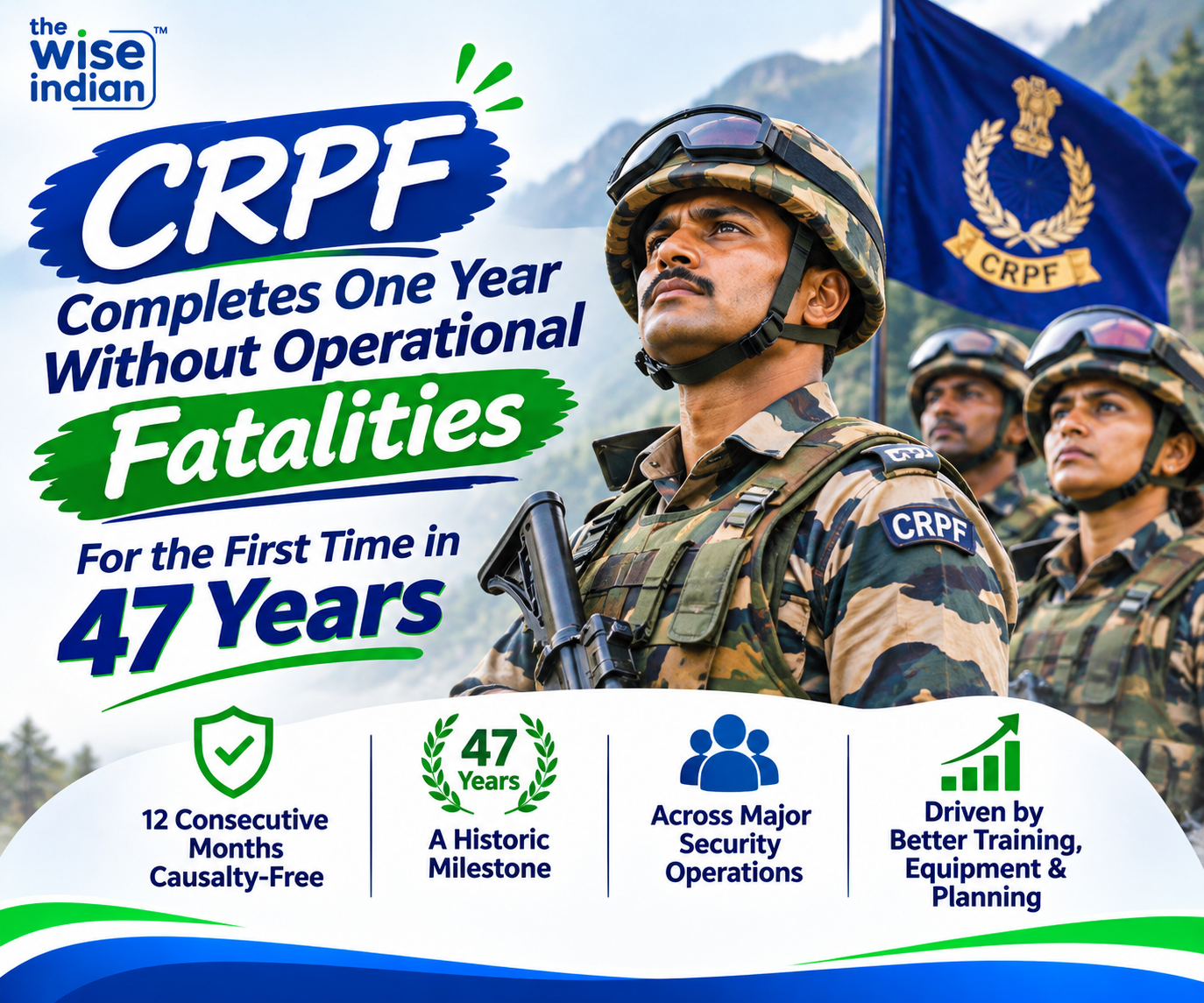
The Central Reserve Police Force (CRPF) has achieved a significant milestone in its operational history. For the first time in 47 years, the force has completed an entire year without an operational fatality. The development highlights an important change in personnel safety across India’s internal security operations. CRPF Director General G.P. Singh announced the achievement on November 1, 2026. However, the milestone also raises an important question about how security forces protect personnel during demanding assignments.
A Historic Year Without CRPF Fatalities
The CRPF has completed 12 consecutive months without losing personnel in operational duties, marking a rare achievement in its history. According to Director General G.P. Singh, the last operational fatality occurred on October 30, 2025. The previous comparable period ended in January 1979, making this development particularly significant after nearly five decades. Officials also reported that nine CRPF personnel died during operational duties in 2025 up to October 30. Therefore, the latest achievement represents a notable improvement compared with the preceding period. However, the record specifically concerns operational fatalities, not every possible cause of death among serving personnel.
This distinction matters because the force continues to face several personnel welfare challenges beyond battlefield and operational safety. The announcement also recognises the efforts of thousands of personnel serving in difficult locations across the country. For an organisation regularly deployed in high-risk environments, completing 12 consecutive months without an operational death is an important achievement. It also provides an opportunity to examine the measures supporting personnel protection.
Better Preparation and Equipment Strengthen Operational Safety
According to G.P. Singh, several improvements contributed to the achievement, including modern equipment, better training and strategic planning. These measures help security personnel prepare for difficult assignments and respond more effectively to changing operational conditions. Furthermore, contemporary equipment can improve communication, coordination and protection during field deployments. Training also helps personnel understand potential threats, follow operational procedures and make informed decisions under pressure.
Strategic planning, meanwhile, allows commanders to assess risks before deploying teams into sensitive areas. The Times of India also reported additional operational practices, including protective equipment, careful planning and stronger deployment arrangements. Such measures demonstrate how personnel safety depends on preparation before an operation begins. However, equipment and training alone cannot eliminate every danger associated with counter-insurgency and security assignments.
Operational conditions can change quickly, particularly in areas involving difficult terrain, armed groups and unpredictable security threats. Consequently, continuous improvements in planning and preparedness remain essential for maintaining the force’s safety record. The achievement highlights the importance of treating personnel protection as an integral part of operational effectiveness.
CRPF Continues Deployments Across Major Security Regions
The milestone becomes particularly significant when considering the CRPF’s responsibilities across India’s internal security landscape. The force remains involved in anti-Naxal operations, counter-terrorism duties in Jammu and Kashmir and counter-insurgency assignments in northeastern states. These responsibilities require personnel to work in different geographical conditions and respond to varied security challenges. For example, operations in forested regions demand different preparation from deployments in urban or mountainous locations. Meanwhile, Jammu and Kashmir continues to require security arrangements against terrorism and related threats.
In the Northeast, the CRPF supports security operations amid regional challenges, including the continuing situation in Manipur. The force also assists state police organisations and performs other internal security duties when required. According to reports, the CRPF has approximately 3.25 lakh personnel, making it India’s largest central armed police force. Its responsibilities therefore extend well beyond individual counter-insurgency missions. Maintaining personnel safety across such a large organisation requires coordination, preparation and continuous operational monitoring. Moreover, the absence of operational fatalities does not suggest that these regions have become entirely risk-free. Instead, it demonstrates an important safety outcome during a period of continuing deployments.
Medical Evacuation Becomes an Important Part of Personnel Protection
Another important factor identified by the CRPF leadership is the emphasis on post-incident medical response. The force has focused on rapidly evacuating injured personnel to secondary and tertiary medical facilities. This approach recognises that survival during an incident depends on more than immediate protection. In serious situations, timely access to specialised medical treatment can make a critical difference. An injured personnel member may require emergency surgery, advanced trauma care or specialised treatment unavailable near an operational location. Therefore, reducing the time between injury and medical assistance becomes an important responsibility.
The emphasis on faster evacuation also highlights the connection between operational planning and medical preparedness. Emergency transportation arrangements, coordination with hospitals and effective communication can support better outcomes. Nevertheless, medical evacuation does not replace preventive measures or eliminate the possibility of serious injuries. Instead, it forms another layer of protection alongside training, equipment and operational planning. This broader approach helps explain why the leadership has highlighted post-incident response as part of the achievement. Protecting personnel must remain a priority throughout an operation, including the moments following an unexpected incident.
The Wise Take
The CRPF’s historic record offers an important example of why personnel safety deserves attention alongside operational achievements. However, zero operational fatalities should not be confused with zero deaths among serving personnel. Reports have also raised concerns about suicides within the force, highlighting a separate personnel welfare challenge. The National Human Rights Commission previously sought a report following concerns about CRPF personnel suicides.
These issues underline the need for a broader approach to protecting those who serve. Physical safety, timely medical treatment, mental health support and working conditions all deserve sustained attention. Meanwhile, the latest achievement demonstrates the importance of preparation, strategic decisions and effective emergency response. The force must continue strengthening these measures while adapting to changing security requirements. Ultimately, the real value of this milestone lies not only in its historical significance but also in the importance it places on every personnel member’s safety.
Also read our other article on Sensex Surges 1,233 Points as Reliance Earnings Drive a Strong Rally Across Indian Stock Markets
Follow The Wise Indian for regular updates on stories that shape India’s strategic future and global standing. Stay connected with us for sharp analysis, untold perspectives, and a closer look at the shifting legal landscapes, civic rights, and institutional frameworks defining our democratic fabric.