

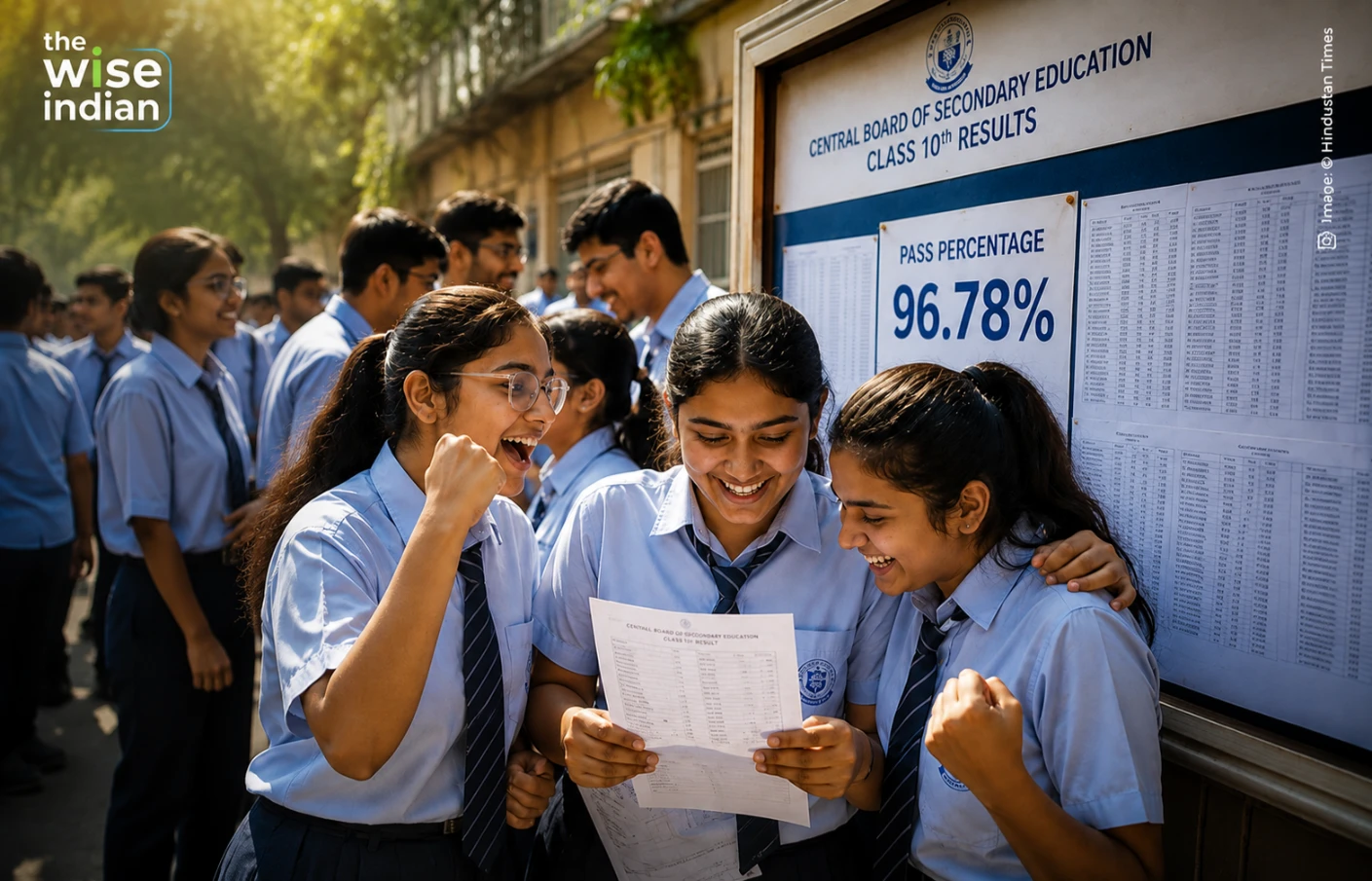
CBSE declared the result of the Class 10 Second Board Examination 2026 on Saturday, 18 July. The combined pass percentage across the main and second examinations stands at 96.78 percent.
In the main examination held earlier this year, the pass percentage was 93.70 percent.
Who Sat the Second Examination
A total of 6,64,027 candidates registered for the second examination and 6,63,777 appeared.
Of these, 5,13,955 sat it to improve on their main examination scores. Another 1,49,822 appeared under the compartment category, of whom 52.40 percent cleared.
Among the students attempting to improve, 3,08,095 succeeded, which is 59.95 percent of that group.
The gap between the two figures is where the new system shows its effect. The main examination result of 93.70 percent reflected a single sitting; the combined figure reflects two.
How the Two-Exam System Works
CBSE introduced two board examinations for Class 10 from 2026, following the recommendations of the National Education Policy 2020.
The main examination ran from 17 February to 11 March. The second examination was held from 15 to 21 May, and students could use it either to improve a score or to clear a subject they had failed.
Examination Controller Sanyam Bhardwaj said that more than 59 percent of candidates improved their performance compared with the main examination.
Appearing for the second examination was optional for students who had already passed. A candidate’s better score across the two attempts is what stands.
How Students Can Access Results
Results are available through the DigiLocker results portal. Printed mark sheets and passing certificates for regular students, including those enrolled in schools abroad, will be supplied through their respective schools rather than issued directly to candidates.
Private candidates will receive digital academic documents through DigiLocker, with printed documents sent to their registered addresses. CBSE has not released a merit list, in line with its practice of recent years.
The Wise Take
A three-point rise in the pass rate is the headline, but the more instructive figure is 59.95 percent, the share of students who improved when given a second attempt. That number suggests a meaningful proportion of February results reflected a bad morning rather than a settled level of understanding. Whether the format reduces exam pressure or simply extends the exam season from three weeks to five months is a question the first cohort cannot answer on its own. It will take a few years of data, and honest reporting of what happens to students who improve on neither attempt.