
The Aichi-Nagoya Games run on an unusual five-cluster format with no single athletes’ village. India’s planning has been shaped as much by logistics as by training.
Every Asian Games cycle produces a familiar conversation about medal targets. The 2026 edition has produced a less familiar one about accommodation.
The Games will be held in Aichi-Nagoya, Japan, from 19 September to 4 October 2026, with 45 countries and regions competing across 43 sports. India arrives having won 107 medals at Hangzhou in 2023, comprising 28 gold, 38 silver and 41 bronze. The scale is substantial. Forty-five countries and regions competing across forty-three sports makes this one of the largest multi-sport events on the international calendar outside the Olympic Games.
A Games Without a Single Village
The Aichi-Nagoya edition follows a five-cluster competition model, with events spread across prefectures including Aichi, Gifu and Shizuoka. Athletes will compete and stay across multiple locations rather than in one Olympic-style village.
That format turns accommodation into a performance variable. India is reported to have requested land-based accommodation for its contingent, a request that matters particularly for precision sports such as shooting and archery. Travel between clusters adds a variable that most contingents do not usually have to plan for, particularly for athletes competing in more than one event across different disciplines.
Rehearsing the Living Conditions
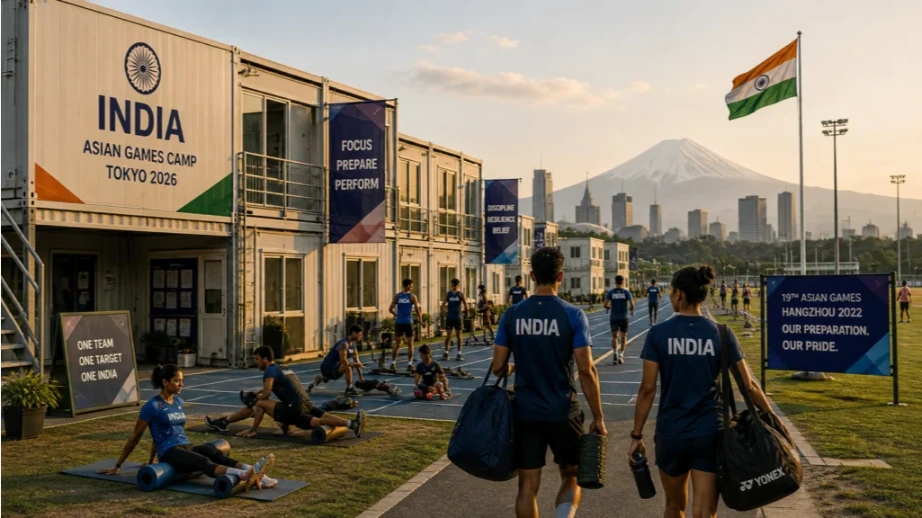
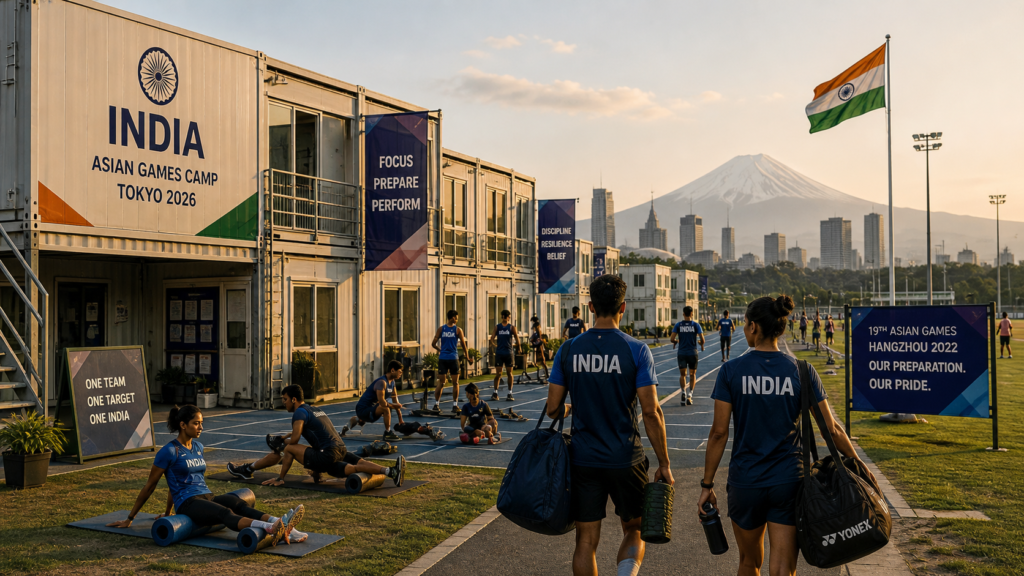
To prepare athletes for compact housing, container-style units have been installed at Sports Authority of India training centres in Patiala and Bengaluru.
Qualifying athletes are expected to spend at least one night in these units. It is a small intervention aimed at removing an avoidable distraction during competition weeks.
Acclimatising in Japan
The athletics squad is scheduled to train at the University of Tsukuba near Tokyo before moving to competition. The Sports Authority of India signed a memorandum of understanding with the university in June 2026 covering training and exchange programmes.
Reports indicate the team will travel after the Indian Athletics Final Series in New Delhi in early September, with track and field events in Nagoya scheduled for the second half of the month. Acclimatisation camps of this kind are now standard practice for endurance and track events, where adjusting to humidity and time difference can affect performance more than any late change in training load.
Who India Is Sending
Confirmed names in the contingent include shooter Manu Bhaker, badminton player PV Sindhu, boxer Lovlina Borgohain and wrestler Aman Sehrawat. Squash player Anahat Singh returns after a team bronze at Hangzhou.
Hockey carries additional weight this cycle. The men’s and women’s tournaments double as continental qualification events for the 2028 Olympics, with the winners earning direct entry. India’s athletics squad announcement was awaited at the time of writing, with javelin thrower Neeraj Chopra widely expected to headline the team following his competition schedule in Europe through August.
The Wise Take
Medal tables get written after the fact and preparation gets discussed before it, which is why the second conversation is usually the more revealing one. Container units at Patiala will not win anyone a final. What they do is remove one more unfamiliar variable from an athlete’s first night in an unfamiliar country, and elite sport is substantially a contest of managed variables. India’s build-up this cycle has been notable for treating logistics, acclimatisation and living conditions as part of performance rather than around it. Whatever the tally reads in October, that is a more mature approach than the country has always brought to a continental Games.