
Picture a quiet highway at dusk, a crumpled scooter, and a stranger who slows down. Most drivers keep moving, but a few always stop. Now India’s Rah-Veer scheme honours those few with a title and ₹25,000. Here is how it works, told through the people who step forward.
The Rah-Veer Scheme Rewards Strangers Who Stop on the Road
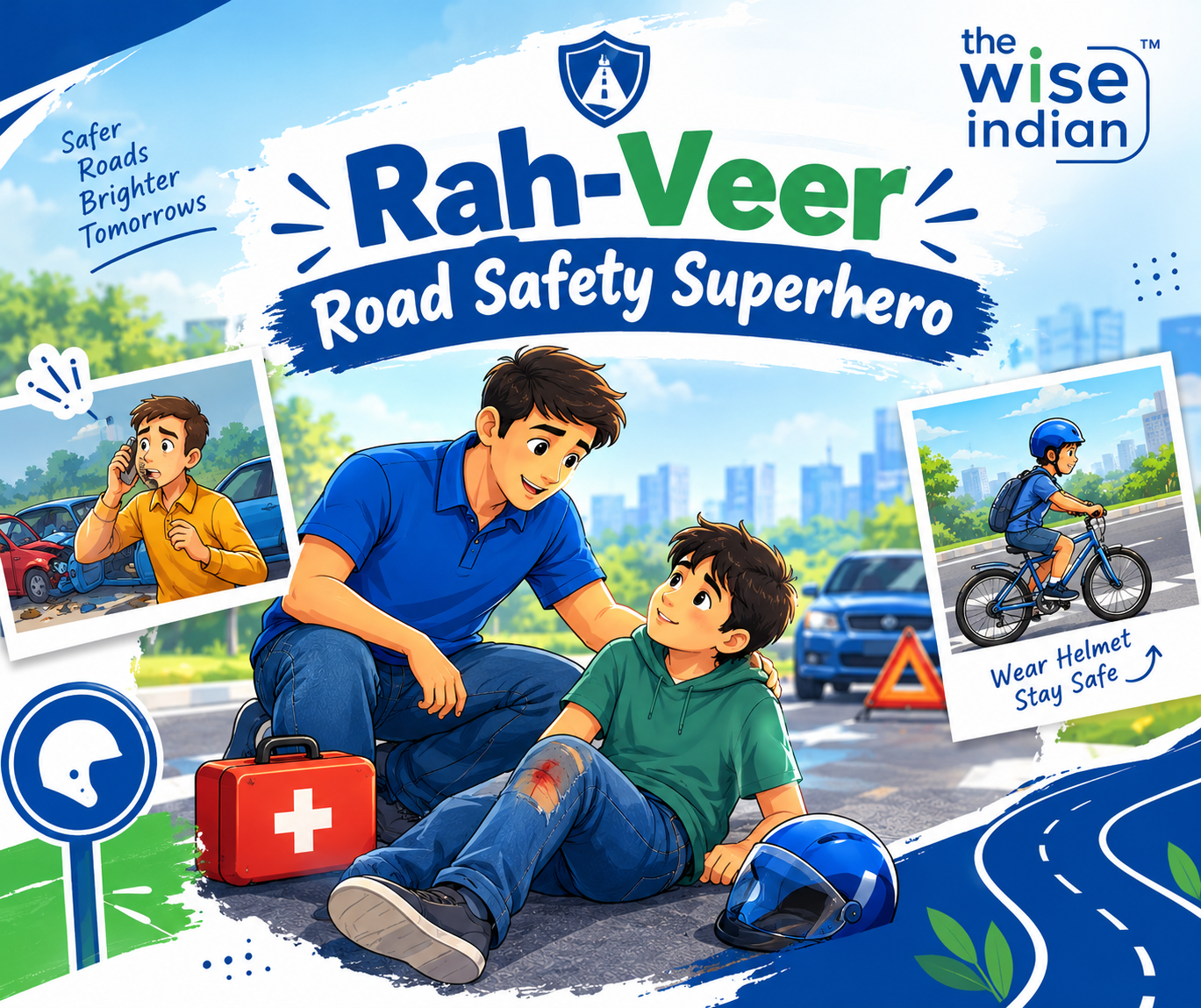
The Rah-Veer scheme is simple at heart. Anyone who rushes a road accident victim to hospital can earn the title Rah-Veer. Minister Nitin Gadkari told Lok Sabha in December 2025 that helpers get the title and ₹25,000. The scheme began earlier in 2025. Now picture an autorickshaw driver at a busy junction. A motorbike skids just ahead of him. He does not wait for an ambulance. Instead, he lifts the rider into his seat and drives to the nearest hospital. That quick, brave act is exactly what the scheme hopes to inspire.
The name itself carries the message. It joins rah, meaning road, with veer, meaning brave. Helpers also receive a Certificate of Appreciation from the Government of India. Together, these honours turn a private act of courage into public recognition. There is a bigger goal, too. India already has a Good Samaritan law, yet many bystanders still look away. Therefore, the government wants the reward to reset public behaviour in emergencies. A small cash prize sends a loud message that helping is the right thing to do.
Why the First Golden Hour Decides Who Lives
The golden hour is the first 60 minutes after an accident. Experts treat it as the most critical window against death or permanent disability. Therefore, every minute a bystander saves matters. The numbers explain the urgency. India sees about 5 lakh road accidents and 1.8 lakh deaths each year, Gadkari said. Moreover, 66 per cent of those deaths involve people aged 18 to 34. He also cited an AIIMS study that found timely care could avoid almost 50,000 deaths every year.
Think of a college student riding home after class. She spots an overturned car beside a roadside tea stall. She calls for help and flags down a passing van. Meanwhile, the tea-stall owner keeps the injured driver steady. Together, they reach the hospital before the hour runs out. Time often slips away at the roadside. Crowds gather, but nobody takes charge. In that moment, one person who acts can change the outcome. The scheme exists to make that person more common.
From ₹5,000 to ₹25,000: What Changed for Helpers
The Rah-Veer scheme lifted the reward from ₹5,000 to ₹25,000 per incident. That is a fivefold jump. The higher amount aims to motivate more people to act. However, the money is only part of the story. The rules also scale for groups. If two people save one victim, they split the ₹25,000 equally. Conversely, if a single helper rescues multiple people from one crash, the payout remains capped at ₹25,000 for that incident. One person can earn the award up to five times a year. Ten of the best Rah-Veers each year also win ₹1,00,000 at the national level.
The rules also suit groups of helpers. If two people save one victim, they split the ₹25,000 equally. Besides that, one person can earn the award up to five times a year. Ten of the best Rah-Veers each year also win ₹1,00,000 at the national level. Imagine a truck driver who stops on a dark highway at night. He lifts an injured cyclist into his cab and drives to a trauma centre. Afterwards, the police should give him a written acknowledgement with his name and rescue details.
Verification then follows a clear path. In Madhya Pradesh, the hospital informs the police, and the police alert the District Collector. After checks, the money goes straight to the helper’s bank account. However, anyone unwilling to share their details cannot receive the award. States are now putting the scheme into practice. Madhya Pradesh’s cabinet approved it in May 2025. Meanwhile, Uttarakhand’s transport department published its guidelines in April 2025. Applications there go through a district committee under the district magistrate.
The Law and Paperwork That Protect the Person Who Stops
Many bystanders hesitate because they fear endless police questions. Section 134A of the Motor Vehicles (Amendment) Act, 2019 addresses that fear. It shields helpers who act in good faith from civil or criminal liability. The reward builds on that protection. Nobody can force a bystander to disclose personal details or become a court witness. Sharing details is the helper’s own choice, though the reward needs them. Police may record only one voluntary statement, at a time and place the helper chooses. Hospitals must also start emergency treatment at once and ask the helper for no payment.
The acknowledgement slip matters as well. It lists the helper’s name, phone number, and address, plus the time and place of the accident. It also records how the helper saved the life. If officials break these protections, helpers can complain to a grievance committee. The district magistrate or deputy commissioner leads that committee. Meanwhile, some officials already hunt for such helpers. In Shimla, a deputy commissioner told police to identify recent Good Samaritans so the district can honour them. Consider the tea-stall owner again. He can now leave the hospital without fear of paperwork or blame. The minister has also promised cashless treatment of up to ₹1.5 lakh for the first seven days.
The Wise Take
The Rah-Veer scheme does not ask anyone to become a hero. It simply removes the fear and adds a thank-you. Still, a reward works only when people know about it. Therefore, share these rules with family, friends, and drivers you know. If you see a crash, call emergency services right away and follow their guidance. Authorities, in turn, should pay rewards quickly and publicise the rules widely. Finally, remember that the stranger who stops today may someday save someone you love.
Also read our other article on What Is a Girls’ Panchayat in Haryana, and Does It Really Hold Any Official Power in Villages?
Follow The Wise Indian for more stories about the people and ideas quietly reshaping India.