
India’s goalkeeper came out of the 2026 World Cup one match short of the national record. She told the story of the bus stand herself, in Amstelveen.
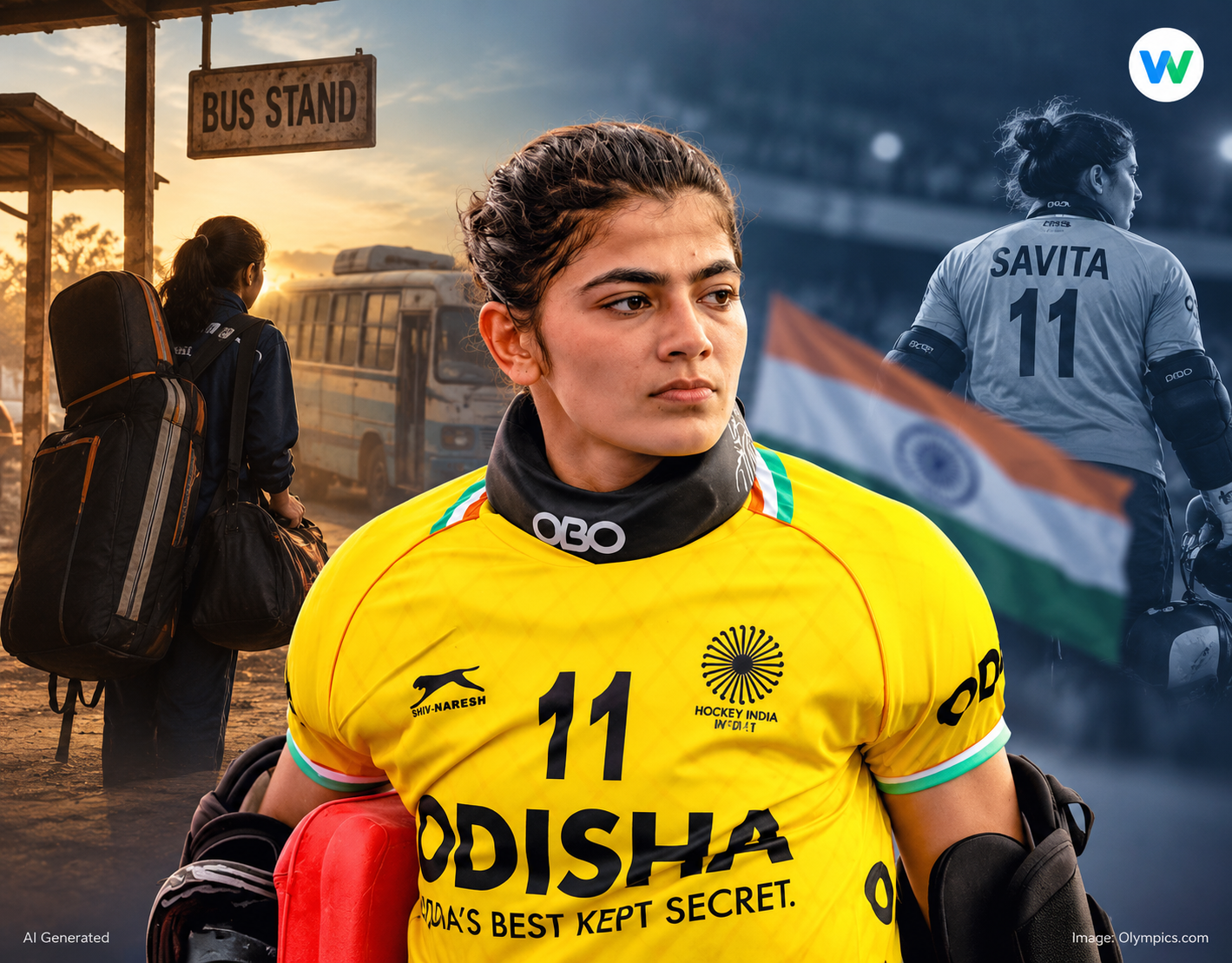
In 2011, Savita Punia stood at a bus stand with two bags and no way to get home. She almost quit hockey that evening. Fifteen years later she kept goal for India at the 2026 World Cup in Amstelveen. India finished fifth, their best result at a Women’s Hockey World Cup since 1974. Savita Punia has now played 319 matches for her country. That leaves her one short of the Indian record.
A Kit Bag, a Second Ticket and Rs 500
She was travelling home from a national camp. Evening buses were few. She had her own luggage and her goalkeeper’s kit with her. That kit means leg guards, body armour and a helmet, and it is bulky.
The conductor refused to let her board with both bags. He told her to buy a second ticket for the kit. She has put that at around five hundred rupees, and she says she did not have it. She has also described what he said next. His words were that a girl only has to call out once and ten boys will come.
She rang her father from the bus stand and told him she was finished with hockey. He bought a second hand car so she could keep travelling to camps. That account is her own, given in the Netherlands during this World Cup.
What the Record Books Say About Savita Punia
Here is the number that matters, and it is not 319. The Indian record for a woman is 320 international matches. Vandana Katariya set it, and she has since retired. Savita Punia is one match away from equalling it.
She went into the World Cup on 317 and came out on 319. She has not retired. She has spoken about the Asian Games and the Los Angeles Olympics, so that one match is well within reach.
She is also the second Indian woman to pass 300 games for the country. Vandana Katariya was the first.
Her own record starts in the year she nearly walked away. The International Hockey Federation’s player database lists her first entry as a single match at the 2011 Women’s Asian Champions Trophy. After that the list runs past fifty tournaments. Two Olympic Games, in 2016 and 2020. Three World Cups, in 2018, 2022 and 2026. Three Commonwealth Games, three Asian Games and a decade of Pro League seasons. She is 36. She has held the Arjuna Award since 2018 and the Padma Shri since January this year.
What Actually Kept Savita Punia Playing
Look at what nearly ended this career. It was not coaching. It was not money for training. It was transport.
A goalkeeper’s kit will not fit on a cycle. It will not fold into a shared auto. It travels with the player to every camp and every trial, and somebody has to pay for that seat.
She missed the World Cup qualifiers in Hyderabad in March for personal reasons and came back for the tournament itself. In Amstelveen she made a double save against Germany before Lynn Krings scored off the rebound. India won that match 3-1 and took fifth place.
The Wise Take
India measures its sport in medals, camps and stadium budgets. Nobody measures it in bus fares. Yet this career nearly ended over a ticket, not at a selection meeting. What saved it was a car one family bought on its own.
States run sports hostels partly for this reason. Places are few, and most young players still travel from home the way Savita Punia did. What nobody writes down is why girls stop. One sarpanch built a girls’ hockey team for exactly this reason. Until somebody records the reason at the moment a girl drops out, the bus stand keeps doing work that no policy document ever sees.