

Researchers tested 160 protected animals to find which anchor species shelter the most wildlife and the most stored carbon.
India’s conservation effort has long been built around the tiger. Protect the tiger’s forest, and everything else living in it stays safe too. So a study published this year asks the obvious follow-up. Which other anchor species would work the same way?
What an Anchor Species Actually Is
The idea is older than the study. Some animals need large, unbroken habitats to survive. So a protected boundary around one of them shelters everything else inside it. Science calls these umbrella species.
The paper appeared in the journal Conservation Letters, and it uses the term anchor species instead. Its argument is simple. A country can use the laws it already has for single animals to protect wildlife and forest carbon at the same time.
How the Researchers Chose the Nine
The team came from the National University of Singapore, Nanyang Technological University and the University of Queensland. They began with 160 threatened vertebrates that India’s Wildlife Protection Act already covers.
First they mapped the habitat of each animal. Then they laid those maps over fine-grained habitat data for 2,187 land species, and over measures of carbon held in above-ground biomass.
That let them work out, for each of the 160 animals, how many other species and how much carbon would fall inside a protected area drawn around its habitat.
What Protecting a Single Anchor Species Covers
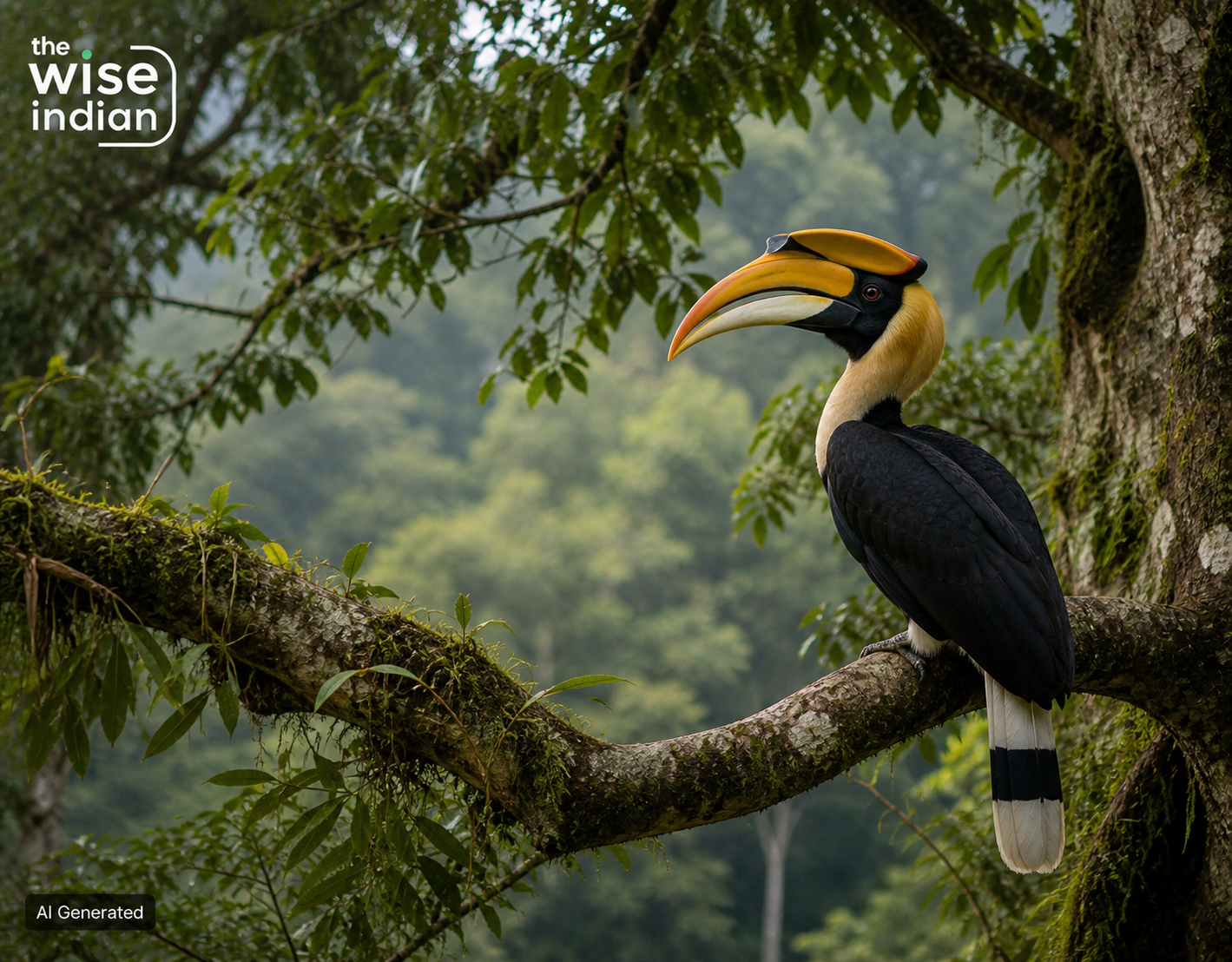
Nine animals came out ahead. They are the sambar deer, the leopard, the dhole, the tiger, the king cobra, the gaur, the Indian pangolin, the sloth bear and the great hornbill.
Protect the habitat of any one of them, and the boundary covers more than 700 species of mammals, birds and reptiles. It also takes in roughly 1.1 gigatonnes of above-ground carbon. The paper puts that at more than a third of India’s total.
The Target That Makes This Timely
India has signed the Kunming-Montreal Global Biodiversity Framework. It commits countries to conserve 30 percent of land and sea by 2030. Meeting that means deciding which land to add to the protected network. So this study offers a method for choosing.
The Wise Take
Arguments about what to protect usually run in the language of rarity and public affection, which is part of why the tiger has done so well. This paper proposes a different test. Measure what else sits inside the boundary before drawing it. That reframing matters most for the anchor species nobody talks about, such as the Indian pangolin and the king cobra, whose habitats turn out to carry unusual weight. A map is not a decision, though, and protected areas always involve the people who live around them. What the study adds is a way to see the full return on a line before anyone draws it.