
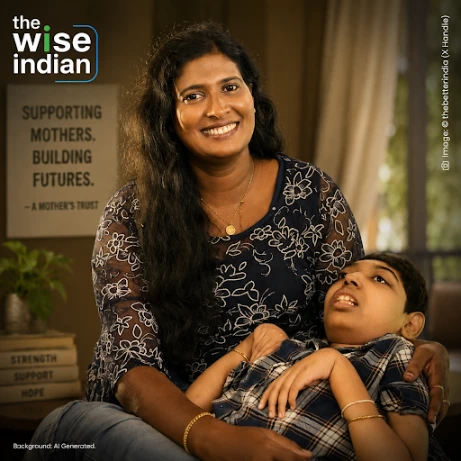
Sheeja’s daughter was born with microcephaly in 2010. Her marriage ended soon after. Snehasandram now supports more than 200 mothers in the same position.
On 25 March 2010, at a hospital in Thiruvananthapuram, Sheeja gave birth to her daughter Sandra. Sandra was born with microcephaly, a condition in which a baby’s head is smaller than expected and which often requires lifelong support.
Her marriage ended not long afterwards. In the years that followed, spent largely in hospital corridors, Sheeja began to notice how many other mothers were sitting there alone.
A Pattern, Not an Exception
The trust’s own account of why it was formed is blunt about what its founders observed: that when a child is born with a disability, the father frequently leaves, and the mother is left with the child at a relative’s home, often without adequate food, medicine or treatment.
Sheeja was recognising the same shape in her own life. The organisation that became the Snehasandram Charitable Trust did not begin as a plan. It accumulated over years, incident by incident, until a group of mothers decided to register something formal.
What It Actually Provides
Snehasandram is run by mothers of children with disabilities, for mothers of children with disabilities. It is based in Peyad, in Vilappil village on the edge of Thiruvananthapuram.
The trust today supports more than 200 mothers across Kerala. The work is practical rather than symbolic: livelihood training so that a mother who cannot leave home for a full working day still has an income, and emergency assistance when a medical crisis arrives without warning.
The third thing it offers is harder to fund and often what members value most, which is a room full of people who do not need the situation explained to them.
The Part That Remains Unbuilt
The trust’s long-standing ambition is a residential care centre, for the question every one of these mothers eventually reaches: what happens to the child when the mother is gone. Land near Vilappilsala was donated towards it. The centre has not been built.
The Wise Take
India’s disability policy is written around the child, which is correct as far as it goes and leaves out the person doing the caring. A mother in this position is usually excluded from regular employment by the hours her child needs, excluded from most welfare categories because she is neither disabled nor destitute on paper, and excluded from ordinary social life by exhaustion. Snehasandram is a workaround for that gap rather than a solution to it. The solution would be recognising unpaid lifelong caregiving as work, and paying for it. Until then, mothers are funding each other.