
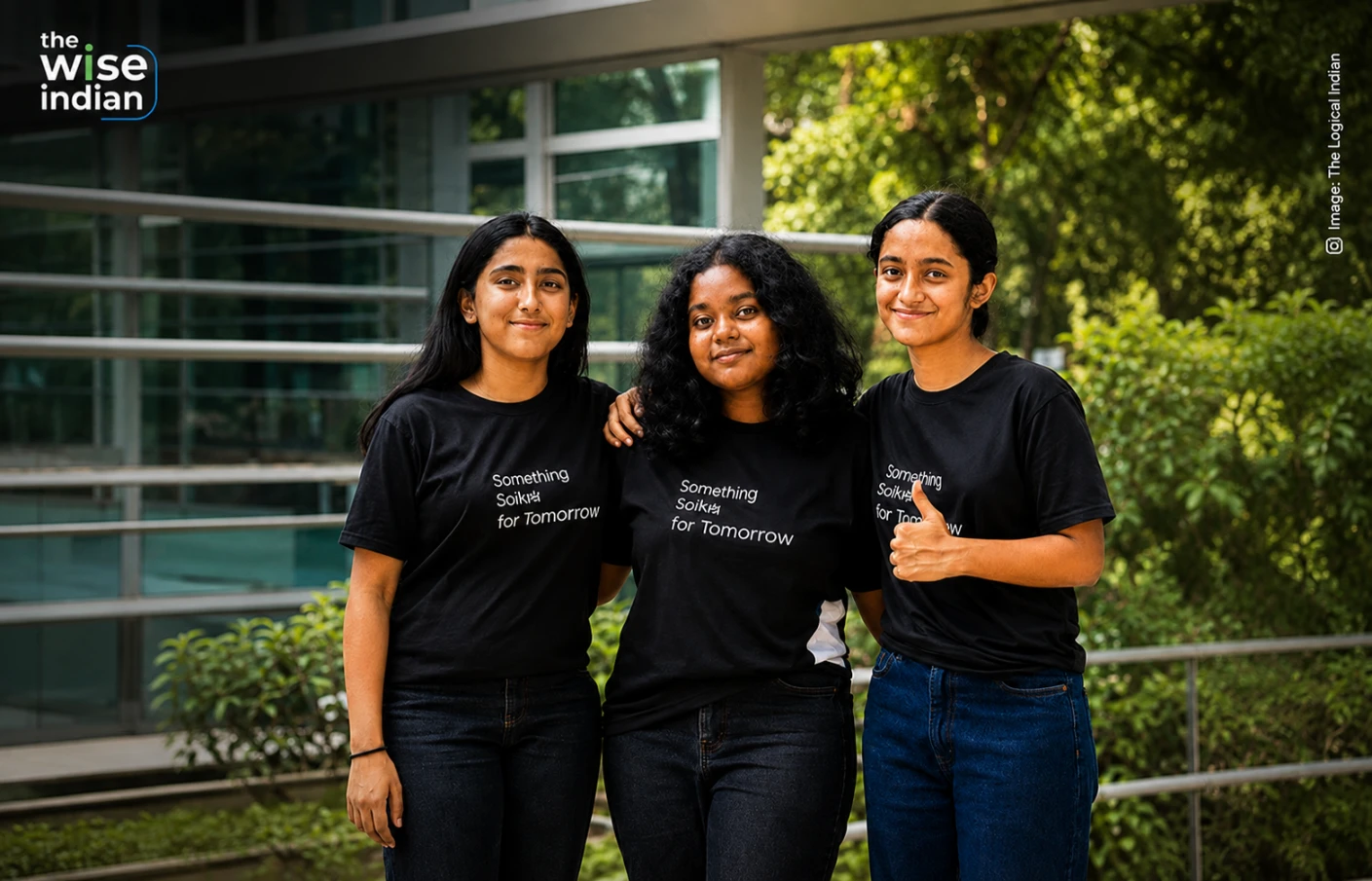
Team Udaan’s bagasse-based pad set out to answer two problems at once: what periods cost, and what disposable pads leave behind.
Every sugar mill produces bagasse, the fibrous residue left after juice is pressed from sugarcane. Most of it is burnt for fuel or discarded.
Anupriya Nayak and two schoolmates looked at that residue and saw an absorbent core. Their team, Udaan, has spent several years developing a reusable sanitary pad built around shredded sugarcane bagasse.
Two Problems, One Material
The idea addresses a pair of issues that are usually treated separately. Conventional disposable pads remain expensive for many Indian households, particularly in rural and low-income communities.
They are also largely non-biodegradable, and the volume of used sanitary waste entering Indian landfills has grown steadily as access to pads has widened. Most of it is not segregated at source, which leaves sanitation workers handling it directly.
A washable pad made from agricultural waste attempts to reduce recurring cost and disposal burden together, rather than trading one against the other.
Why Bagasse
Bagasse is abundant, cheap and already concentrated at mills, which removes the collection problem that defeats many waste-derived materials. Shredded and layered, it can hold liquid while remaining light.
Because the pad is washable, the recurring cost falls sharply after the first purchase, which is the point at which affordability usually decides whether a household adopts a product at all.
From School Project to Recognised Innovation
Udaan was formed by Anupriya Nayak, Prisha Dubey and Vanalika Konwar, who were sixteen and based in Delhi and Port Blair when the project began.
The all-girls team was named among the top three in the inaugural Indian edition of Samsung’s Solve for Tomorrow competition. The top three teams shared a total grant of one crore rupees and received six months of incubation at IIT Delhi.
Reports indicate a venture linked to Nayak’s work, Menstrumate, has since expanded operations across several states and countries. The Wise Indian has not independently verified the scale of that expansion.
The Wise Take
Menstrual products in India have moved a long way in fifteen years, from a subject largely absent from public conversation to a line item in state budgets. The unresolved part is what happens after use, because a country that succeeded in distributing pads did not simultaneously build a way to dispose of them. Solutions built from agricultural residue are one response, and they will only matter if they reach the price and durability that households actually need. The value of student projects like this one is less the prototype than the question they insist on asking.