
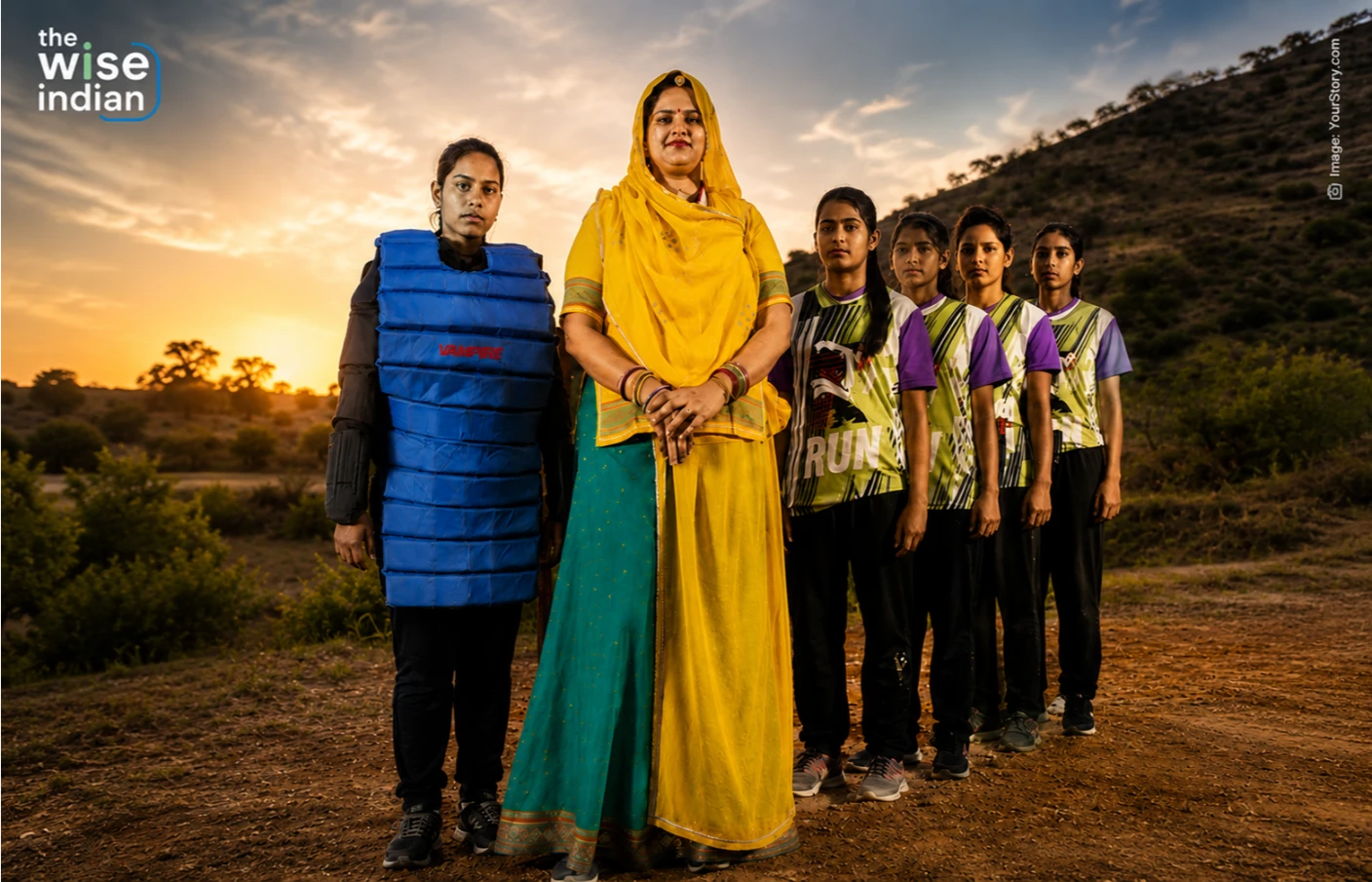
Neeru Yadav funded equipment and coaching from her own salary to put the girls of Lambi Ahir on a hockey field ten kilometres away.
Neeru Yadav wanted to play hockey as a girl in Narnaul, Haryana. Her family asked her to concentrate on her studies instead, and she did.
She holds an MSc in Mathematics along with BEd and MEd degrees. She was a homemaker in Lambi Ahir, in Rajasthan’s Jhunjhunu district, when the village sarpanch seat was reserved for a woman.
Persuading the Parents First
Yadav contested the election and won, becoming the village’s first woman sarpanch in 2020. She has said she began hearing from girls in the village who wanted to play hockey but had no way to do so.
In Lambi Ahir, girls were often married early and sport was not part of the expectation. The first task was not equipment but conversation, convincing parents to let their daughters train.
Lambi Ahir had no suitable ground. Yadav arranged access to a playing field at Singhania University, roughly ten kilometres from the village, and bought hockey equipment and coaching using her own sarpanch honorarium.
Beyond the Hockey Field
The hockey team is the most visible of her initiatives but not the only one. Her first project as sarpanch was a Farmers’ Producers Organisation, set up because villagers were borrowing from moneylenders at high interest and travelling more than ten kilometres to buy seed and fertiliser.
She has also run skilling programmes for girls under the Pradhan Mantri Kaushal Vikas Yojana, health camps, free sanitary pad distribution and banking awareness sessions for women.
Funding the Work
Yadav has directed prize money towards the same ends. She won 6.70 lakh rupees on a televised quiz programme and has said the amount would go towards girls’ sport and environmental work in the village.
Her other village initiatives have included a community utensils bank intended to cut single-use plastic at local functions, and a women’s safety programme.
In 2024 she represented India at a United Nations event on women in local governance, alongside two other elected women representatives from Indian panchayati raj institutions.
The Wise Take
Reserved seats in panchayati raj were designed to put women into local office, and the persistent criticism has been that many such seats are held nominally while male relatives govern. Lambi Ahir is one answer to that criticism, though a single village cannot settle the argument. What is worth noting is how ordinary the interventions are: a ground, a set of sticks, a conversation with parents, a producer organisation. None required new legislation. They required someone in office deciding that the village’s daughters counted as constituents.