

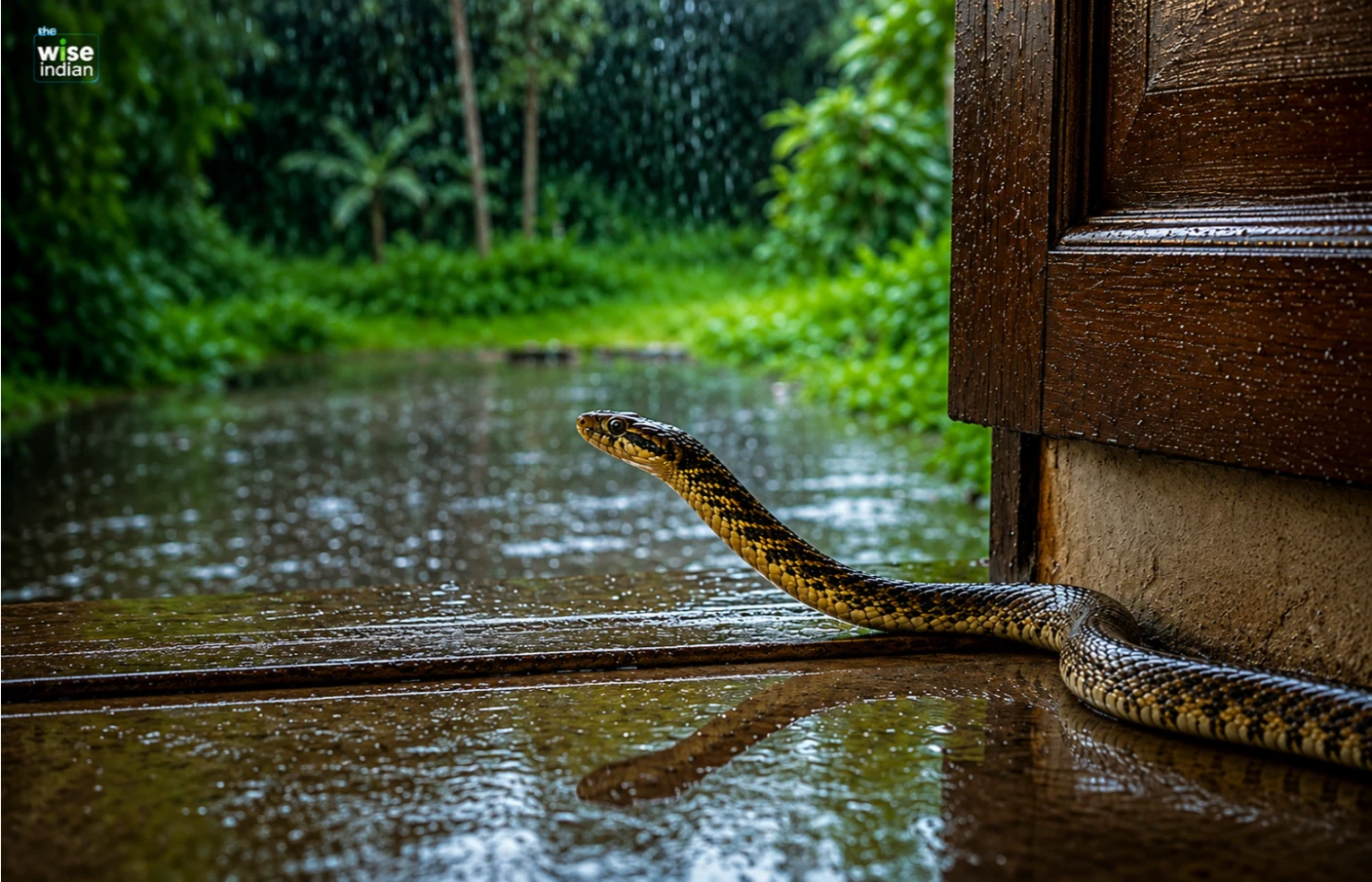
A snake in the garden, bathroom, or parking area is enough to trigger panic. Every monsoon, social media fills with videos of snakes entering homes, leaving many people wondering whether these reptiles are becoming more aggressive during the rainy season.
The answer is simpler than many assume. Snakes are not looking for people. They are often looking for dry ground, shelter, or food after their natural habitats are disturbed by heavy rainfall. Understanding why they appear can help prevent dangerous encounters and ensure both people and wildlife remain safe.
Flooded Habitats Force Snakes to Move
During the monsoon, rainwater can flood burrows, rock crevices, and underground shelters where snakes usually live. Forced out of these habitats, many species move to higher, drier places, which may include homes, garages, sheds, or gardens. Hatchlings of several species also emerge during this period, making sightings more common.
This seasonal movement does not mean snakes are actively seeking humans. In most cases, they are simply adapting to changing environmental conditions.
They’re Usually Following Their Next Meal
Monsoon also brings an increase in frogs, rodents, and insects, all of which are common prey for snakes. If a home has easy access to food sources or cluttered surroundings that attract rodents, snakes may follow.
Experts recommend keeping surroundings clean, trimming overgrown vegetation, sealing cracks around doors and drains, and reducing rodent activity to make homes less attractive to snakes.
What to Do If You Spot a Snake
If you see a snake, stay calm and keep a safe distance. Do not try to catch, corner, or kill it. Most snakebites occur when people attempt to handle or provoke snakes.
The Ministry of Health advises allowing the snake an escape route whenever possible and contacting the local Forest Department or an authorised wildlife rescuer for safe removal. Chemical or natural snake repellents have not been proven to work reliably.
If someone is bitten, seek immediate medical attention at the nearest healthcare facility equipped to treat snakebites. Do not rely on home remedies or traditional treatments.
The Wise Take
Snakes have shared India’s landscapes with people for centuries, and the monsoon briefly brings those worlds closer together. Most encounters happen because rain disrupts their habitat, not because they are hunting humans. Awareness, rather than fear, is often the best protection. By keeping homes less inviting to snakes and knowing how to respond safely, people can reduce risks while allowing trained rescuers to return these animals to their natural habitat.c