

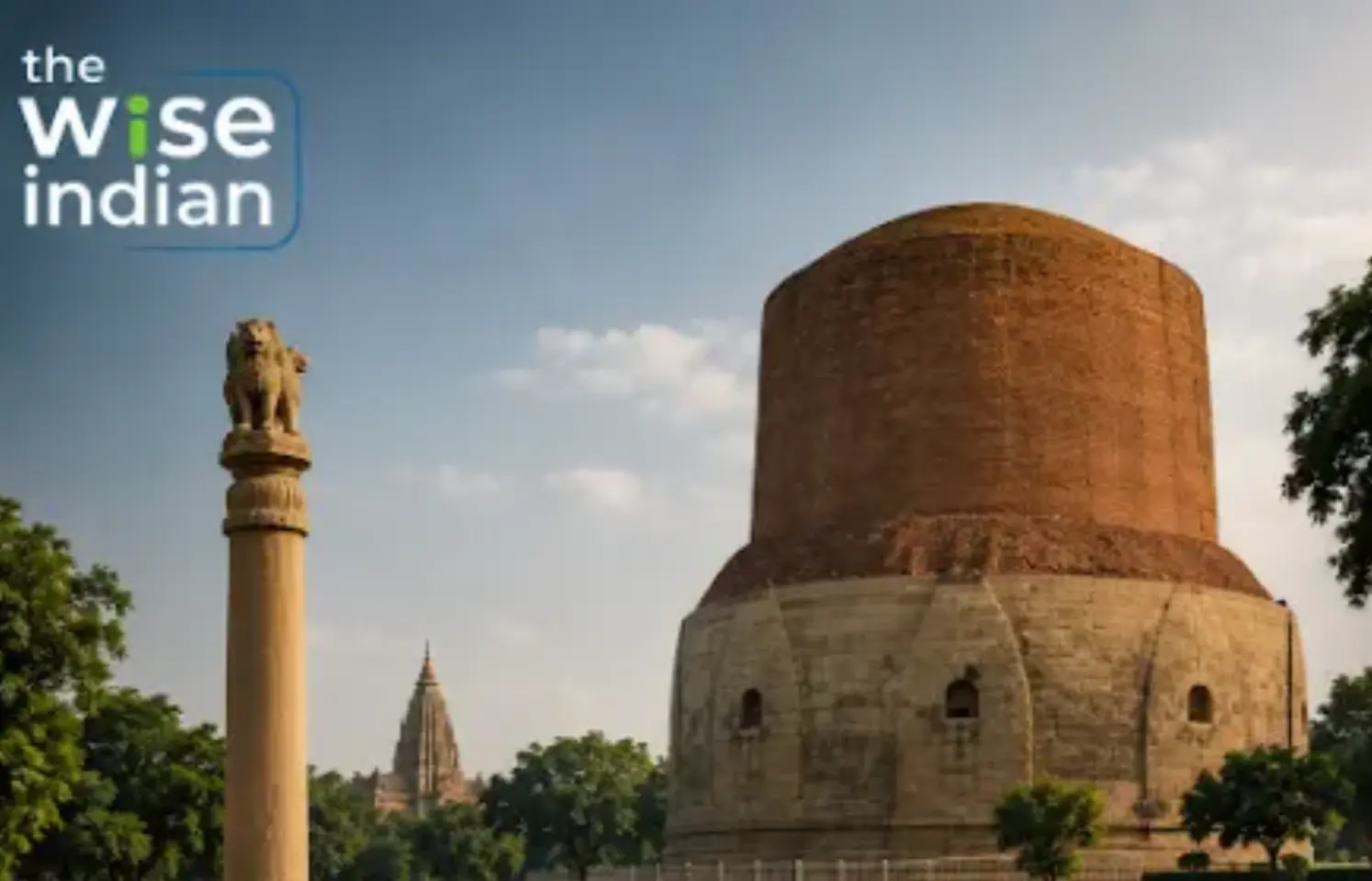
The place where the Buddha is believed to have delivered his first sermon became India’s 45th UNESCO World Heritage Site on 25 July.
Sarnath has been on a list for a very long time. It entered UNESCO’s Tentative List in 1998 and stayed there while forty-odd Indian sites were inscribed ahead of it.
On 25 July 2026, at the 48th session of the World Heritage Committee in Busan, the wait ended.
What Was Inscribed
The Ancient Buddhist Site of Sarnath, in Uttar Pradesh, was added to the World Heritage List as one of 18 properties inscribed at the session.
The site comprises archaeological remains of temples, stupas and monasteries. It is where the Buddha is believed to have delivered his first sermon, the Dhammacakkappavattana Sutta, after attaining enlightenment at Bodh Gaya in the sixth century before the Common Era.
Sarnath is one of Buddhism’s four principal pilgrimage destinations. It is also where the Lion Capital of Ashoka was found, the sculpture adopted as India’s State Emblem.
Where It Sits in India’s List
The inscription takes India to 45 World Heritage Sites, comprising 37 cultural properties, seven natural ones and one mixed site, Khangchendzonga National Park in Sikkim.
India became a State Party to the World Heritage Convention in 1977, and its first sites, among them the Taj Mahal, Agra Fort and the Ajanta and Ellora caves, were inscribed in 1983. The Maratha Military Landscapes were added in 2025 and the Moidams of Assam in 2024.
Why Recognition Takes This Long
A place on the Tentative List is a candidacy, not a queue with a fixed order. Nominations require documentation of outstanding universal value, evidence of protection measures and a management plan, all assessed by advisory bodies before the Committee votes.
Sarnath’s nearly three-decade wait reflects that process rather than any doubt about the site’s significance.
India has been an active participant in that system, hosting and chairing the 46th session of the World Heritage Committee in New Delhi in 2024, the year the Moidams of Assam were inscribed.
The Wise Take
World Heritage status is often read as a tourism announcement, and the visitor numbers usually follow. The more consequential part is the obligation attached to it, because inscription commits a country to protecting and managing the site, and to reporting on its condition. For Sarnath, which sits close to Varanasi and already receives pilgrims from across Asia, that obligation arrives alongside pressure. Managing crowds at a site whose value lies in archaeological remains is a harder problem than attracting them. The recognition is deserved. What it now measures is whether the management plan written to win it is the one that gets followed.