
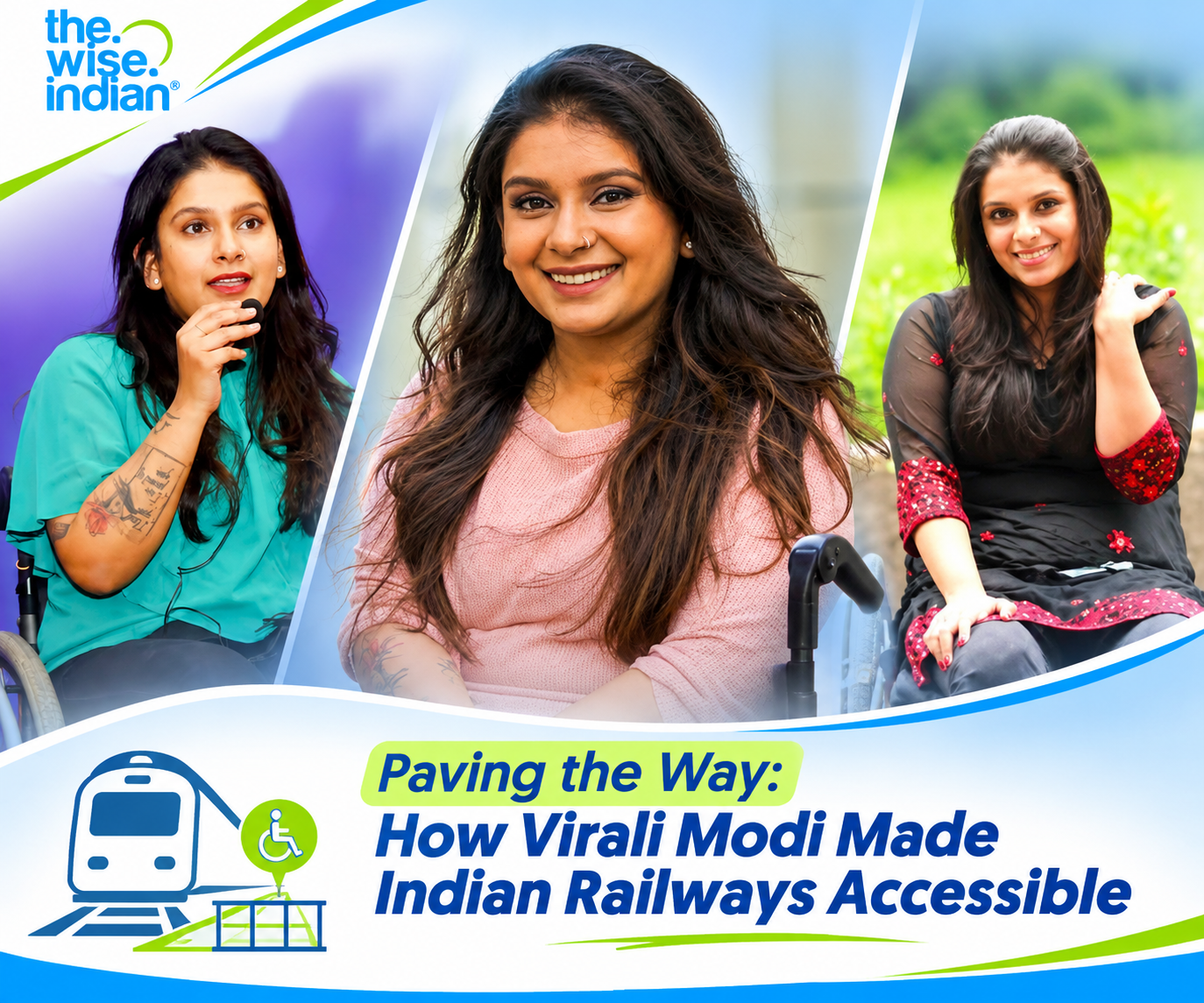
For many people, travelling by train is a routine experience. However, for wheelchair users, even boarding a train can become a serious challenge. Virali Modi experienced these difficulties firsthand and decided to do something about them. She is an Indian disability rights activist, motivational speaker and wheelchair-using model who turned her personal struggles into a campaign for change. Her journey took a difficult turn when she contracted malaria as a teenager.
Serious complications led to respiratory and cardiac arrest, leaving her in a coma for 23 days. She eventually recovered but was left paralysed and needed a wheelchair. Learning to adapt to a different way of life was not easy. However, she gradually rebuilt her confidence and continued pursuing her ambitions. Her experiences also exposed the barriers that people with disabilities face in everyday life. Train journeys became particularly difficult because railway stations lacked suitable ramps and accessible facilities. Instead of accepting these problems as unavoidable, she decided to speak up and demand better treatment for passengers with disabilities.
The Railway Experiences That Inspired Her Campaign
Virali Modi faced some of her most distressing experiences while travelling by train. Without proper ramps or wheelchair-friendly boarding arrangements, she depended on porters to lift her into train compartments. During three separate journeys in 2008, 2011 and 2013, she experienced inappropriate touching and harassment while receiving this assistance. These incidents affected her sense of safety and dignity. However, she remained silent for several years because she feared that people might not believe her. In 2017, the introduction of the Tejas Express brought another accessibility concern to her attention.
The train included facilities for passengers with visual and hearing impairments, but provisions for people with locomotor disabilities remained inadequate. This raised an important question about equal access. Why should some passengers receive accessibility support while others continue to struggle? She decided that the issue needed public attention. Her experiences were not isolated problems but reflected wider difficulties faced by wheelchair users across the country. Therefore, she began approaching authorities and using social media to demand practical improvements. Her campaign focused on making train travel safer, more accessible and more dignified for passengers with physical disabilities.
How #MyTrainToo Brought Public Attention to Railway Accessibility
In 2017, she launched the #MyTrainToo campaign to challenge accessibility barriers within Indian Railways. She initially wrote an open letter to government representatives, including the Prime Minister and the Railway Minister, explaining the difficulties she experienced during train journeys. However, the lack of an effective response encouraged her to take another step. She started an online petition on Change.org, asking railway authorities to introduce disability-friendly facilities.
The campaign gradually attracted public attention and received support from thousands of people. It eventually collected more than six lakh signatures, according to her 2024 interview with The Times of India. Her message also reached government representatives and railway officials. A railway official from Kerala contacted her and showed interest in finding practical solutions. Their discussions focused on introducing affordable improvements rather than waiting for expensive station renovations. This approach helped turn public support into practical action. The campaign demonstrated how personal experiences, when communicated effectively, can bring wider attention to overlooked public issues. It also encouraged conversations about the responsibility of transport authorities to serve passengers with different accessibility needs.
Portable Ramps and Small Wheelchairs Made a Difference
One of the most significant outcomes of the campaign was the introduction of practical accessibility measures at railway stations. Rather than depending entirely on major construction projects, Virali Modi and the railway official explored solutions that stations could implement with limited resources. They introduced portable ramps that could connect platforms to train entrances, making boarding easier for wheelchair users. They also arranged smaller, aisle-sized wheelchairs that could move through narrow train compartments. These facilities addressed two important challenges: getting onto a train and moving inside it. The improvements extended beyond portable equipment in some locations.
At Ernakulam Junction in Kerala, the Divyangjan Project introduced permanent ramps, portable boarding ramps, accessible washrooms and dedicated waiting lounges. An electronic buggy also helped passengers with disabilities and older people reach their trains. Railway staff and porters received sensitisation training to improve the assistance provided to passengers. According to a 2024 Red Bull India profile, the collaboration helped make nine railway stations across India wheelchair-accessible through portable ramps and smaller wheelchairs. These measures showed that meaningful accessibility improvements do not always require complete reconstruction. Even relatively affordable changes can make public transport more inclusive.
Recognition, Advocacy and a Wider Fight for Inclusion
The railway campaign brought national attention to Virali Modi work and opened new opportunities for her advocacy. In 2017, she received the Women’s Achievement Award from the Delhi Commission for Women. The same year, the BBC included her in its prestigious 100 Women list, recognising influential women from around the world. She also became a motivational speaker and shared her experiences through public appearances and TEDx talks. Her message focuses on changing how society views disability.
Rather than treating people with disabilities as objects of sympathy, she encourages others to recognise their independence, ambitions and equal rights. Her work also extends beyond railway stations. Through initiatives such as #RampMyRestaurant, she highlighted the difficulties wheelchair users face when entering restaurants and other public spaces. Additionally, her modelling career challenged conventional ideas about beauty and representation.
She became one of India’s first wheelchair-using models and used the platform to promote greater visibility for people with disabilities. However, she has acknowledged that the progress achieved through her railway campaign has not spread quickly enough. In a 2024 interview, she expressed disappointment that more stations had not followed the improvements. She has also indicated her interest in restarting the campaign and continuing her work for accessibility.
The Wise Take
Virali Modi journey demonstrates that meaningful social change can begin when someone refuses to accept an unfair situation as normal. Her campaign did more than highlight the difficulties faced by wheelchair users. It brought public attention to railway accessibility and helped introduce practical solutions at several stations. Portable ramps, smaller wheelchairs and accessible facilities may appear to be modest improvements, but they can make a significant difference to someone’s independence.
Nevertheless, the work is far from complete. Millions of passengers need public transport that supports safe and dignified travel, regardless of their physical abilities. Accessibility should not depend on individual campaigns or the willingness of a particular railway official. It must become a consistent part of transport planning and public infrastructure. Her story also reminds society that inclusion requires more than sympathy or encouraging words.
It demands action, accountability and equal opportunities. By turning painful experiences into a public movement, she showed how one determined voice can encourage institutions to reconsider their responsibilities. Her fight continues to carry an important message: accessible transport is not a special favour. It is a basic requirement for equal participation in society.
Also read our other article on Anita Dongre: The Indian Fashion Designer Empowering Rural Women Through Sustainable Fashion
Follow The Wise Indian for exclusive stories celebrating everyday heroes who are quietly shaping the culture, sustainability, and future of a better India.