
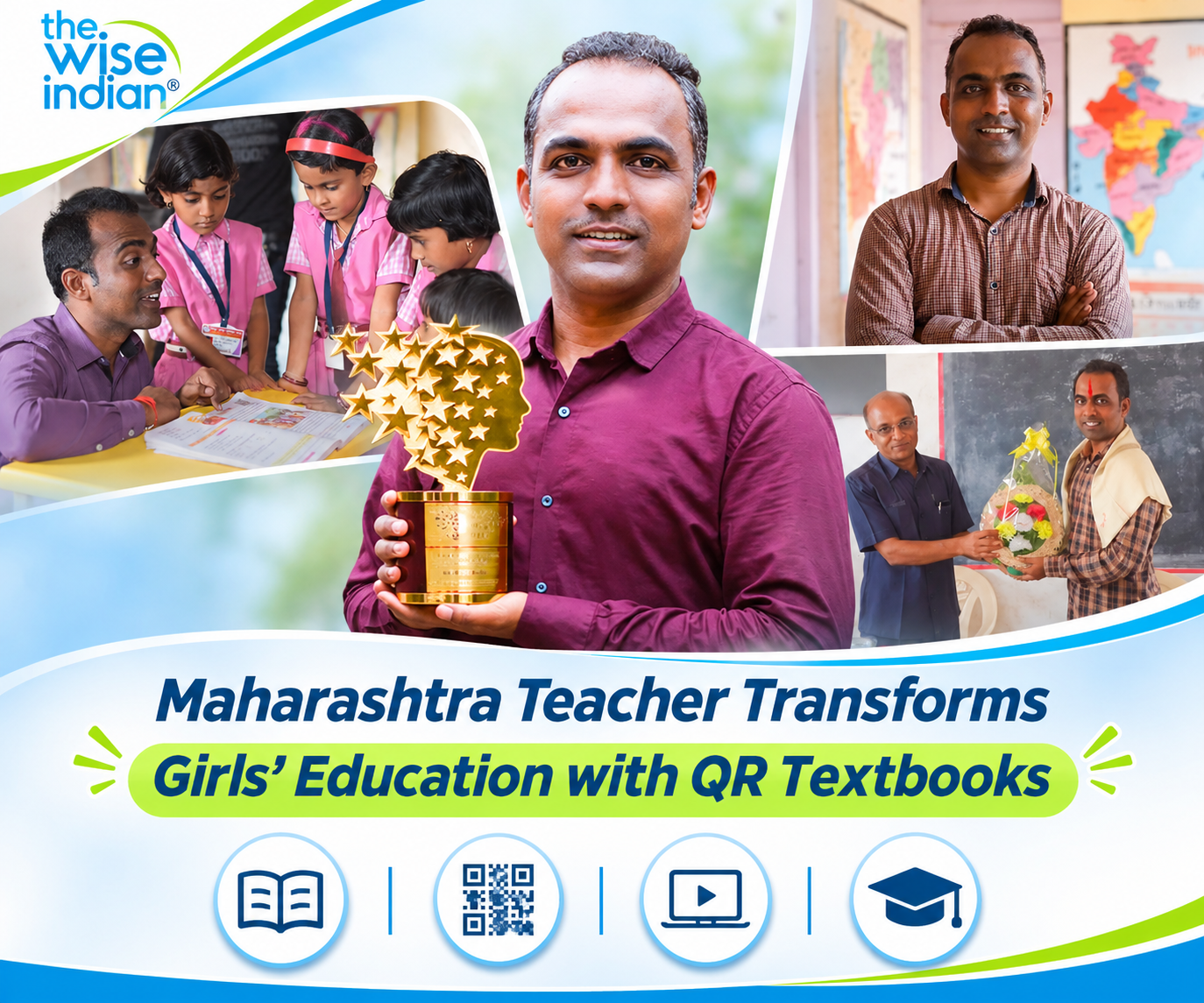
A teacher can change the future of an entire community by making education accessible to every child. In Maharashtra’s Solapur district, one government schoolteacher demonstrated how technology, language and determination could transform rural education. When he arrived at a struggling village school, many girls rarely attended classes, and several children struggled to understand their textbooks.
Instead of accepting these difficulties, he introduced an innovative learning system using QR codes. His approach improved classroom participation, encouraged girls to continue their education and eventually influenced textbook development across India. His remarkable contribution earned him the prestigious Global Teacher Prize in 2020, bringing international recognition to an innovation that began in a small village.
The Struggles Behind a Rural Classroom
In 2009, Ranjitsinh Disale joined the Zilla Parishad Primary School in Paritewadi village, Solapur district, Maharashtra. However, the conditions he encountered were far from encouraging. The school operated from a dilapidated building located between a cattle shed and a storeroom. Many students belonged to tribal communities where girls’ education faced considerable social barriers. School attendance among girls could fall as low as 2%, while teenage marriage remained common. Furthermore, children faced another major obstacle because their textbooks were written in Marathi, whereas Kannada was their primary language. Consequently, many students struggled to understand classroom lessons and participate in learning activities.
Disale recognised that improving education required more than repairing school infrastructure. Children first needed lessons they could understand in their own language. He decided to learn Kannada so that he could communicate directly with his students and understand their difficulties. This decision became the foundation of his educational transformation. Rather than expecting children to adjust to an unfamiliar learning system, he began adapting the teaching materials to their needs. His approach also recognised that girls needed an encouraging environment where they could attend school regularly and pursue their ambitions. The challenges in Paritewadi therefore became the starting point for a wider effort to improve educational access.
How QR-Coded Textbooks Changed Learning
After understanding the language barrier, Disale began translating textbooks into Kannada, the mother tongue of many children in his classroom. However, he wanted students to receive more than translated printed material. He therefore introduced unique Quick Response (QR) codes into textbooks, allowing children to access additional educational resources through smartphones. By scanning these codes, students could explore audio poems, video lessons, stories and assignments connected to their classroom subjects. These resources made lessons more interactive and helped children understand topics through different learning methods.
Importantly, the QR codes also supported learning outside regular classroom hours. Students could revisit explanations, listen to poems and practise activities at their own pace. Disale further improved the materials by studying students’ feedback and adjusting activities according to their learning requirements. He also incorporated tools such as Immersive Reader and Flipgrid to support girls with special educational needs. This approach helped create a more personalised learning experience instead of treating every child as having identical learning requirements. Technology became a practical teaching aid rather than an expensive addition to the classroom. His innovation demonstrated that digital learning did not always require sophisticated infrastructure. Even a simple QR code could connect a printed textbook with useful digital resources and make lessons easier to understand.
A Remarkable Change in Girls’ Education
The changes gradually extended beyond classroom learning and influenced the wider community. According to the Global Teacher Prize organisers, girls’ attendance at the Paritewadi school eventually reached 100%. The village also reported no teenage marriages following the transformation, highlighting the connection between educational opportunities and social progress. The school received the Best School award at the district level, while 85% of its students achieved A grades in their annual examinations. One girl from the village also graduated from university, an achievement that had previously seemed almost impossible within the community.
These developments reflected how consistent educational support could change children’s expectations about their futures. Girls who previously faced barriers to attending school gained greater opportunities to participate in education and continue their studies. Parents also witnessed the benefits of allowing their daughters to learn and develop their abilities. However, the achievement was not simply about introducing digital devices or improving examination results. It involved building trust with families, understanding local challenges and making education relevant to children’s everyday lives. The experience showed that meaningful educational reform must address both classroom difficulties and the social conditions that prevent children from learning.
From One Village to India’s Textbooks
The innovation did not remain limited to a single government school. After successfully introducing QR-coded textbooks in Paritewadi, Disale submitted a proposal to the Maharashtra government and supported a pilot project demonstrating their potential. In 2017, the state announced plans to introduce QR codes in textbooks across Classes 1 to 12. The initiative later attracted national attention, prompting the Ministry of Human Resource Development to ask the National Council of Educational Research and Training (NCERT) to examine the innovation and its wider application. In 2018, the government announced that QR codes would be incorporated into NCERT textbooks.
This development helped expand access to supplementary digital learning resources for students across the country. His contribution also extended to teacher development. He trained more than 16,000 teachers in Maharashtra to help them use technology effectively in classrooms. Additionally, his digital lessons through Microsoft’s Educator Community reached more than 85,000 students across over 1,400 classrooms in 83 countries, according to the Global Teacher Prize profile. These achievements demonstrated how an idea developed in a rural classroom could influence teaching practices far beyond its original location. They also highlighted the importance of supporting teachers who develop practical solutions to educational challenges.
The Wise Take
In December 2020, Ranjitsinh Disale received the Global Teacher Prize, becoming the first Indian to win the prestigious US$1 million award. The Varkey Foundation presented the recognition in collaboration with UNESCO, acknowledging his contribution to girls’ education and the use of technology in learning. However, his response to the award attracted almost as much attention as the achievement itself. He announced that he would share 50% of the prize money equally among the other nine finalists, allowing them to support their own educational initiatives.
He also expressed interest in supporting innovative teachers and promoting peace through his Let’s Cross the Borders project, which connected students from countries experiencing conflict. His journey offers an important lesson about the role of teachers in society. Educational progress does not always begin with large investments, advanced buildings or expensive equipment. Sometimes, it starts when a teacher listens to students, understands their difficulties and finds a practical way to help them learn. By combining local language instruction with accessible technology, one rural classroom became an example of how thoughtful teaching can create opportunities for children and inspire changes across an entire education system.
Also read our other article on Geeta Dharmarajan: The Educator Who Made Storytelling a Powerful Pathway to Learning Across Urban India
Follow The Wise Indian for more stories about the people and ideas quietly reshaping India.