

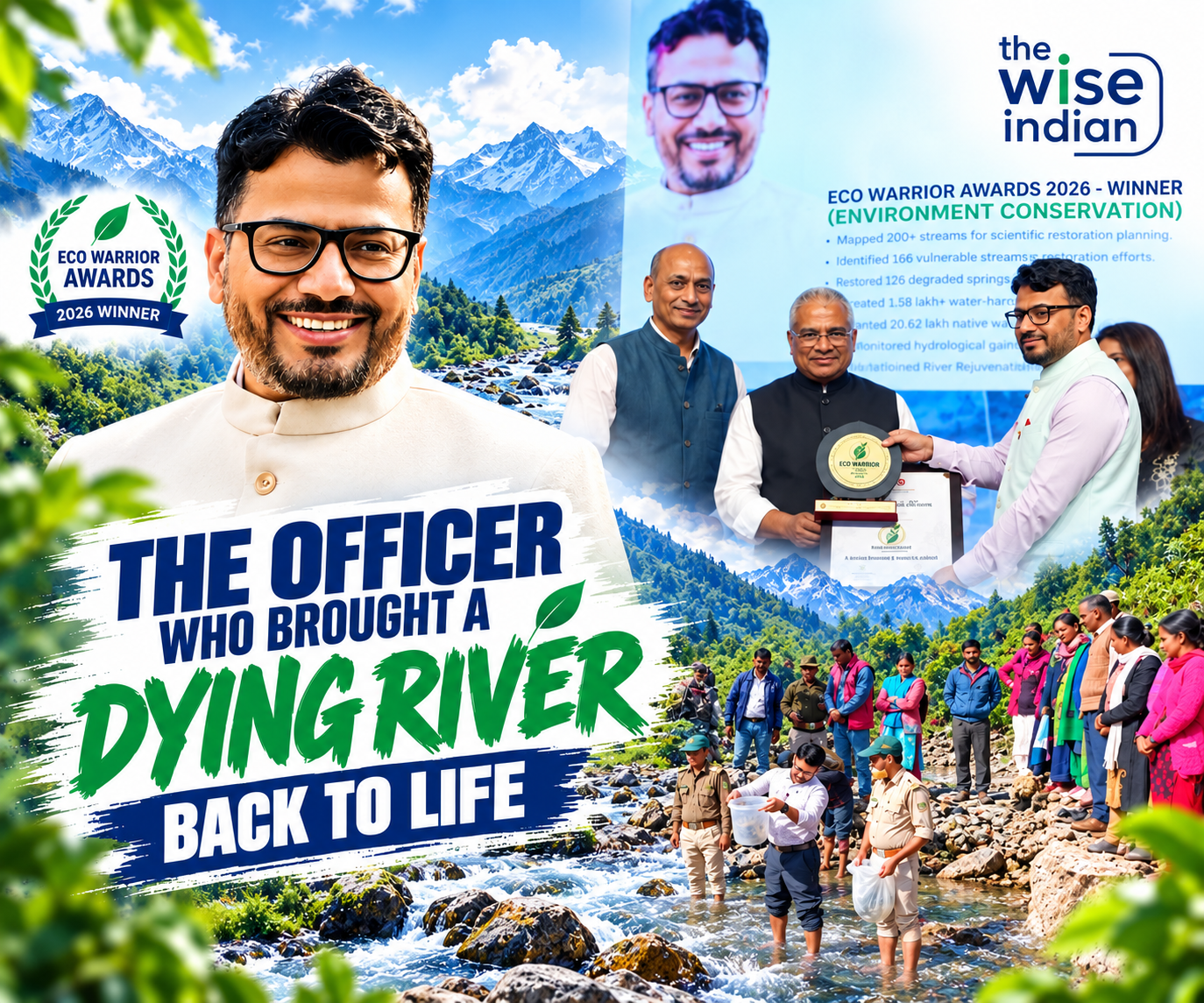
On 29 September 2026, Dharam Singh Meena received the Fourth Eco Warrior Award in New Delhi. The honour recognised eight years of quiet work in the hills of Tehri Garhwal, Uttarakhand. Since 2018, Meena and a network of villagers and women’s groups have worked to bring the Heval river back from the edge of drying up. They restored springs, rebuilt streams and planted trees by the lakh.
Dharam Singh Meena and the Heval River
Dharam Singh Meena is a 2009-batch Indian Forest Service officer of the Uttarakhand cadre. He now serves as Conservator of Forests for the Bhagirathi Circle, based at Muni-ki-Reti. The Heval, also spelled Hewal, flows through Tehri district. Before the project began, 23 villages and the town of Chamba drew drinking and irrigation water from it. More than one lakh people depended on the river. Then the water began to fail. A colleague from Saklana village brought the problem to Meena’s notice. The springs that fed the river were dying, and the stream was shrinking with them. “We started a project in 2018 to rejuvenate dying springs, streams, and the riverbed,” Meena told The New Indian Express.
Why a Dying River Matters in the Hills
In the Himalaya, a river is only as healthy as its springs. When those springs dry up, the river follows, no matter how much rain falls. The problem was not a lack of rain. It was where the rain went. Instead of soaking into the ground and feeding the springs, monsoon water ran off the slopes. That left farmers with flash floods in July and empty channels by December. Meena’s team approached it differently. They used what he described as a “geo-hydrological study based on the spring-shed technique”.
The idea was simple: map where rain recharges the groundwater, then help it soak in. Partners included the National Institute of Hydrology and IIT Roorkee. Villagers joined in, because the problem was theirs too. Gunogi’s pradhan, Kheemanand Kothari, put it plainly: “Sahab hamare liye Bhagirathi ban kar aaye. He has solved the water scarcity problem.”
What the Heval River Project Actually Did
The work was physical, patient, and spread across a whole watershed. Villagers and the forest department built 1,58,572 water-conservation and water-harvesting structures, according to ETV Bharat. These included percolation pits, recharge trenches and vegetative check dams. Each one slows rainwater and lets it sink instead of rushing downhill. They worked across 126 springs, 28 streams and 16 recharge zones. Alongside this, they planted 20.62 lakh native and water-supporting plants.
The choice of trees mattered. Deep-rooted native species hold soil and help water reach the aquifer. Women’s groups played a central part. Save Kumaon’s account of the project describes women running cooperatives, planting saplings. Meena was careful to credit them. “Local people’s cooperation was taken in this project, and work to revive the river was carried out in stages,” he said after the award.
The Numbers Behind the Revival
The results are reported as both structural and measurable. ETV Bharat reported an estimated groundwater recharge capacity of 438.66 million litres. Reporting by The New Indian Express in 2021 recorded a rise in water discharge in 23 springs and about 865.86 lakh litres of groundwater recharge. That same report noted 697 hectares of afforestation. One caution is worth stating. The strongest measured evidence concerns spring discharge and recharge, not the river’s continuous flow.
Independent, long-term figures for the full river have not been published. Still, the direction is clear. Springs that were failing are now monitored with scientific partners, and the water is returning. On 29 September 2026, the Fourth Eco Warrior Awards in New Delhi recognised that work. Union Environment Minister Bhupender Yadav presented the honours. The event was organised by the Indian Forest Service Association and Indian Masterminds. Meena received the award in the Environment Conservation category.
The Wise Take
Dharam Singh Meena did not dam the Heval or bring in heavy machinery. He read the land and helped the rain do its work. Springs, not rivers, are where Himalayan water begins. Fix the springs, and the river takes care of itself. The lesson is quiet but firm. Restoring a landscape is not one grand gesture. It is 1,58,572 small structures, planted one season at a time, by people who live there. Meena gave the project its science and its direction. The villagers gave it their hands.
Also read our other article on Jayshree Vencatesan: The Chennai Wetland Scientist Who Became the First Indian to Win the Ramsar Award for Wetland Wise Use
Follow The Wise Indian for more stories about the officers, scientists and everyday heroes quietly shaping a better India. From a drying river in Tehri to a rescue service on the world’s highest peaks, we bring you the stories that deserve to be told.



