
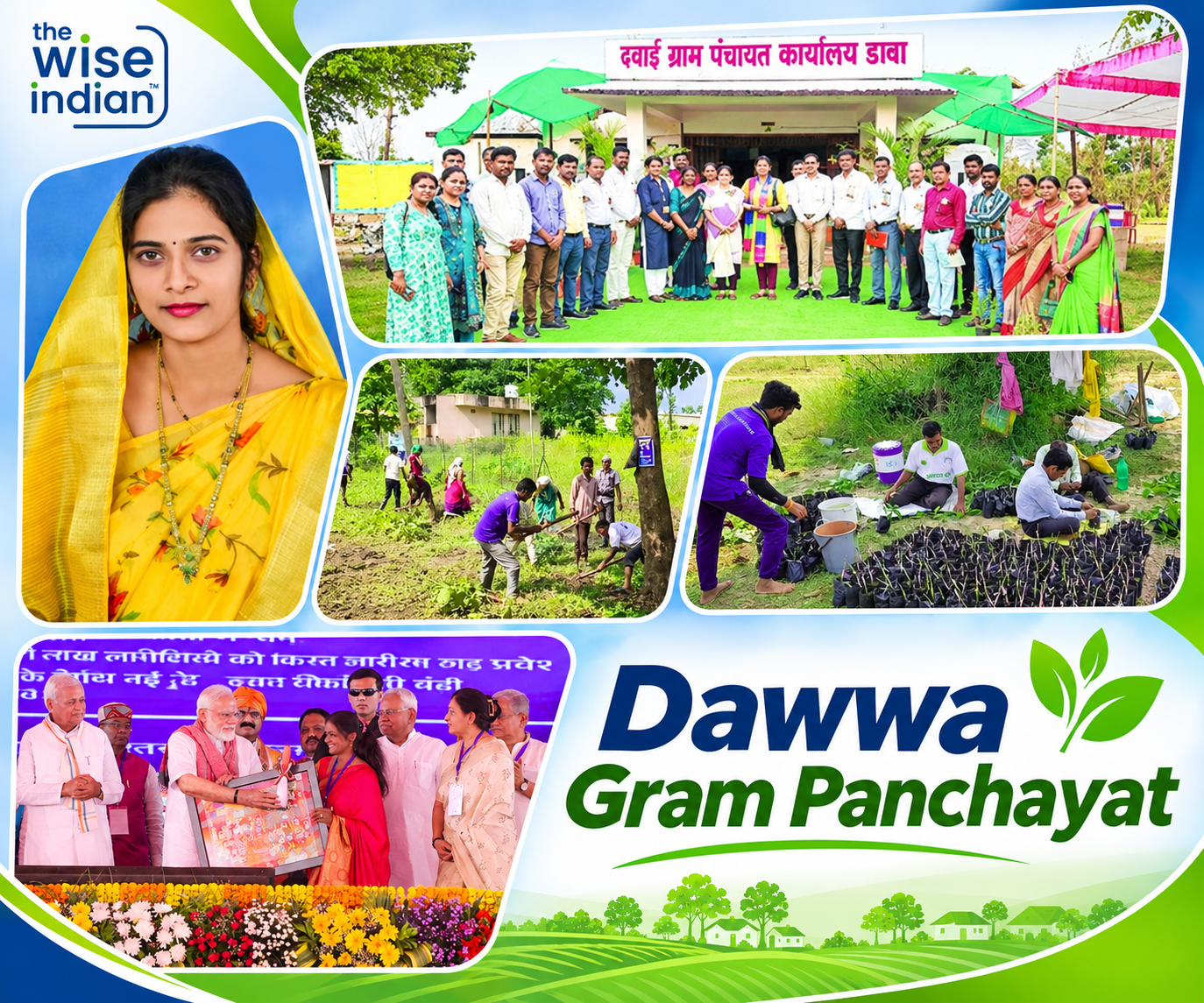
Dawwa Gram Panchayat in Maharashtra’s Gondia district has demonstrated how digital technology can strengthen transparency in rural governance. Under the leadership of Sarpanch Yogeshwari Chatrugan Chaudhary, the village began documenting development projects through photographs containing geographical location details. These geotagged images help connect public works with their actual locations, making project documentation easier to examine. Residents and officials can use this visual evidence to understand where development activities take place and follow their progress.
This approach offers a practical way to strengthen accountability in the use of public funds. Alongside digital documentation, the village has introduced several environmental initiatives involving tree plantation, water conservation, waste management and renewable energy. Its combined efforts received national recognition when it won first place in the Climate Action Special Panchayat Award in 2025. Dawwa’s experience demonstrates how local participation, accessible technology and environmental responsibility can contribute to sustainable rural development.
Geotagged Photographs Bring Transparency to Public Projects
The transparency effort is closely associated with Yogeshwari Chaudhary, who became Sarpanch in December 2023. She says she geotags photographs for every project she documents, using a smartphone or the Bhuvan application. Geotagging adds location information to a photograph, helping viewers identify where the pictured work was carried out. That extra detail matters because a photograph without location context may show progress but cannot easily establish its exact place. When project images carry geographical information, they can provide a more useful record for monitoring and review.
Moreover, the images can help representatives explain development activities during inspections and public discussions. However, this practice does not, by itself, disclose every payment, contract or expenditure entry. Residents still need access to those records to assess how money was spent. Nevertheless, it strengthens the evidence available alongside financial records and project reports. For the Dawwa Gram Panchayat, the method offers a practical way to make public works easier to trace and discuss.
How Digital Tools Support Accountable Village Governance
The approach reflects a wider digital-governance direction in India’s Panchayati Raj system. The Ministry of Panchayati Raj has developed tools that connect planning, work monitoring and asset information. Its mActionSoft application captures GPS-tagged photographs before, during and after eligible works. These records can be viewed through Gram Manchitra, a geographic information platform designed to help Panchayats visualise development activities.
Separately, eGramSwaraj brings planning, progress reporting, accounting and asset management into a common digital system. These national platforms provide useful context for understanding why location-based records matter. The Dawwa Gram Panchayat’s reported use of Bhuvan is a local practice. Meanwhile, government platforms show how geospatial information can support wider monitoring. Together, such tools can make project information easier to organise, review and communicate. Geotagging records an asset’s location. At the same time, financial transparency also requires clear accounts and expenditure information.
Environmental Initiatives Strengthen Dawwa’s Climate Action
The Dawwa Gram Panchayat’s documentation practice sits alongside a larger programme of village-level environmental work. The village has focused on restoring green cover, conserving water, improving sanitation and expanding renewable energy. A plantation drive reportedly added more than 116,000 indigenous trees to common lands. In addition, nurseries and seed-ball activities supported the effort to establish more vegetation. The village also promoted waste segregation and composting, while electric vehicles helped collect waste.
These measures address everyday environmental pressures rather than treating climate action as a single campaign. Water management has included soak pits and recharge structures intended to help rainwater percolate into the ground. Dawwa also created an immersion tank to reduce the pressure that festival-related activities can place on natural water bodies. Furthermore, solar installations in public buildings and other local facilities added a clean-energy dimension. The initiatives show how a Panchayat can combine infrastructure decisions with environmental priorities and public participation. Ultimately, long-term results also depend on maintenance and household participation.
National Recognition Through the Climate Action Special Panchayat Award
The village’s work received national recognition through the National Panchayat Awards 2025. Dawwa S Gram Panchayat in Sadak Arjuni block, Gondia district, Maharashtra, secured first place in the Climate Action Special Panchayat Award. The award carried an incentive of ₹1 crore. Biradahalli in Karnataka placed second, while Mothipur in Bihar placed third. The category recognises Panchayats working towards climate action, net-zero emissions and renewable energy use. Consequently, this recognition placed the Dawwa Gram Panchayat among the Panchayats acknowledged for climate-focused local development.
It also gives the village an opportunity to share its methods with other local bodies. Moreover, it brought wider attention to the work led by Yogeshwari Chaudhary and the community. The award does not mean every environmental challenge has disappeared. Results elsewhere will depend on local conditions, maintenance and community involvement. Instead, it recognises a set of local efforts that can offer practical lessons to other rural institutions.
The Wise Take
Dawwa’s experience offers a useful lesson in how local accountability and environmental planning can reinforce each other. Geotagged photographs make it easier to connect a development activity with its physical location. They can support conversations about progress, help officials review work and give residents clearer information. Yet photographs work best when they complement accessible budgets, expenditure details, completion records and public audits. Transparency depends on the full picture, not images alone.
Similarly, climate action also needs maintained plantations, protected water sources, responsible waste management and cleaner energy. The recognition received by Dawwa highlights the role of Panchayats in turning these priorities into local programmes. Its example shows that digital tools need not be complicated to be useful. When combined with public participation and careful documentation, they can help villages make development more visible, measurable and accountable.
Also read our other article on Satyam Jha Chose Instagram Over a Job After His MTech and Now Teaches Hundreds to Grow Organic Food
Follow The Wise Indian for exclusive stories celebrating everyday heroes who are quietly shaping the culture, sustainability, and future of a better India.