
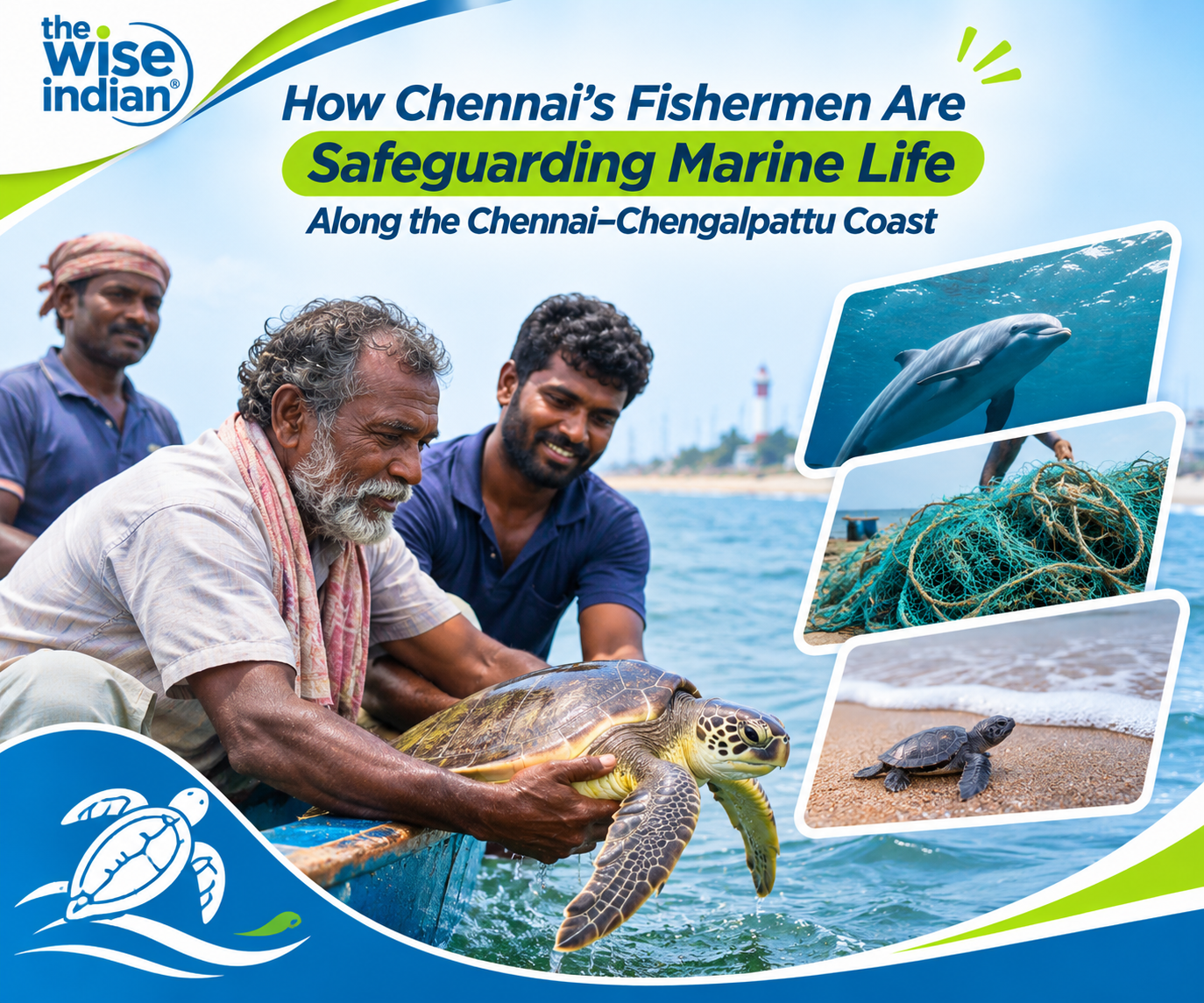
Along the Chennai–Chengalpattu coastline, an inspiring transformation is taking place within fishing communities. Fishermen who once collected turtle eggs or participated in activities that threatened marine wildlife are now helping protect endangered sea turtles. Through training, awareness and livelihood opportunities, TREE Foundation has encouraged local communities to become active conservation partners.
Since 2021, more than 295 fishermen have participated in rescuing and safely releasing marine animals, including sea turtles, dolphins and sharks. Their contribution shows how environmental protection becomes stronger when local communities take responsibility for the ecosystems around them. This initiative offers an important example of how Chennai turtle conservation can bring together wildlife protection and community development.
TREE Foundation Turns Community Participation Into Conservation
Behind this transformation is TREE Foundation, a Chennai-based environmental organisation established in 2002 by Dr. Supraja Dharini. The organisation focuses on protecting marine ecosystems, particularly sea turtles along India’s eastern coastline. It recognised that conservation efforts would remain limited without the involvement of people who depend on the ocean for their livelihoods. Fishermen possess valuable knowledge about coastal waters, marine species and fishing practices.
Therefore, the foundation developed community-based programmes that involve them directly in wildlife protection. Its approach combines environmental education, practical training and alternative livelihood opportunities. Rather than treating fishing communities as outsiders to conservation, TREE Foundation encourages them to become responsible partners. Its wider Sea Turtle Protection Force operates across several states, bringing together local volunteers to protect nesting habitats and marine wildlife.
Former Poachers Find a New Purpose Protecting Sea Turtles
One of the most meaningful aspects of the programme is its involvement of fishermen who previously collected turtle eggs or participated in turtle hunting. Poverty, limited educational opportunities and a lack of awareness contributed to some of these harmful practices. TREE Foundation introduced a different path by training young fishermen to protect the very species they once harmed. They became members of the Sea Turtle Protection Force, commonly known as STPF.
Their responsibilities include patrolling nesting beaches, identifying turtle nests, preventing egg poaching and monitoring hatchlings. The foundation reports that 363 young fishermen who previously engaged in turtle or egg poaching are now part of its protection network across Tamil Nadu, Andhra Pradesh and Odisha. This transformation demonstrates that Chennai turtle conservation is not simply about protecting animals; it can also change attitudes, strengthen communities and create meaningful employment.
Removing Ghost Nets and Rescuing Trapped Marine Animals
Sea turtles face serious dangers even after entering the ocean. One major threat comes from ghost nets, which are fishing nets abandoned, lost or discarded at sea. These nets continue trapping marine animals long after fishermen have stopped using them. Turtles, dolphins, sharks and other species can become entangled, making it difficult for them to swim or reach the surface to breathe. To address this problem, TREE Foundation introduced an incentive-based ghost-net retrieval programme.
Fishermen receive financial support for collecting abandoned nets and bringing them back from the sea. In February 2024, DT Next reported that the foundation had partnered with Royal Enfield to provide Rs 10 per kilogram of retrieved ghost nets. By June 2025, more than 181 tonnes had reportedly been recovered along the Chennai and Chengalpattu coast. The initiative connects marine protection with practical economic benefits for fishing families.
Fishermen Become First Responders for Endangered Wildlife
The impact of this initiative becomes clearer through the fishermen who have participated in actual rescue operations. Their knowledge of fishing equipment and marine conditions allows them to respond when animals become trapped in dangerous nets. In one reported incident, Dharmaseelan from Thazhuthali Kuppam rescued and released nine Olive Ridley turtles and a tiger shark. Another fisherman, Thennarasu from Sathurangapattinam, helped release 21 Olive Ridley turtles caught in fishing nets. Fishermen from Periya Neelankarai Kuppam also rescued a Leatherback turtle trapped in a ghost net.
Earlier, in November 2021, three fishermen named Sreeni, Prabhu and Vela spent nearly two hours freeing a full-grown Leatherback turtle caught in a net offshore from Kovalam. Such incidents show how Chennai turtle conservation depends on people who can recognise danger and act quickly. Their efforts also encourage other fishing communities to report stranded animals and participate in rescue activities.
The Wise Take
The transformation of fishermen into marine wildlife protectors offers an important lesson for conservation programmes across India. Protecting endangered species requires more than regulations and awareness campaigns. It also requires the participation of people whose everyday lives are connected to natural ecosystems. TREE Foundation’s work demonstrates how training, alternative livelihoods and community involvement can turn harmful practices into positive environmental action.
However, these efforts must continue alongside responsible fishing practices, stronger enforcement and protection of coastal habitats. Olive Ridley turtles and other marine species still face threats from fishing equipment, pollution and human disturbance. The fishermen working along the Chennai–Chengalpattu coast are showing that meaningful change is possible when communities receive the opportunity to lead it. Their journey reminds us that those who understand the ocean best can also become its strongest protectors.
Also read our other article on Silent Diabetes: Why Getting Tested Early Matters for Preventing Serious Complications and Protecting Your Health
Follow The Wise Indian for more stories about the people and ideas quietly reshaping India.