
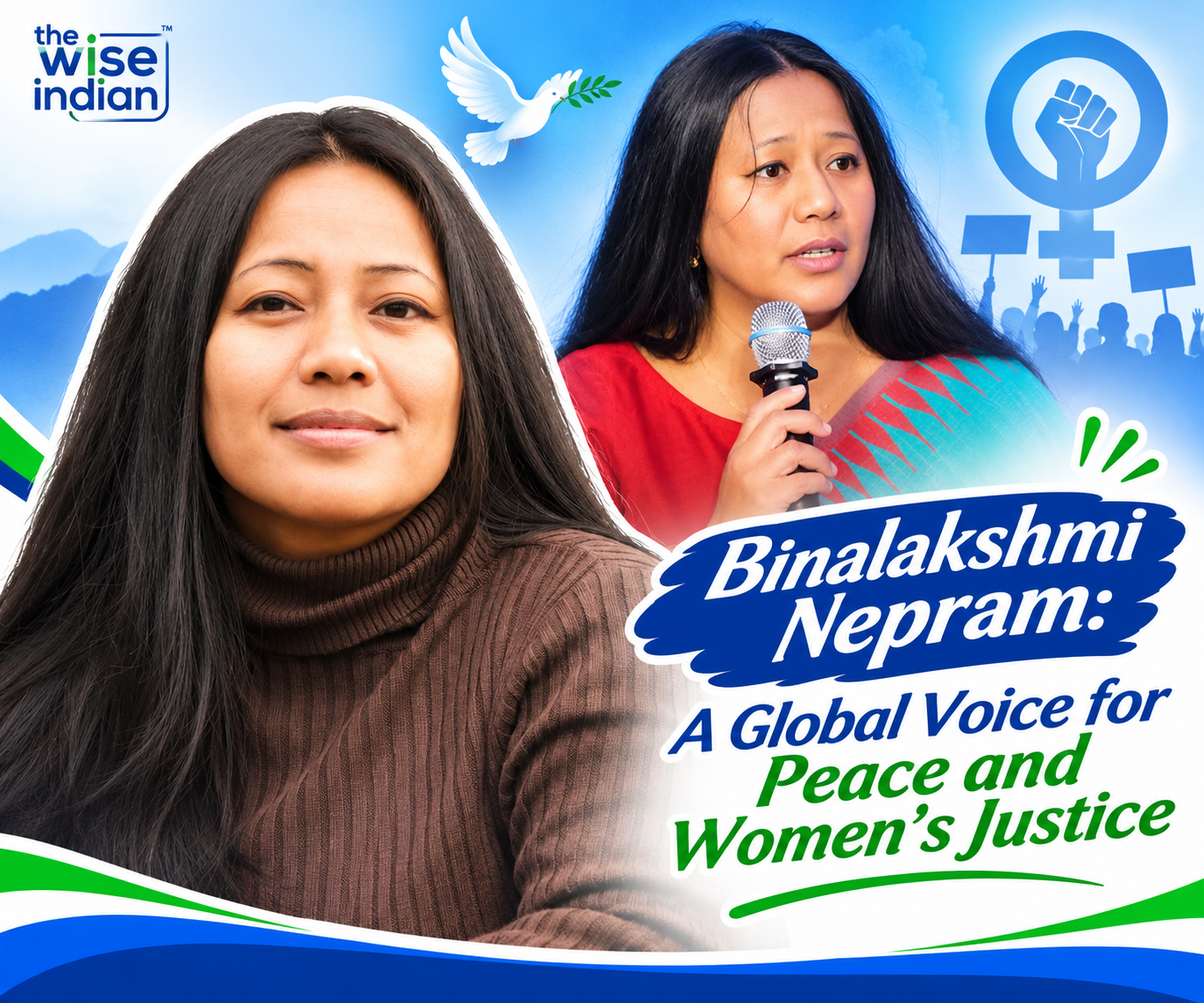
Binalakshmi Nepram is an Indian human rights activist, author and peacebuilder from Manipur who has dedicated her life to supporting women affected by armed violence. Through the Manipur Women Gun Survivors Network (MWGSN), she helps women who have lost family members to gun violence rebuild their lives through sustainable livelihoods and financial independence.
Her work goes beyond providing temporary assistance. It gives survivors opportunities to become entrepreneurs, understand their rights and participate in peacebuilding. By connecting women’s economic empowerment with disarmament, she has developed an approach that addresses both the immediate and long-term consequences of armed conflict.
A Childhood That Shaped Her Mission
Born in 1974 in Manipur, Binalakshmi grew up in an environment affected by armed conflict, political unrest and insecurity. Violence, curfews and civilian casualties were familiar parts of her childhood. However, she gradually understood that such conditions should never be considered normal. Two experiences particularly influenced her commitment to human rights. She remembered the aftermath of the 1984 Heirangoithong massacre, where civilians were killed. Later, in 1997, she lost her 13-year-old niece in a bomb blast. These experiences strengthened her determination to understand why violence continued and how communities could prevent it.
She pursued higher education in History and later studied International Relations, including postgraduate research. During her academic journey, she became interested in the circulation of small arms and their connection with armed conflict. She researched how weapons and narcotics contributed to instability across Northeast India. Her investigation involved understanding the experiences of communities living with violence. This research eventually became the foundation of her book, South Asia’s Fractured Frontier: Armed Conflict, Narcotics and Small Arms Proliferation in India’s Northeast. Published in the early 2000s, the book examined the relationship between weapons, organised violence and regional insecurity.
From Research to Women’s Empowerment
In 2004, Binalakshmi co-founded the Control Arms Foundation of India (CAFI). The organisation focused on conventional disarmament and raising awareness about the dangers of uncontrolled weapons. It aimed to encourage stronger action against the circulation of illegal arms. Her work also brought her into international discussions about disarmament and human security. However, she realised that policy discussions alone could not address the everyday struggles of families affected by gun violence. Women who suddenly lost their husbands or other earning family members needed practical assistance. They required opportunities to support their children, earn money and regain control over their lives.
A defining experience came on December 24, 2004, when she witnessed the aftermath of the killing of 27-year-old Buddhi Moirangthem in Wabgai Lamkhai village, Manipur. Armed men had taken him from his car-battery workshop and shot him dead. His wife, Rebika Akham, was left to face an uncertain future without her husband’s income. Binalakshmi understood that sympathy alone would not solve her problems. She helped arrange Rs. 4,500 to purchase a sewing machine for Rebika. The machine enabled her to stitch clothes for villagers and earn an income. This simple intervention became the starting point of a much larger movement.
Building the Manipur Women Gun Survivors Network
The experience inspired Binalakshmi to establish the Manipur Women Gun Survivors Network, formally launched on April 26, 2007, in Imphal. The organisation supports women whose families have been affected by gun violence, including those who have lost husbands, fathers and sons. Its approach recognises that survivors need more than emergency relief. They require long-term opportunities to rebuild their financial security and participate in their communities. The network therefore focuses on sustainable livelihoods, economic independence and women’s leadership.
One of its important initiatives involves helping women establish small businesses and income-generating activities. Survivors receive assistance with opening bank accounts, accessing interest-free loans and developing livelihood opportunities. These measures help women manage their earnings and plan for their families’ futures. Some women can pursue tailoring and other small businesses using the resources available to them. The organisation also connects survivors with human rights education and information about legal remedies. Consequently, women gain greater awareness of their rights and available support systems.
Another important aspect is its focus on women’s participation in disarmament. The network does not treat survivors merely as recipients of assistance. Instead, it encourages them to share their experiences and contribute to discussions about security and violence prevention. Their voices can help policymakers understand the real consequences of armed conflict. This approach connects individual recovery with wider community change. By strengthening women’s financial position and leadership, the organisation demonstrates how survivors can become active contributors to peacebuilding.
Recognition and a Wider Peacebuilding Mission
The work of Binalakshmi Nepram has received recognition from national and international organisations. In 2010, she received the prestigious Sean MacBride Peace Prize from the International Peace Bureau for her efforts towards disarmament and reducing armed violence. In 2011, she received the CNN-IBN Real Heroes Award. The Manipur Women Gun Survivors Network also received the Indian of the Year Award in the special achievement category that year. These recognitions brought greater attention to the challenges faced by women in conflict-affected communities.
Her achievements continued to receive international attention. She received the Women Have Wings Award in 2016 and the Anna Politkovskaya Award in 2018. In 2013, Action on Armed Violence included her among the influential people working to reduce armed violence worldwide. She has also represented Indian civil society in international discussions concerning women, peace and disarmament. Through her writing, research and advocacy, she continues to highlight the importance of including women in decisions about security and conflict resolution. Her published works include Meckley: A Historical Fiction on Manipur and Where Are Our Women in Decision Making?
The Wise Take
Binalakshmi Nepram’s journey demonstrates how one practical act of support can inspire a larger social movement. Helping Rebika purchase a sewing machine eventually contributed to an organisation that supports women rebuilding their lives after armed violence. Her work reminds us that empowerment requires more than sympathy. Women need financial opportunities, access to justice and a meaningful voice in decisions affecting their communities. By combining economic independence with peacebuilding, she has helped transform survivors into agents of change. Her story shows that rebuilding lives is also an essential part of building a more peaceful society.
Also read our other article on Anita Devi, Bihar’s Mushroom Lady, Built a Farmers’ Company That Opened Livelihood Opportunities for Rural Women
Follow The Wise Indian for more inspiring stories.