
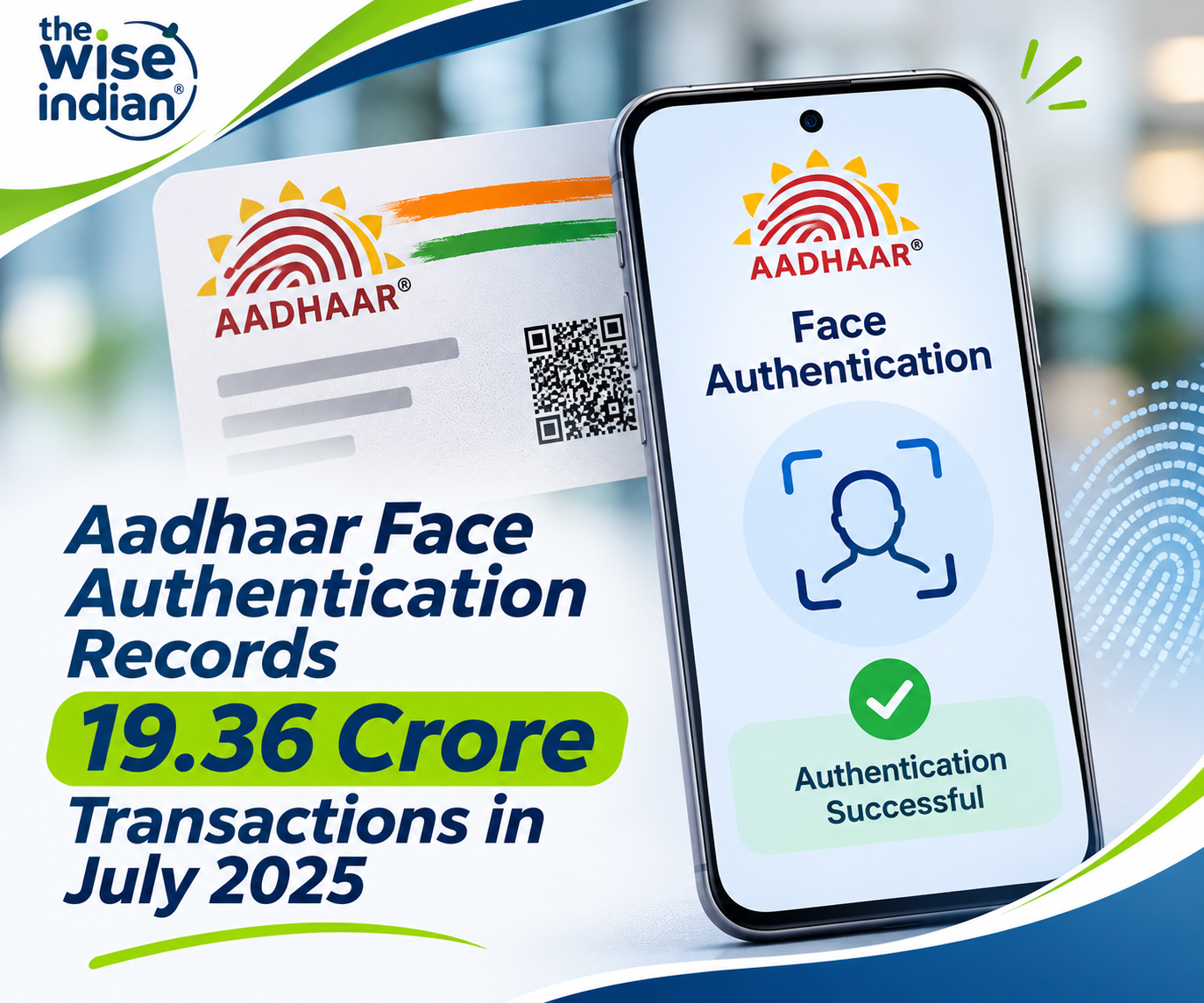
India’s digital identity infrastructure is witnessing a significant transformation through the increasing use of biometric technology. Aadhaar face authentication recorded an impressive 19.36 crore transactions in July 2025, compared with 5.77 crore during July 2024. This represents a remarkable year-on-year increase of approximately 236%.
The milestone highlights the growing acceptance of facial verification across government services, educational institutions, financial organisations and recruitment agencies. Announced by the Ministry of Electronics and Information Technology (MeitY) on August 8, 2025, the achievement also reflects India’s broader progress towards accessible digital service delivery. As more organisations integrate facial verification, this technology is becoming an important component of everyday identity management.
Understanding the Technology Behind Facial Verification
Aadhaar face authentication is a biometric facility developed by the Unique Identification Authority of India (UIDAI). It enables individuals to verify their identity through a live facial image instead of relying exclusively on fingerprints or iris scans. The system uses artificial intelligence to compare the captured facial image with the photograph associated with an individual’s Aadhaar record. This process helps establish whether the person requesting authentication matches the registered identity. One important advantage is its contactless nature, which removes the need for physical fingerprint scanners during verification.
The facility can also provide an alternative for people whose fingerprints are difficult to capture because of age, occupational conditions or worn fingerprint patterns. It operates on both Android and iOS devices, allowing authorised organisations to integrate facial verification into their existing digital services. This flexibility makes biometric identification more accessible in situations where conventional authentication methods may present difficulties. However, successful verification still depends on suitable devices, reliable connectivity and accurate image capture. The growing availability of this facility demonstrates how artificial intelligence can support identity verification in practical public-service applications.
Transactions Reach an Unprecedented Monthly High
The July 2025 performance marked a significant milestone for Aadhaar face authentication. According to UIDAI data released through the government announcement, the system completed 19.36 crore transactions during the month. The corresponding figure for July 2024 was only 5.77 crore. This represents an increase of approximately 236%, showing how rapidly the technology expanded within one year. The monthly growth was also notable, as July transactions increased by 22% compared with June 2025. The system had already recorded 15.87 crore transactions in June, demonstrating a continuing upward trend.
Another important achievement occurred on July 1, 2025, when more than 1.22 crore authentication transactions were completed in a single day. This surpassed the previous daily record of over 1.07 crore transactions, registered on March 1, 2025. These figures demonstrate increasing activity across different services using facial verification. However, transaction numbers should not be confused with the number of individual Aadhaar holders. One person may complete multiple authentication transactions while accessing different services. Therefore, the figures measure usage activity rather than the total number of unique beneficiaries. The increase nevertheless provides an important indication of the technology’s expanding role in India’s digital ecosystem.
Supporting Welfare Delivery and Essential Services
A major application of Aadhaar face authentication is its integration into government welfare programmes. More than 150 entities, including government departments, financial institutions, oil marketing companies and telecommunications service providers, were using the facility according to the August 2025 announcement. One significant example is the National Social Assistance Programme (NSAP), which provides social security assistance to eligible elderly people, widows and persons with disabilities. The facial verification facility was integrated into the programme to support contactless identity authentication for beneficiaries accessing eligible assistance.
Since its introduction in July 2025, approximately 13.66 lakh beneficiaries had authenticated themselves through this method, according to the government announcement. This alternative can be particularly useful for individuals who experience difficulties with fingerprint-based verification. Nevertheless, accessible alternatives remain important because facial authentication may not work equally well in every situation. Welfare delivery systems must ensure that technical difficulties do not prevent eligible individuals from receiving their benefits. The wider adoption of biometric options therefore needs to go hand in hand with reliable assistance and inclusive service arrangements. Such integration illustrates how digital identity infrastructure can support the delivery of public services while reducing dependence on physical verification procedures.
Expanding Adoption Across Education and Recruitment
The technology is also finding applications beyond welfare distribution. All 850 medical colleges and institutions under the National Medical Commission (NMC) had adopted Aadhaar face authentication for attendance marking, according to the August 2025 announcement. This development introduces facial verification into institutional attendance management and provides another application for biometric technology. Central recruitment organisations have also incorporated the facility into their processes. The Staff Selection Commission (SSC) and Railway Recruitment Board (RRB) are among the organisations using it for candidate registration and verification.
These applications demonstrate how digital identity tools can support different administrative requirements. Educational institutions can use biometric verification for attendance, while recruitment agencies can use it to establish candidate identities during examination-related processes. The wider adoption also reflects the growing interest in reducing manual identity checks and improving administrative efficiency. Meanwhile, UIDAI recorded 221 crore Aadhaar authentication transactions across all authentication methods in July 2025, representing 3.8% growth compared with July 2024. Aadhaar-based electronic Know Your Customer (e-KYC) services also recorded 39.56 crore transactions during the month. These figures illustrate the broader use of digital identity verification across India’s service economy.
The Wise Take
The achievement of 19.36 crore transactions in July 2025 marks an important milestone in India’s digital identity development. The increase from 5.77 crore transactions in the previous year demonstrates the expanding use of facial verification across welfare programmes, educational institutions and recruitment systems. More importantly, the technology offers an additional authentication option for people who may encounter difficulties with conventional biometric methods. However, growing adoption must also encourage responsible data handling, strong security safeguards and accessible alternatives.
Facial verification should complement inclusive service delivery rather than become an obstacle for individuals experiencing technical difficulties. As India continues expanding its digital infrastructure, the experience of Aadhaar face authentication highlights the potential of artificial intelligence to support public administration and everyday services. Its long-term success will depend not only on transaction growth but also on reliability, privacy protection and the ability to serve people from different backgrounds and circumstances.
Also read our other article on How to Align Mutual Fund Investments With Financial Goals: Simple Tips and Easy Steps Beginner Can Follow
Follow The Wise Indian for clear, unbiased, and actionable guides that make personal finance simple.