

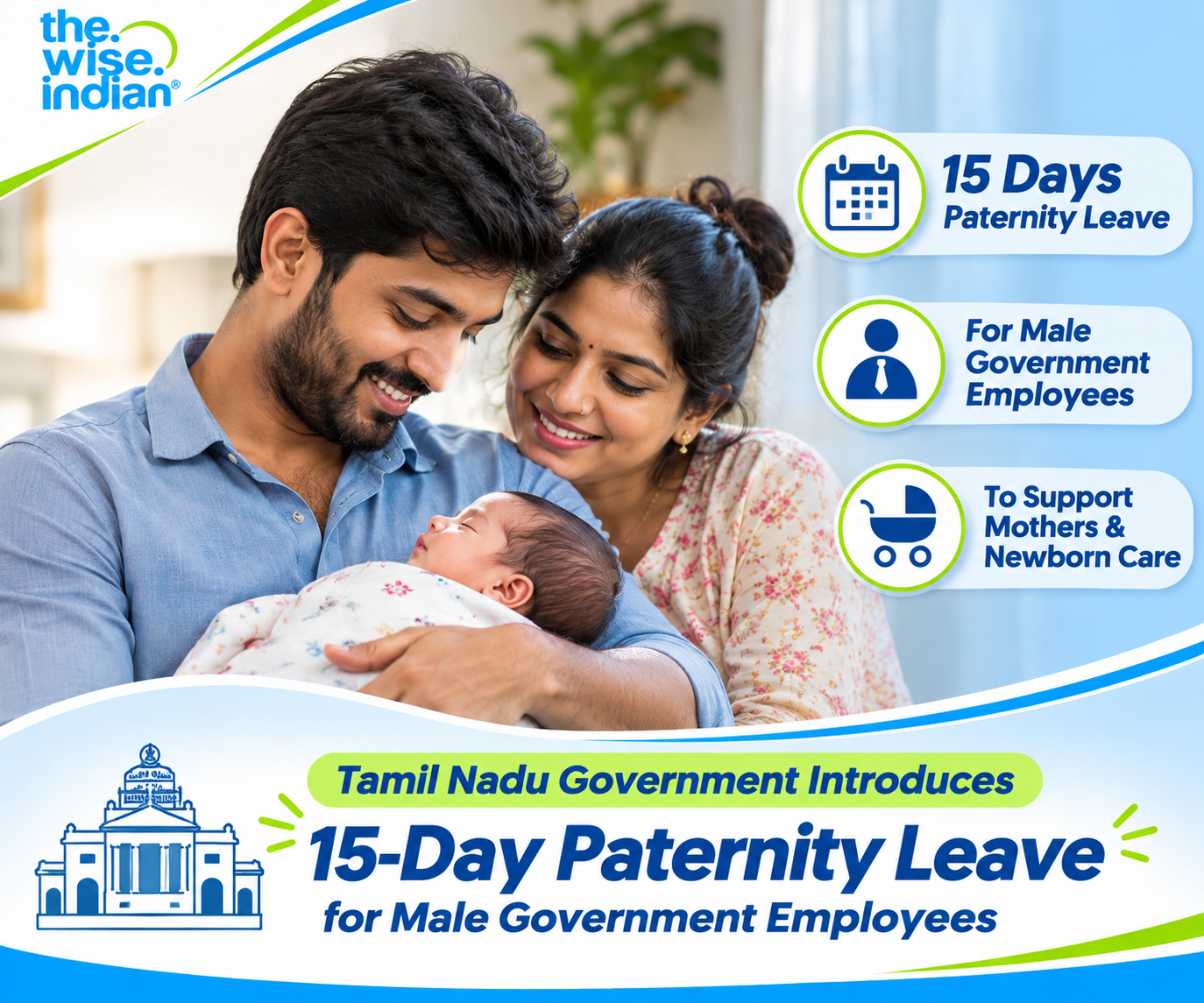
The Tamil Nadu government has introduced a new benefit for married male government employees by granting them 15 days of paternity leave. Chief Minister C. Joseph Vijay announced the decision on November 26, 2026, marking the first time the state has formally extended this benefit to male government employees.
Under the new provision, eligible fathers can take time off either during the 15 days before the expected date of childbirth or within six months after the baby’s birth. The decision follows requests from government employees who sought dedicated leave to support their families during childbirth. Moreover, the announcement recognises the importance of fathers in newborn care and acknowledges that parenting responsibilities should be shared between both parents.
What the New Government Order Provides
The new provision grants 15 days of paternity leave to married male employees working in the Tamil Nadu government. According to the official announcement, employees can use the leave during the 15 days preceding the expected date of delivery or within six months following the child’s birth. This arrangement gives fathers two opportunities to support their families, depending on their circumstances and requirements. For instance, an employee may choose to remain available shortly before childbirth to assist his spouse with hospital visits and other preparations.
Alternatively, he can use the leave after delivery to help care for the newborn and support the mother’s recovery. The government has introduced this facility following representations from male employees seeking dedicated leave for childbirth-related responsibilities. The announcement also makes clear that the benefit applies to married male government employees rather than automatically covering every working father in the state. Although the government has announced the entitlement, employees should follow their respective departments’ instructions for the application process and approval.
Why Tamil Nadu Introduced the New Benefit
The government recognised that childbirth brings significant physical and emotional changes for both mothers and families. During this period, mothers may require assistance with medical appointments, hospital visits, recovery and newborn care. Fathers can provide practical support while helping families manage the responsibilities that come with welcoming a child. The government also highlighted the importance of a father’s physical and emotional involvement during the period surrounding childbirth. Requests from male government employees played an important role in the decision.
Their representations raised the need for a formal arrangement that would allow fathers to take time away from their professional duties during this important family event. By accepting these requests, the state has acknowledged that childcare requires the involvement of both parents. Furthermore, the decision reflects a broader understanding of family welfare, where workplace policies can help employees manage professional responsibilities without overlooking important personal commitments. The announcement therefore addresses an employee demand while recognising the contribution fathers make to early childcare.
How the Provision Complements Existing Maternity Benefits
Tamil Nadu already provides 365 days of maternity leave to eligible women government employees. This extended provision allows mothers to take time away from work for childbirth, recovery and childcare. The introduction of a separate benefit for fathers adds another dimension to the state’s existing employee welfare measures. While maternity leave addresses the mother’s needs during pregnancy and after delivery, the newly announced provision gives fathers an opportunity to participate more actively in the same period.
Both arrangements recognise that the arrival of a child requires time, attention and support from families. However, the two benefits serve different purposes and have different durations. The state’s 365-day maternity entitlement should not be confused with the 15-day provision available to married male employees. Importantly, the new arrangement does not replace maternity benefits or reduce the existing entitlement for women. Instead, it creates an additional opportunity for fathers to assist their spouses and take part in caring for their newborn children. This approach places greater emphasis on shared family responsibilities within the government workforce.
How Fathers Can Use the 15-Day Leave
The new arrangement offers flexibility through two permitted periods. Married male government employees can take their 15 days during the 15 days before the expected delivery date or within six months after the child’s birth. The first option may help fathers accompany their spouses to medical appointments, prepare for hospital admission and organise essential arrangements before delivery. The second option allows them to remain at home after childbirth and participate in the baby’s early care. Fathers can also assist mothers with daily responsibilities while they recover from delivery.
This support may include helping with household tasks, attending to the newborn and managing other family requirements. However, the announcement does not provide a detailed breakdown of how employees should divide the 15 days or whether they can take them in separate periods. It also does not explain the complete documentation requirements or departmental approval procedures. Employees should therefore check the applicable instructions issued by their departments before planning their leave. The provision gives eligible fathers a defined opportunity to support their families without relying entirely on other leave arrangements.
The Policy in the Wider Indian Context
Tamil Nadu is not the first Indian state to introduce a dedicated provision for fathers working in government departments. Several other states have already recognised the importance of supporting employees during childbirth. Odisha introduced 15 days of paternity leave in 2011, while West Bengal provides 30 days of paternity-cum-childcare leave to eligible male employees. Kerala offers up to 10 days, and Madhya Pradesh provides 15 days under its revised civil service leave rules, effective from January 2026.
Assam also introduced 14 days of leave for eligible male government employees in September 2026. These arrangements differ in their duration, eligibility conditions and permitted periods of use. The Union government has also provided 15 days of paternity leave to eligible central government employees since 1999. Tamil Nadu’s announcement therefore brings the state government workforce into line with an existing form of employee support available in parts of India. More importantly, the decision adds to the wider discussion about workplace benefits, family welfare and the role of fathers in early childcare.
Also read our other article on Flipkart CEO Kalyan Krishnamurthy Steps Down After 11 Years as Walmart-Owned Company Prepares for Potential IPO in India
Follow The Wise Indian for regular updates on stories that shape India’s strategic future and global standing. Stay connected with us for sharp analysis, untold perspectives, and a closer look at the shifting legal landscapes, civic rights, and institutional frameworks defining our democratic fabric.