
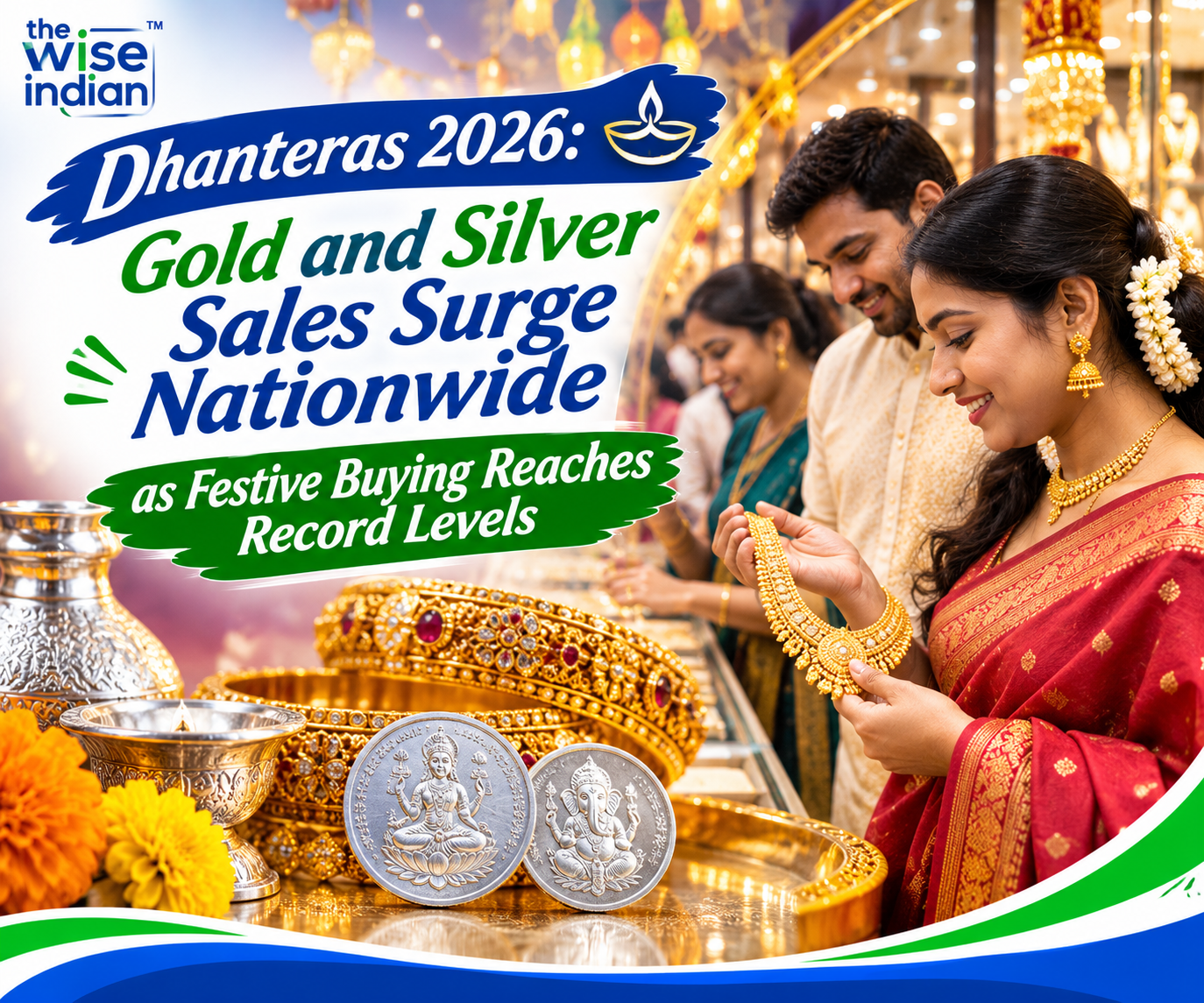
India is celebrating Dhanteras on Friday, November 6, 2026, with festive shopping creating remarkable activity across jewellery markets, retail stores and commercial centres. Gold and silver purchases are attracting buyers despite elevated precious metal prices, while traditional household shopping is adding momentum to the celebrations.
According to the Confederation of All India Traders (CAIT), nationwide business generated during the festival has reached an estimated ₹1.25 lakh crore. Gold and silver purchases alone account for approximately ₹66,000 crore, according to industry estimates. As families observe auspicious buying traditions, Dhanteras 2026 is highlighting the strength of India’s festive retail economy. The celebration also brings renewed attention to wealth, health, prosperity and new beginnings.
Dhanteras 2026: The Festival of Wealth and New Beginnings
Dhanteras, also known as Dhantrayodashi, marks the beginning of the five-day Diwali festival. It falls on the thirteenth lunar day, called Trayodashi Tithi, during Krishna Paksha in the Hindu month of Kartik. The word combines Dhan, meaning wealth, and Teras, referring to the thirteenth lunar day. Traditionally, families celebrate this occasion by purchasing precious metals, decorating their homes and performing religious ceremonies. Goddess Lakshmi, the deity of wealth and prosperity, receives special prayers alongside Lord Kubera, the guardian of riches.
Devotees also worship Lord Dhanvantari, who represents health and healing in Hindu tradition. According to Hindu mythology, Dhanvantari emerged during the Samudra Manthan carrying a pot of Amrit, the nectar of immortality. This story connects the festival with both material prosperity and physical well-being. Consequently, the occasion encourages families to welcome abundance while appreciating the importance of good health.
Gold and Silver Sales Surge Across India
Gold and silver remain central to the country’s Dhanteras shopping tradition. Jewellery stores, bullion dealers and retail markets attract customers looking for auspicious purchases. Families commonly purchase gold ornaments, silver coins, bars, utensils and decorative articles. However, this year’s celebrations have attracted particular attention because of the scale of nationwide trading activity. According to a November 6 report by the Indian news agency IANS, CAIT estimated that Dhanteras business reached approximately ₹1.25 lakh crore across India. The figure represents activity across several retail categories, rather than precious metals alone.
Meanwhile, the All India Jewellers and Goldsmith Federation (AIJGF) estimated gold and silver jewellery and coin sales at more than ₹66,000 crore. Jewellery markets, automobile showrooms, electronics outlets and neighbourhood businesses also benefited from festive spending. These figures underline the importance of Dhanteras as one of India’s major annual retail occasions. The strong market activity reflects the continued popularity of traditional purchases. Gold jewellery remains an important choice for families, particularly those purchasing ornaments for weddings and future celebrations.
Silver coins, bars and utensils offer additional options for shoppers seeking precious-metal purchases. Decorative articles featuring elephants, fish and tortoises are also attracting attention. These objects traditionally represent auspiciousness and prosperity in many households. Furthermore, consumers are purchasing kitchenware, home appliances, smartphones and vehicles during the festive period. Such spending extends the celebration beyond jewellery counters. The combination of traditional shopping and modern retail purchases is supporting businesses across different market segments. It also provides opportunities for local traders, manufacturers, artisans and small retailers during the festive season.
Rising Gold Prices Change Festive Shopping Preferences
Despite strong purchasing activity, elevated precious metal prices have influenced consumer decisions. Gold prices have remained significantly higher than their levels during the previous year’s festive season. The Economic Times reported on November 6 that 24-karat gold was trading at approximately ₹1,41,840 per 10 grams at the time of its report. This represented an increase of around 20% compared with the corresponding period last year. Higher prices have encouraged shoppers to reconsider the quantity and type of jewellery they purchase. Instead of choosing heavier ornaments, many consumers are exploring lightweight designs and smaller-ticket purchases.
Jewellers have reported interest in 14-karat and 18-karat gold jewellery, which offers more affordable purchasing options. Silver coins and decorative articles are also attracting buyers who want to maintain their festive traditions. However, higher sales values do not necessarily indicate an equivalent increase in the quantity of precious metals sold. Industry estimates released before the festival had already indicated strong demand. AIJGF expected the combined value of gold and silver jewellery and coin sales to reach approximately ₹66,000 crore, representing around 10% growth compared with the previous year.
Meanwhile, the India Bullion and Jewellers Association reported expectations of increased gold demand supported by advance bookings. These developments demonstrate how changing prices are influencing the jewellery market without eliminating festive interest. Buyers are balancing their budgets while continuing to participate in traditional celebrations. Retailers are responding with different designs, smaller denominations and a wider range of products. Consequently, the market is accommodating consumers with different purchasing capacities. The festival demonstrates how cultural traditions continue to shape spending decisions even during periods of substantial price movements.
Auspicious Shopping and Dhanteras 2026 Puja Muhurat
Religious observances remain an essential part of Dhanteras celebrations. The Trayodashi Tithi in 2026 begins at 10:30 AM on November 6 and ends at 10:47 AM on November 7, according to the New Delhi Panchang timings reported by NDTV. The gold-buying muhurat in New Delhi begins at 10:30 AM on November 6 and continues until 6:37 AM on November 7. However, these timings are location-specific, and devotees generally consult their local Panchang before planning religious activities. The evening Lakshmi-Kubera puja is another important observance.
Families clean their homes, decorate entrances with colourful rangoli and light traditional oil lamps. They offer flowers, sweets and prayers while seeking blessings for financial stability and happiness. In Chennai, the reported puja muhurat is from 6:14 PM to 8:10 PM on November 6. These rituals bring families together and strengthen the cultural significance of the festival. Another important tradition is Yama Deepam, also called Yamadeepdaan. Families traditionally light an oil lamp outside their homes to seek protection from untimely death and pray for the well-being of their loved ones.
Many households also purchase new utensils made from brass, copper or steel. These purchases represent fresh beginnings and the welcoming of prosperity into the home. Meanwhile, markets remain active as shoppers complete their purchases around auspicious periods. The combination of religious ceremonies, family gatherings and festive shopping creates a distinctive atmosphere throughout the country. Although celebrations differ between communities and regions, the central message remains connected to prosperity, health and happiness.
The Wise Take
Dhanteras represents much more than the purchase of gold, silver or expensive household products. Its deeper significance lies in welcoming prosperity, appreciating good health and celebrating new beginnings with loved ones. The impressive nationwide trading figures reported during Dhanteras 2026 demonstrate the continued importance of traditional festivals in India’s retail economy. At the same time, changing consumer preferences show how families adapt their purchases to economic conditions.
Whether someone buys a gold coin, a silver utensil or simply lights a traditional diya, the celebration carries personal and cultural meaning. True prosperity also includes peaceful relationships, good health, financial responsibility and gratitude. As the country prepares for the remaining Diwali celebrations, may this auspicious occasion bring happiness, abundance and fresh opportunities to every household.
Happy Dhanteras 2026! May Goddess Lakshmi bless every home with wealth, health, happiness and prosperity.
Also read our other article on Agnipath Scheme Revamp: Centre Extends Agniveer Service by Two Years, Creating Another Route to Regular Military Enrolment
Follow The Wise Indian for regular updates on stories that shape India’s strategic future and global standing. Stay connected with us for sharp analysis, untold perspectives, and a closer look at the shifting legal landscapes, civic rights, and institutional frameworks defining our democratic fabric.