
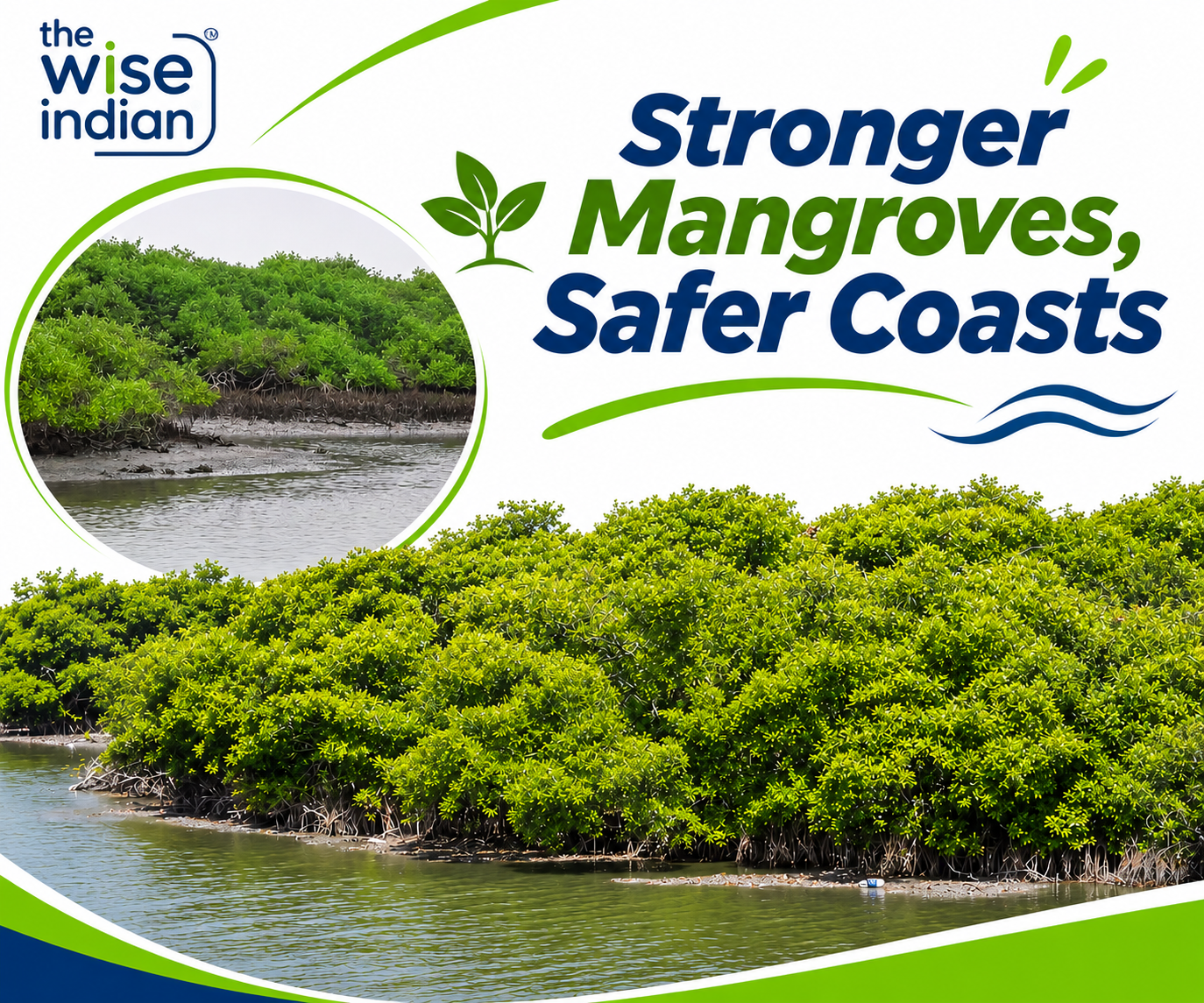
Thoothukudi in Tamil Nadu is strengthening its coastal protection through an important environmental conservation initiative. The district Forest Department has covered 115.46 hectares through mangrove plantation and restoration activities between 2022–23 and 2025–26. The initiative aims to revive degraded coastal habitats, protect marine biodiversity and support fishing communities.
Scientific guidance from marine biologist Dr K. Kathiresan has also strengthened the restoration strategy. Meanwhile, the department is preparing a dedicated conservation programme extending until 2030. This long-term approach places Thoothukudi mangrove restoration among the district’s important environmental priorities. It also highlights how local conservation can protect natural resources and livelihoods together.
Protecting the Coast Through Natural Mangrove Forests
Mangroves are among the most valuable ecosystems found along tropical coastlines. Their dense root systems help hold coastal soil together and reduce the impact of erosion. They also act as natural barriers against cyclonic storm surges, tidal flooding and saltwater intrusion. These benefits are particularly important for coastal settlements that face changing weather conditions. Mangrove forests also provide sheltered habitats for several marine species. Fish, prawns and other aquatic organisms use these areas as breeding and nursery grounds.
Consequently, healthy mangrove ecosystems directly support fishing activities and local livelihoods. Thoothukudi has more than 700 hectares of mangrove forests, with important patches around Palayakayal, Punnakayal and Mukkani. These locations lie near the Thamirabarani River estuary, where freshwater meets seawater. The district mainly supports two mangrove species, Avicennia marina and Rhizophora mucronata. Their distribution varies according to local salinity conditions. Protecting these habitats therefore benefits both coastal biodiversity and communities that depend on marine resources.
Restoration Work Covers 115.46 Hectares
The Thoothukudi District Forest Department has carried out plantation and restoration activities under the Tamil Nadu Shore Protection and Conservation Scheme. The programme began in 2022–23 and covered 115.46 hectares by 2025–26. This area represents approximately 285.19 acres. The work includes establishing new plantations and bringing degraded mangrove habitats back towards their natural condition. One major challenge involves the spread of Prosopis juliflora, commonly known as Seemai Karuvelam. This invasive tree competes with native vegetation and affects suitable areas for mangrove regeneration.
The department has therefore identified locations where removing invasive growth can support restoration. At Palayakayal, officials reported replacing Seemai Karuvelam-covered land with mangrove plantations across 14.51 hectares. They also reported restoring 21.765 hectares of degraded mangrove habitat during 2025–26 up to January 2026. In addition, more than 100 hectares along the Palayakayal and Thoothukudi shores were identified for further restoration. These activities demonstrate the importance of combining new plantations with the rehabilitation of existing ecosystems.
Scientific Guidance Supports Better Restoration
Scientific planning plays an important role in improving the survival of mangrove plantations. Dr K. Kathiresan, Emeritus Professor at the Centre of Advanced Study in Marine Biology, Annamalai University, has provided guidance for the conservation programme. He participated in field assessments alongside Dr Vinod Ravichandran and District Forest Officer M. Ilayaraja, along with other forest officials. The team inspected mangrove habitats in the Punnakayal and Pazhayakayal regions. Their assessment examined existing vegetation, environmental conditions and locations requiring intervention.
This information contributes to the preparation of a Detailed Project Report (DPR). The report identifies restoration zones and outlines suitable activities for different areas. One important method involves creating fishbone-shaped water channels. These channels allow brackish water to enter mangrove areas during high tide and flow out during low tide. This movement supports natural sediment deposition and creates better conditions for seedling growth. The process shows why successful restoration requires more than planting saplings. Suitable tidal movement, soil conditions and regular monitoring are equally important. Officials have also highlighted that a mangrove ecosystem may require 15–20 years to develop fully.
A Long-Term Conservation Programme Until 2030
The Forest Department is preparing a dedicated mangrove conservation programme that will extend until 2030 under the Tamil Nadu Shore Protection and Conservation Scheme. Its Detailed Project Report proposes several interventions to improve the condition of coastal habitats. These include removing invasive alien species, restoring natural tidal flows and expanding mangrove coverage. The programme also aims to improve the long-term sustainability of existing forests. Another important objective involves supporting communities that depend on mangrove ecosystems for their livelihoods.
Local participation can make these efforts more effective because residents understand the environmental changes affecting their surroundings. The department has established village mangrove councils at Ratchaniapuram and Mukkani to encourage public involvement in plantation and conservation activities. These councils can help connect local communities with restoration work and environmental awareness. Fishermen also have a direct interest in protecting mangrove habitats because these ecosystems support fish and prawn populations. Through scientific planning and community participation, Thoothukudi mangrove restoration can contribute to a stronger relationship between coastal protection and sustainable livelihoods.
The Wise Take
The district’s conservation efforts demonstrate how restoring natural ecosystems can create lasting environmental and social benefits. Mangroves protect vulnerable coastlines, support marine biodiversity and provide important habitats for aquatic species. However, successful restoration depends on more than the number of hectares covered. Newly planted trees must survive, tidal channels must function properly and invasive vegetation must remain under control. Local communities also need opportunities to participate in long-term maintenance.
A July 2026 report highlighted that approximately 146 hectares of mangrove forests had been restored and established across Mukkani, Pazhayakayal and Punnakayal through several initiatives over four years. This later figure covers multiple schemes and should not be confused with the earlier 115.46-hectare figure. As the district advances its conservation plans, Thoothukudi mangrove restoration offers an encouraging example of local environmental action. Its long-term success could strengthen coastal resilience and protect the natural resources that sustain generations of fishing families.
Also read our other article on Ghost Nets and Sea Turtles: How Abandoned Fishing Gear Traps Marine Wildlife
Follow The Wise Indian for clear, unbiased, and actionable guides that make personal finance simple.