
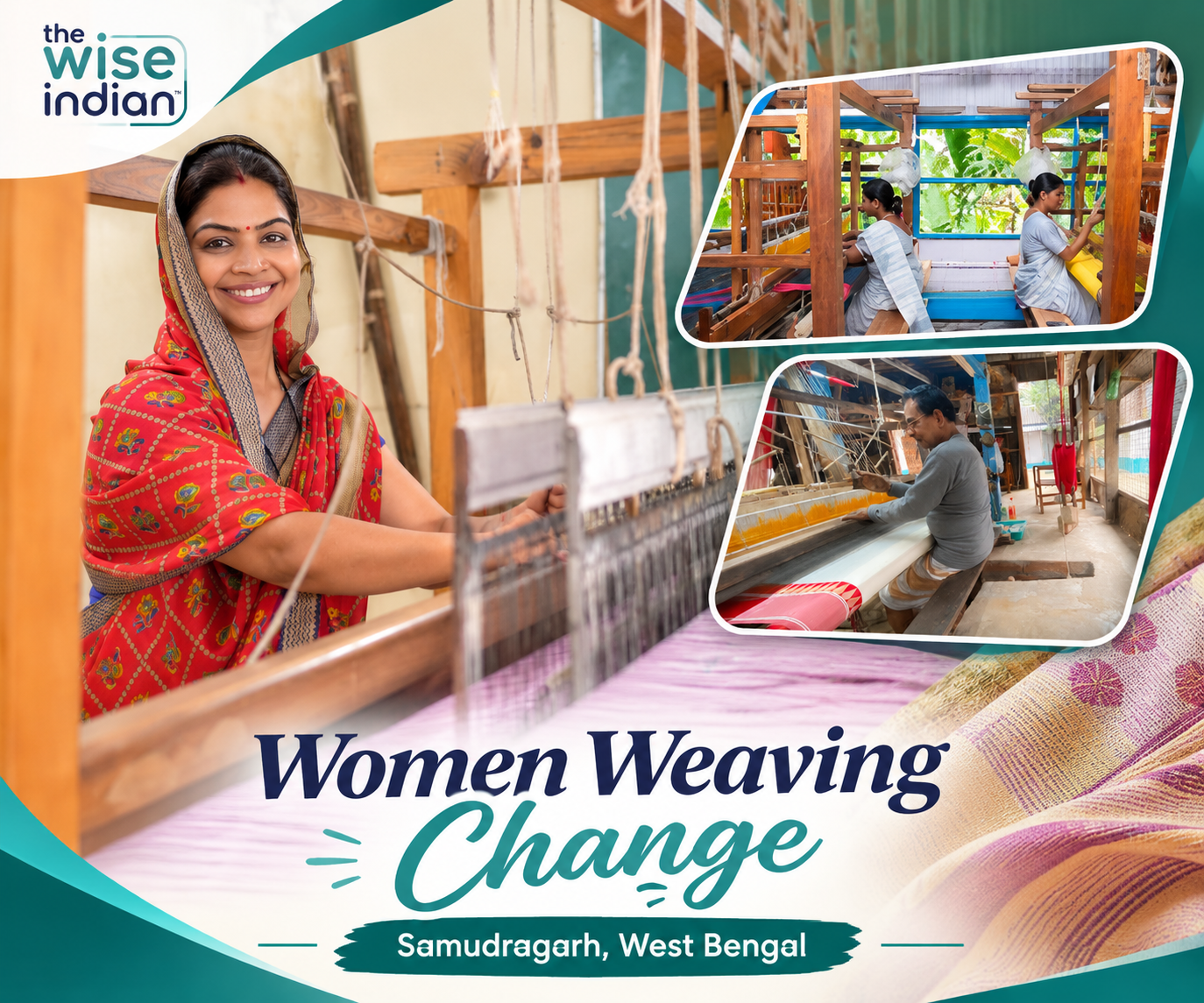
In Samudragarh Weavershala, a traditional weaving community in West Bengal, ten women are creating a new chapter for India’s handloom industry. Their workplace is not an ordinary weaving shed. It is the country’s first all-women Weavershala, an initiative supported by Taneira, the ethnic wear brand from Titan Company. Here, women who once worked independently from their homes now share a professional workspace. They are earning livelihoods while protecting traditional weaving skills. Moreover, their journey demonstrates how better infrastructure and opportunities can help rural women participate in India’s traditional industries.
Samudragarh has a rich history of handloom craftsmanship. Generations of local families have depended on weaving for their livelihoods. However, the expansion of mechanised textile production gradually weakened the traditional industry. Many artisans struggled to secure orders, while younger generations explored alternative employment. Consequently, traditional weaving faced the risk of losing both skilled workers and its cultural significance. The establishment of the Samudragarh Weavershala offers a different possibility. It brings together experienced artisans, improved equipment and renewed opportunities for women.
A Traditional Weaving Community Facing Challenges
Samudragarh has long been associated with Bengal’s handloom traditions. The region forms part of the state’s wider textile heritage, where generations of artisans have developed specialised weaving skills. Families traditionally passed these techniques from parents to children. However, the growing competition from power looms changed the industry’s economic conditions. Mechanised production increased competition, making it difficult for independent handloom workers to secure consistent orders.
Master weaver Sanjay Debnath previously managed a cooperative society involving local handloom artisans. The organisation once supported a thriving weaving community. However, changing market conditions gradually weakened its operations. Orders declined, workers left the profession, and the cooperative accumulated debts. Eventually, its weaving sheds fell into disrepair. Many traditional looms stopped operating, threatening the livelihoods of families who depended on this occupation.
Women faced additional difficulties within this changing environment. Several continued weaving from their homes, often without access to suitable facilities. Individual production also limited their ability to participate in larger orders. Furthermore, traditional working arrangements offered little professional recognition. The community therefore needed more than financial assistance. It needed better infrastructure, reliable opportunities and an environment where artisans could continue their profession with dignity.
Taneira Introduces the Weavershala Initiative
The story connects with Taneira’s wider effort to strengthen India’s traditional textile industry. The brand, which belongs to Titan Company, launched its Weavershala initiative in 2022. Its objective was to modernise traditional weaving facilities without replacing the craftsmanship behind handwoven textiles. The programme focuses on better infrastructure, improved working conditions and more sustainable livelihoods for artisans.
According to Titan’s official information, the initiative works with established weaving communities and multi-generational artisan organisations. It provides improved workspaces and modern equipment while helping traditional crafts remain relevant. Its facilities support different textile activities, including handloom weaving, printing and painting. The initiative has gradually expanded across several Indian craft centres. These include Varanasi, Champa, Coimbatore, Phulia and other traditional production locations.
However, the Samudragarh Weavershala represents a particularly important development within this programme. Taneira collaborated with Sanjay Debnath’s weaving community to restore an abandoned shed. The company supported improvements to the facility and helped introduce better equipment. Debnath’s community also approached women who previously worked independently from their homes. They encouraged these artisans to join the shared workspace. The resulting facility became India’s first all-women Weavershala, demonstrating how existing craft communities can create opportunities through collaboration.
Ten Women Rebuild Their Livelihoods
The most important part of the Samudragarh Weavershala is its ten women weavers. Previously, these artisans worked separately from their homes. Although they possessed valuable traditional skills, they lacked access to a shared professional environment. The new facility changed this arrangement by bringing them together under one roof.
According to Sanjay Debnath’s account, the women joined because the facility offered regular work, better wages and improved working conditions. This arrangement also helped them participate in a more organised production system. Instead of working in isolation, they could collaborate with other artisans and contribute to a larger weaving community. Their work demonstrates that women can take leading roles in preserving traditional textile industries.
Importantly, the transformation also revived other occupations connected to weaving. Starching specialists returned to the production process after their skills had nearly disappeared from the local system. These workers strengthen cotton yarn before weaving, helping artisans maintain fabric quality. Women helpers also contribute to the wider production ecosystem. Consequently, the initiative supports more than the ten individuals operating looms. It helps restore different stages of traditional textile production.
The Samudragarh Weavershala also offers an important example of professional recognition. Women artisans now have a shared identity as skilled workers rather than remaining invisible contributors to household production. Their participation challenges traditional assumptions about women’s roles in the handloom sector.
Better Equipment Makes Traditional Weaving Easier
One significant improvement at the Samudragarh Weavershala involves the introduction of modern weaving equipment. Traditional pit looms often require artisans to sit in uncomfortable positions for extended periods. Their physical arrangement can create considerable strain, especially during long working hours. Poorly equipped workspaces can also affect productivity and make the profession less attractive to younger workers.
The renovated facility addresses several of these challenges. Traditional pit looms have been replaced with ergonomically designed frame looms. These provide more comfortable working positions and improve the overall weaving experience. Electric jacquard machines also help artisans produce intricate textile patterns more efficiently.
Additionally, motorised lifting systems make certain weaving operations easier. Machine reels have replaced traditional thigh reels in yarn preparation, reducing physical strain. These improvements allow women to concentrate more effectively on their craft. They also support more efficient production without removing the traditional skills required to create handwoven fabrics.
The changes demonstrate how technology can support rather than replace traditional craftsmanship. The women continue to depend on their experience, precision and knowledge of weaving techniques. Modern equipment simply improves the environment in which they work. As a result, artisans can preserve traditional production methods while adapting to changing market requirements.
The Wise Take
The Samudragarh Weavershala demonstrates that preserving traditional crafts requires supporting the people behind them. Ten women have found an opportunity to work together, strengthen their skills and contribute to a traditional industry. Their journey also highlights the importance of recognising women as skilled professionals within India’s handloom ecosystem.
Taneira’s initiative offers one approach to addressing challenges faced by traditional artisans. Better facilities, improved equipment and more organised working arrangements can make weaving a more sustainable occupation. However, long-term success also depends on consistent orders, fair compensation and continued support for artisan communities.
India’s handloom heritage represents generations of knowledge, creativity and cultural identity. Protecting it requires more than celebrating beautiful sarees. It requires creating opportunities for the people who produce them. In Samudragarh, ten women are showing how a supportive working environment can help traditional craftsmanship move towards a more promising future.