

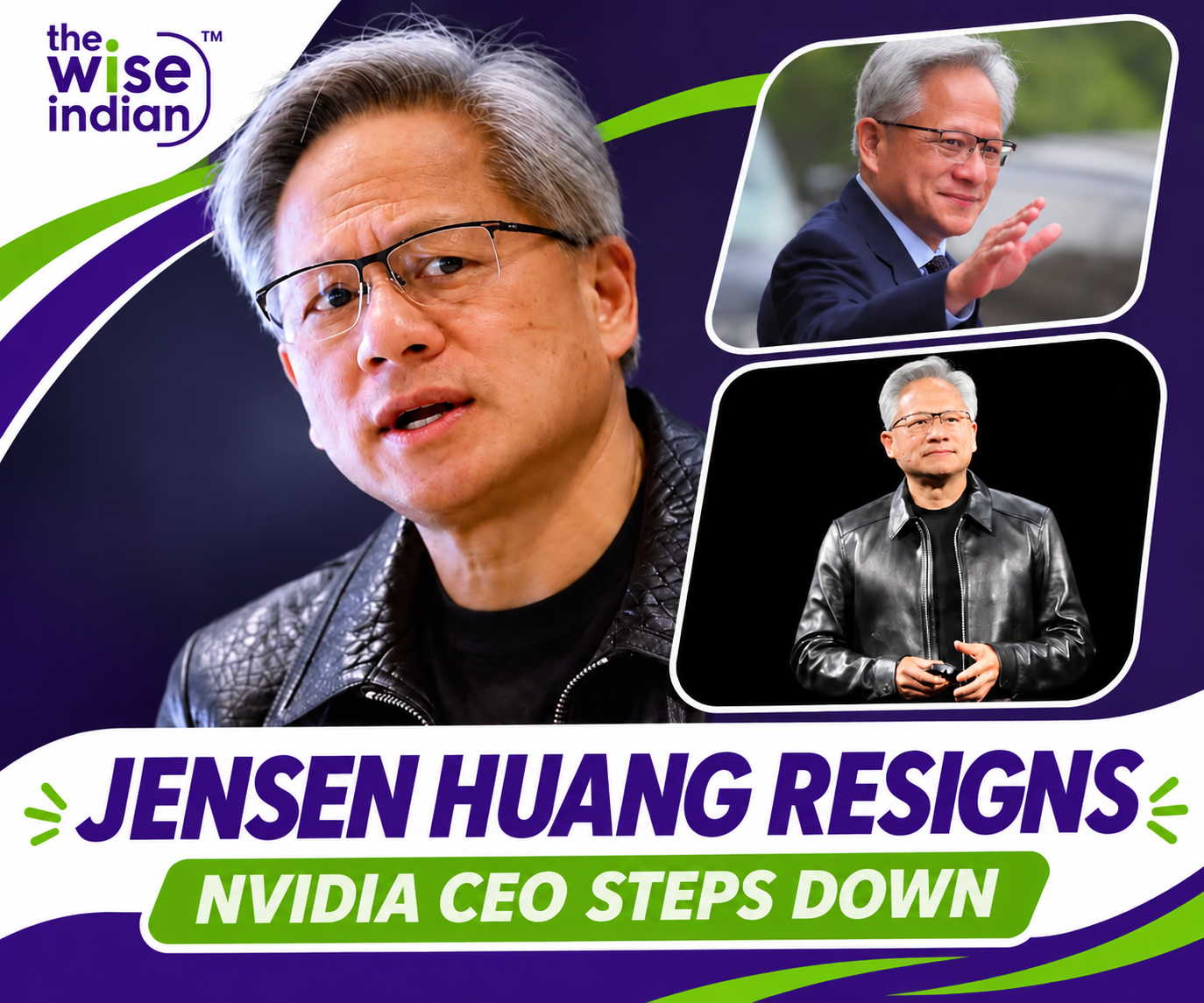
Jensen Huang resigns as NVIDIA’s president, chief executive officer and a member of its board of directors, bringing a major leadership change to the technology company he co-founded in 1993. The company announced on November 12, 2026, that his departure took effect immediately.
NVIDIA’s board appointed Colette Kress, its executive vice president and chief financial officer, as interim CEO while it searches for a permanent successor. The board will consider candidates from inside and outside the company. It also appointed Harvey C. Jones as the first chair of NVIDIA’s board. The announcement places the future leadership of one of the world’s most prominent artificial intelligence and semiconductor companies in focus.
NVIDIA Confirms Jensen Huang’s Resignation
NVIDIA’s board confirmed that Jensen Huang had resigned from three positions: president, chief executive officer and member of the board of directors. The change took effect immediately on November 12, according to the company’s announcement. The statement did not identify a specific reason for his departure. It instead outlined the immediate leadership arrangements and thanked Jensen Huang for his contributions to NVIDIA and the wider technology industry. His departure ends a 33-year period at the head of the company he helped establish.
The board said it would begin a search for a permanent chief executive and would consider both internal and external candidates. Until that process concludes, Kress will lead the company as interim CEO while retaining her existing finance role. This means the company has announced an immediate successor for day-to-day leadership, but has not yet named a permanent replacement. The board has not provided a timetable for completing the search. Jensen Huang’s resignation therefore leaves the company with an interim arrangement while directors assess the candidates.
Colette Kress Takes Over as Interim CEO
Colette Kress, who has served as NVIDIA’s executive vice president and chief financial officer since September 2013, will hold the interim CEO position. She will continue to oversee the finance organisation while taking on the responsibilities of chief executive. Before joining NVIDIA, Kress spent nearly 25 years in finance roles at major technology companies, including Cisco and Microsoft, according to the company. Her long experience inside NVIDIA gives her familiarity with its business, financial position, customers and operations.
In its announcement, the board said it had confidence in Kress and the existing leadership team. It also said it expected the company’s operations, customer commitments and product roadmap to continue without interruption. Kress said she would work with the leadership team to build on the foundation established during Huang’s tenure. She also reaffirmed the company’s focus on customers, partners, developers and shareholders. Her appointment is an interim arrangement; NVIDIA has not announced that she will become the permanent CEO.
Harvey C. Jones Becomes NVIDIA’s First Board Chair
The leadership announcement also introduced a new position in NVIDIA’s board structure. The directors appointed Harvey C. Jones as the company’s first-ever chair of the board. Jones has more than 30 years of experience as an entrepreneur, technology executive and venture investor. NVIDIA noted that he previously served as chief executive officer and executive chairman of Synopsys, a company known for semiconductor design software and services.
As board chair, Jones will lead the board while the company moves through the executive transition. His appointment is separate from the interim CEO role held by Kress. The company’s announcement attributed its confidence in Kress and the leadership team to Jones, who highlighted their understanding of NVIDIA’s business, customers, operations and financial position. The board has not disclosed further details about how its new chair role will affect the company’s governance arrangements. The appointments establish the immediate leadership structure while the search for a permanent CEO continues.
Jensen Huang’s Legacy and NVIDIA’s Growth
Huang co-founded NVIDIA in 1993 with Chris Malachowsky and Curtis Priem. The company began with a focus on graphics technology for gaming and multimedia. In 1999, NVIDIA introduced the graphics processing unit, or GPU, which helped advance computer graphics and later became important for parallel computing. The company introduced its CUDA architecture in 2006, opening GPU parallel-processing capabilities to scientific and research applications. These developments helped NVIDIA expand beyond gaming into data centres, scientific computing, artificial intelligence, automotive technology and other fields.
Its processors and software now support a broad range of AI development and accelerated computing workloads. Under Jensen Huang’s leadership, NVIDIA developed from a graphics-focused chipmaker into a major supplier of computing infrastructure used by technology companies and researchers. His resignation marks a change at the top of a company whose products have become central to the expansion of modern AI. The company has said its current technology roadmap and customer commitments will continue during the transition.
The Wise Take
After Jensen Huang departure, NVIDIA faces an important leadership transition, but the company has already outlined its immediate next steps. Kress will serve as interim CEO and CFO, Jones will chair the board, and directors will assess internal and external candidates for the permanent position. For now, the company’s public message is one of continuity: its leadership team is expected to maintain operations, serve customers and advance its product roadmap.
The longer-term question is who will take responsibility for NVIDIA’s strategy after the interim period. That decision will matter to employees, customers, developers, investors and the wider technology industry, given the company’s role in AI and accelerated computing. Until the board completes its search, Kress remains responsible for leading the business on an interim basis. NVIDIA has not announced a permanent successor or a date for that appointment.
Also read our other article on India Simplifies Visa Rules as Government Cuts Main Categories to Nine and Reduces Application Form Fields by 65–70%
Follow The Wise Indian for regular updates on stories that shape India’s strategic future and global standing. Stay connected with us for sharp analysis, untold perspectives, and a closer look at the shifting legal landscapes, civic rights, and institutional frameworks defining our democratic fabric.