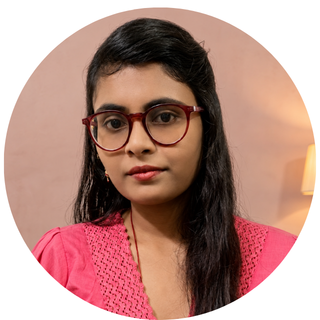
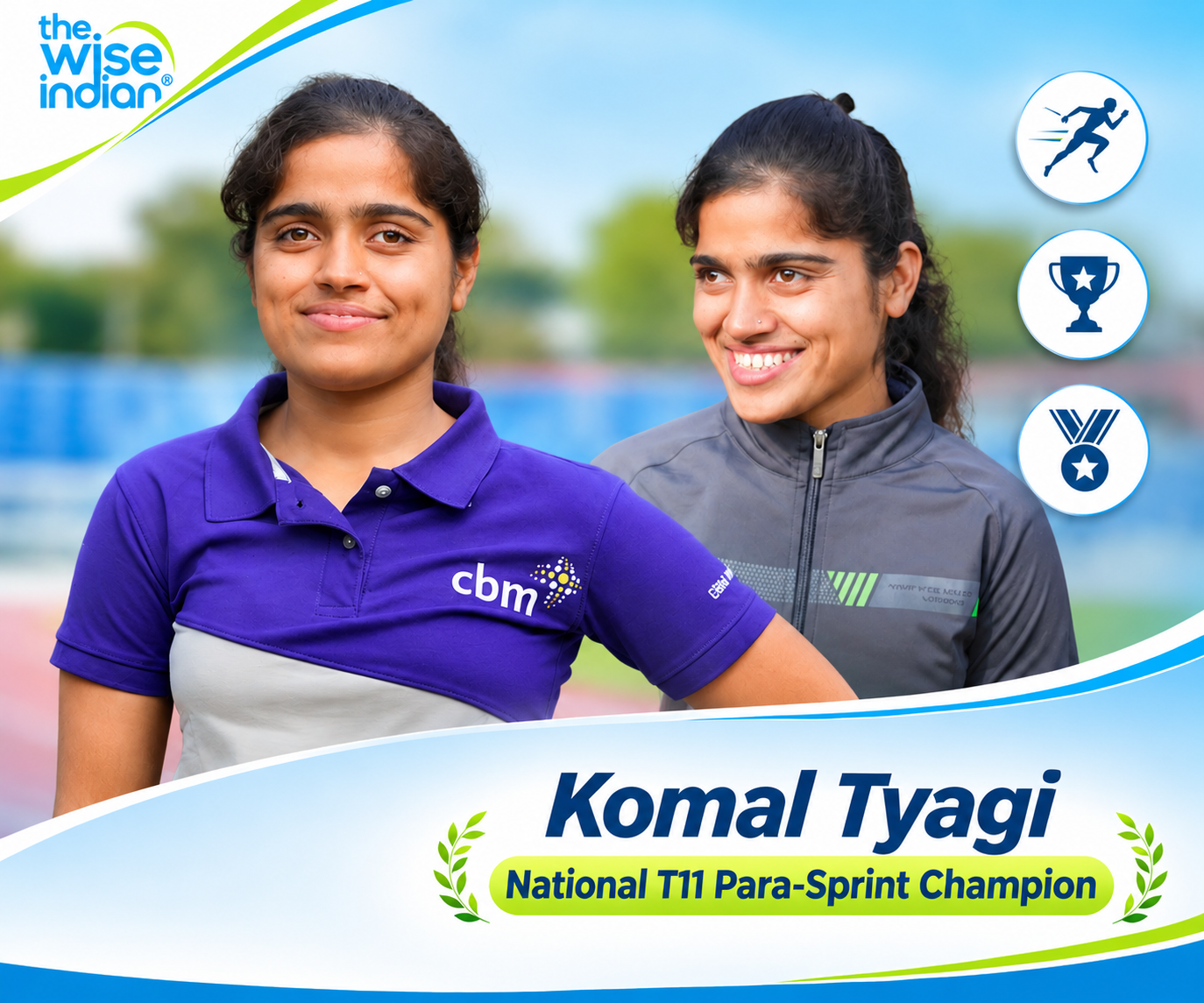
At 23, Komal Tyagi has already learned that reaching the finish line can demand much more than speed. The visually impaired sprinter from Morena district in Madhya Pradesh is a national champion in the 100-metre and 200-metre T11 events. She also won a bronze medal at the Khelo India Para Games. Yet her journey has never been a straightforward race towards medals. She has navigated inaccessible schooling, pressure to marry, demanding training costs and moments of deep uncertainty.
In 2024, financial hardship brought her close to leaving athletics altogether. Support from an organisation working for disability inclusion helped her continue. Today, her story is about sporting achievement, but also about what becomes possible when talent receives practical support. Her experience brings attention to the determination of para-athletes and the resources they need to compete on equal terms.
Early Life and the Discovery of Sports
Born visually impaired, Komal grew up in a village in Morena with two visually impaired siblings. She initially attended a regular school, but keeping up with classroom activities was difficult without suitable support. When her younger siblings were enrolled at a residential school for children with visual impairment in Gwalior, the family initially felt that she was too old to join. She disagreed and continued asking for the same opportunity.
In 2015, aged 14, she joined the school herself. The move gave her an environment designed around accessibility and helped her become more confident. Until then, sport had not been part of her plans. The school director noticed her physical ability and encouraged her to try athletics. At an event marking the International Day of Persons with Disabilities, she entered a shot-put competition and won a medal on her first attempt. That early result encouraged her to train seriously. Komal Tyagi later won national-level gold medals in shot put and discus, discovering that sport could offer her a path to independence and recognition.
Education, Determination and Personal Challenges
Her sporting progress was accompanied by a determination to continue studying. After completing Class 12, the COVID-19 pandemic disrupted her routine and brought her back home from Gwalior. She then faced questions about marriage, but she wanted to pursue higher education. She persuaded her family to support that decision and enrolled at Miranda House, University of Delhi. The college environment and encouragement from seniors helped her return to competitive sport.
She began taking part in national para-athletics competitions and Khelo India events, while continuing her education. However, training in Delhi and managing daily expenses became difficult. She moved back to Gwalior to train at the Atal Behari Vajpayee Training Centre for Disability Sports. Komal Tyagi continued her academic journey alongside athletics. She completed a Bachelor of Education degree and, according to the 2026 profile, was pursuing a master’s degree in political science. For her, education and sport were not competing ambitions; both were ways to shape a future on her own terms.
Financial Hardship Nearly Ended Her Sporting Career
By 2024, the cost of continuing as a competitive athlete had become overwhelming. The training centre offered a ground, coaching and accommodation, but several essential expenses remained. She needed specialised running spikes, high-protein nutrition and money to travel to competitions. As a T11 athlete, she also needed a guide runner to train and compete alongside her. These requirements added financial pressure to an already demanding routine.
She came close to quitting, not because she had lost her ambition, but because she could not afford everything required to pursue it. Help arrived through CBM India Trust, which selected her for its Para Athlete Support Program. The programme supported expenses such as coaching, equipment, nutrition, travel and competition fees. For Komal Tyagi, the assistance helped her remain in the sport when she was close to walking away. Her experience shows why inclusion must go beyond encouragement: athletes need consistent, practical backing to access training and competition opportunities.
From Field Events to National Sprinting Success
A change in events also helped her find a new direction. Komal Tyagi had earned medals in shot put and discus, but some coaches felt that her build might suit sprinting better. She decided to train for the 100-metre and 200-metre races instead of treating that advice as a reason to stop. The switch demanded a different training routine, sharper acceleration and the confidence to compete in events where every fraction of a second matters.
Her work paid off as she established herself as a national champion in both sprint distances in the T11 category. She added a bronze medal at the Khelo India Para Games to her achievements. T11 is a sport classification for athletes with the most significant visual impairment; guide-running support is an important part of competition in this category. The results mark a significant transition from field events to sprinting and show her willingness to adapt, learn and test herself in a new discipline.
The Wise Take
The next ambition for Komal Tyagi is to represent India at the Asian Games and the Paralympics. She knows that reaching that level will require sustained training, competition exposure and continued support. She has also spoken about the nervousness and self-doubt that can arise before a race. Conversations with her coach and reminders of other people’s struggles help her regain perspective. Rather than making every race only about winning a medal, she tries to focus on giving her best performance.
Back in her village, she still encounters questions about marriage, reflecting how little some people understand the opportunities available through para-sport. Her achievements challenge those assumptions without reducing her story to inspiration alone. They point to the need for accessible schools, inclusive coaching, guide runners, equipment and financial assistance. Her progress is personal, but the barriers she has faced are shared by many athletes. The Wise Take is simple: ability deserves a fair chance, and support can keep a promising career moving.
Also read our other article on From the Mountain Trails of Chamba to Asian Games Glory: How Seema Kumari Ended India’s 16-Year Medal Drought
Follow The Wise Indian for more stories about the players and everyday heroes quietly shaping a better India.