

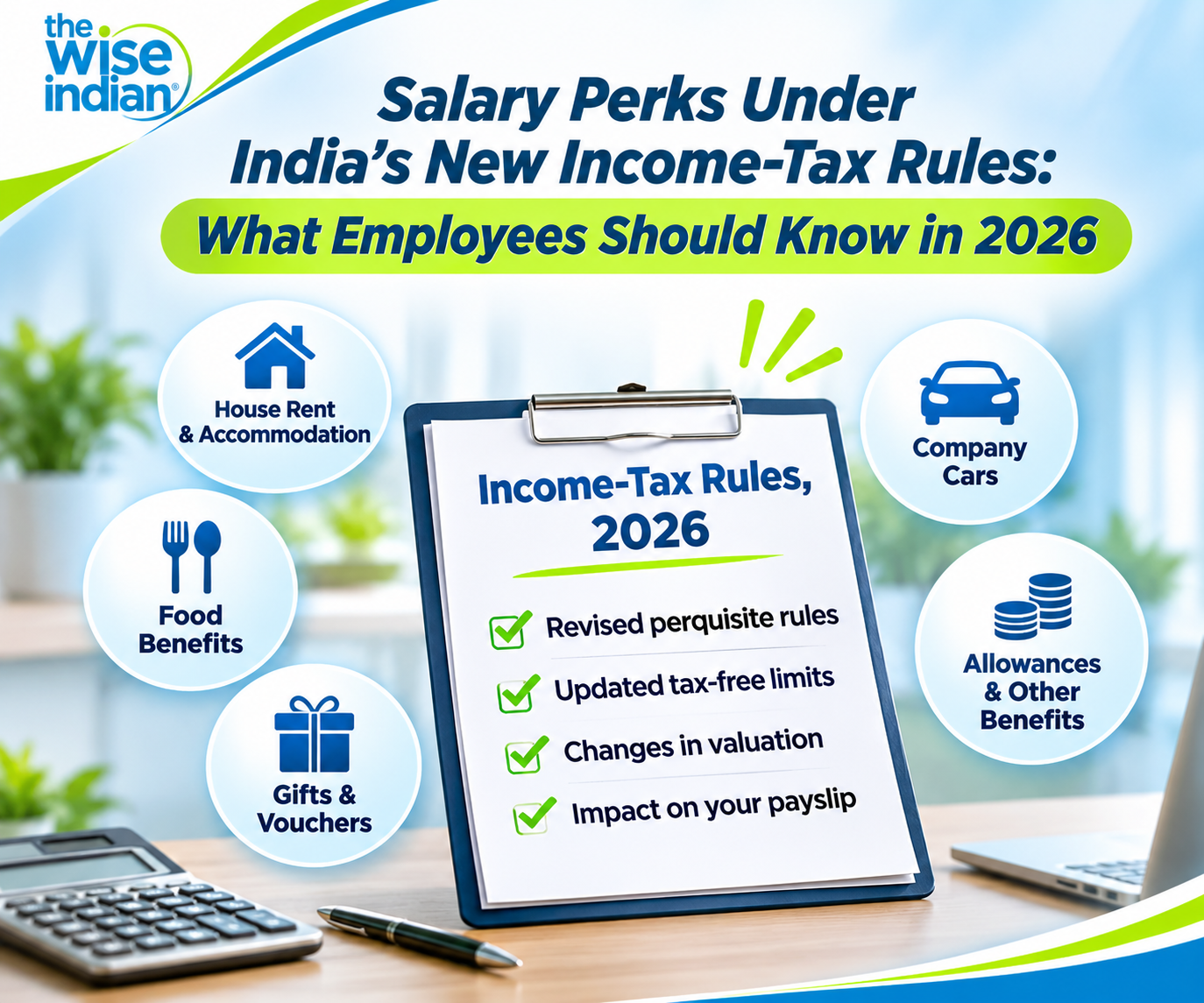
India’s salary structure is changing under the Income-tax Rules, 2026, which took effect on 1 April 2026. The revisions affect workplace meals, employer-provided gifts and documentation for tax claims. For salaried employees, these updates can make certain benefits more valuable. However, not every allowance becomes tax-free, and not every employee receives an automatic tax reduction.
The actual benefit depends on eligibility, employer policies and the tax regime selected. Understanding the revised Salary Tax Benefits can help employees review their salary packages and avoid mistakes when submitting tax declarations. Employees can use these details to ask informed questions before approving their annual tax declarations.
Meal Benefits Get a Higher Tax-Free Limit
One significant change concerns meals provided by employers. Under the revised rules, qualifying free food and non-alcoholic beverages supplied during working hours at the office or business premises are exempt from taxation up to ₹200 per meal. The same limit applies to paid vouchers that employees can use only at eating joints. This replaces the earlier ₹50 limit, making the exemption more relevant to current food prices. Tea and snacks during working hours, along with meals in remote areas or offshore installations, retain separate exemptions. These revised Salary Tax Benefits can particularly help employees who regularly receive workplace meals or employer-sponsored food vouchers.
However, the ₹200 limit does not create a general cash allowance that every employee can claim. The exemption applies to qualifying food and non-alcoholic beverages supplied through the specified arrangements. General-purpose prepaid cards and unrestricted cash payments should not automatically be treated as tax-free meal benefits. Employers may also recover part of the meal cost from employees, which affects the value of the benefit. Employees should check their company’s meal-card policy and confirm that the vouchers meet the requirements before including them in their tax planning. The rule concerns the employer’s cost of eligible meals, reduced by any amount recovered from the employee.
Employer Gift Vouchers Get a Higher Exemption
Employer-provided gifts have also received an increased tax-free threshold. Gifts, vouchers and tokens given to employees or members of their households are assigned a nil taxable value when their combined value remains below ₹15,000 during the tax year. The previous threshold was ₹5,000. This change can benefit employees who receive festival gifts, anniversary presents or other qualifying rewards from their employers.
However, the limit applies to the aggregate value throughout the tax year. It is not a separate ₹15,000 exemption for every festival or occasion. The wording also specifies an amount below ₹15,000, so employees should not assume that gifts reaching or exceeding the threshold remain entirely tax-free. These Salary Tax Benefits depend on the nature and total value of the gifts received. The threshold is a combined annual limit, not a monthly or per-occasion allowance. Employers should track qualifying gifts across the year rather than assessing each occasion separately.
HRA Rules Expand the Eligible City List
House Rent Allowance remains an important component of many salary packages. Under the old tax regime, employees can claim an HRA exemption calculated using the least of three amounts: actual HRA received, rent paid minus 10% of eligible salary, and 40% or 50% of eligible salary depending on the city category. Previously, the 50% category covered Delhi, Mumbai, Kolkata and Chennai. From 1 April 2026, Bengaluru, Hyderabad, Pune and Ahmedabad have joined this category. This expansion can increase the eligible HRA calculation limit for employees living in these cities.
However, it does not mean that 50% of their salary automatically becomes tax-free. Actual rent, salary components and HRA received still determine the exemption. For employees who rent homes in the newly included cities, these Salary Tax Benefits may make the old regime more competitive, depending on their other deductions. Importantly, this HRA benefit is available under the old tax regime, not the new regime. The city classification changes only the percentage used in the statutory calculation, not the amount of rent paid.
New HRA Documentation Requirements for Employees
Employees claiming HRA must also pay attention to updated documentation requirements. Form 124 replaces the earlier Form 12BB for submitting details of claims and supporting evidence to employers for tax deduction purposes. The revised form requests landlord information, including the landlord’s name and address, and asks employees to disclose their relationship with the landlord. PAN details are required when annual rent exceeds ₹1 lakh. Rent receipts and payment records remain important supporting documents. A rent agreement can also help establish the rental arrangement.
However, it would be misleading to say that every tenant must provide a landlord’s PAN regardless of the rent paid. Employees should submit accurate information and maintain proper records throughout the year instead of collecting documents at the last minute. Employers may request receipts or other evidence to verify the claim and maintain payroll records. Rent paid to a family member should also reflect a genuine, documented arrangement.
The Wise Take
The revised rules should be considered alongside the choice between India’s old and new tax regimes. The new regime offers lower slab rates but generally provides fewer exemptions and deductions. The old regime allows eligible claims such as HRA, subject to specific conditions. Meanwhile, the revised meal and gift thresholds concern employer-provided benefits and should be assessed separately from HRA calculations. Employees should compare their annual salary, eligible allowances, rent payments and other deductions before selecting a regime.
Employers must also update payroll systems, track annual gift values and communicate the new documentation requirements. Ultimately, the revised Salary Tax Benefits can improve the tax treatment of selected workplace perks, but higher exemption limits do not guarantee higher take-home pay. Understanding the conditions and reviewing the complete salary package remain the best ways to use these changes effectively. Reviewing both options annually is sensible because rent, salary and deductions can change.
Also read our other article on Aadhaar Face Authentication Records 19.36 Crore Transactions in July 2025, Reflecting India’s Growing Digital Adoption
Follow The Wise Indian for clear, unbiased, and actionable guides that make personal finance simple.