
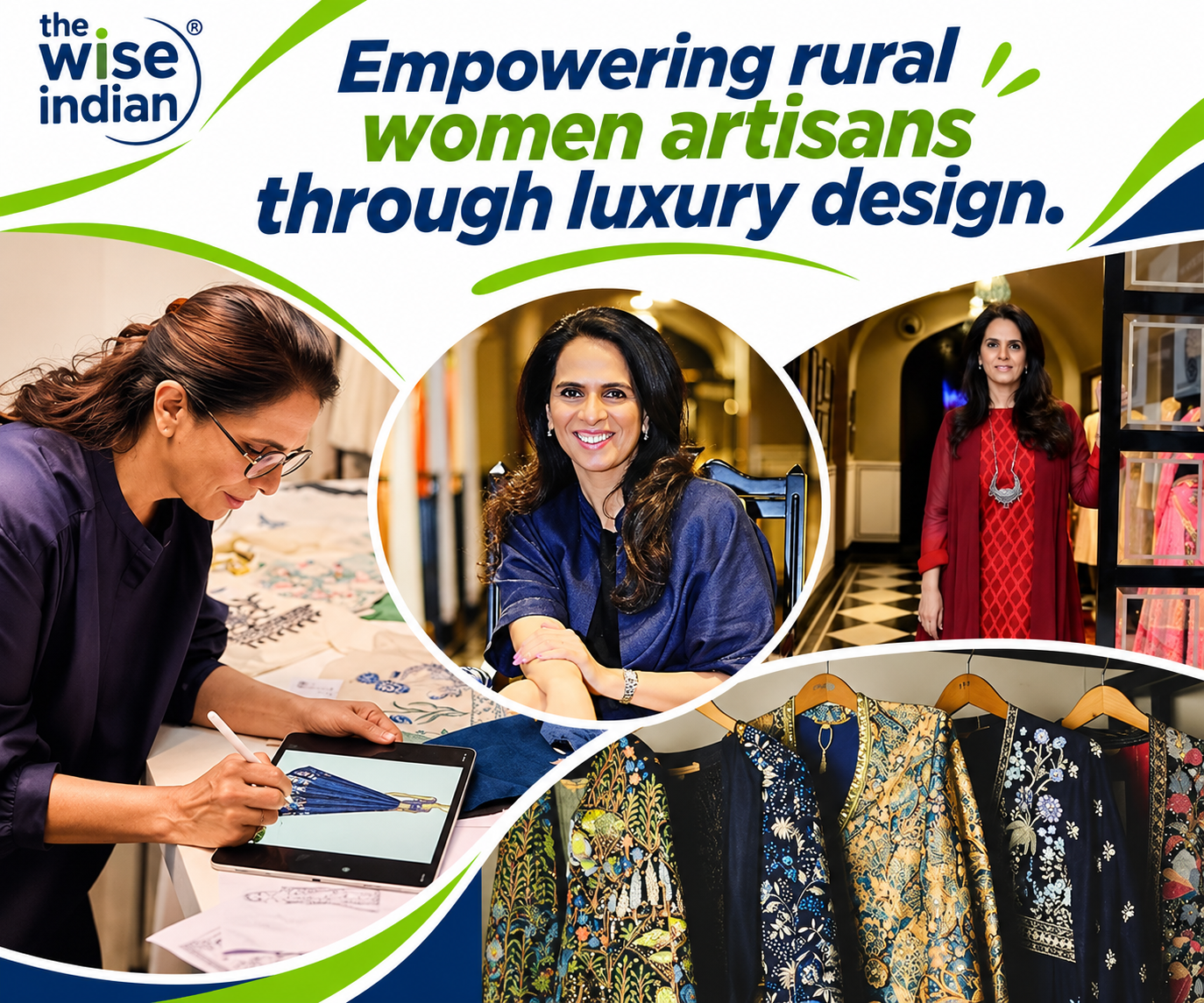
Fashion is often associated with luxury, changing trends and glamorous runways. However, Indian designer Anita Dongre believes that clothing can also create meaningful social change. Her work connects contemporary fashion with traditional Indian craftsmanship, environmental responsibility and rural livelihoods. Through her fashion labels and charitable initiatives, she supports artisans and women who possess valuable skills but often lack access to organised employment. Her approach demonstrates how the fashion industry can preserve cultural heritage while creating economic opportunities for communities.
Instead of separating business success from social responsibility, she brings both ideas together through a model that values people, craftsmanship and the environment. Her journey is particularly significant because it began on a modest scale. What started with two sewing machines gradually developed into a recognised fashion business. Today, her work reaches beyond clothing collections and retail spaces. It also highlights the contribution of rural women, traditional artisans and local craft communities to India’s creative economy.
From a Small Workshop to a Recognised Fashion House
The story of Anita Dongre began in 1995, when she established her fashion business with her sister Meena Sehra and brother Mukesh Sawlani. Her initial workshop operated with just two sewing machines in a small space at home. During those early years, she designed garments for friends and local boutiques. Building a fashion business was challenging, particularly when professional fashion design was still gaining recognition as a career in India.
Her determination gradually helped transform the small venture into the House of Anita Dongre, one of India’s recognised fashion businesses. The company developed several labels, including AND, Global Desi, Anita Dongre and Grassroot. Each label serves different fashion preferences, from contemporary everyday clothing to bridal couture and handcrafted collections.
Her creative outlook also reflects childhood experiences in Jaipur, where exposure to traditional textiles, colourful clothing and local craftsmanship influenced her understanding of Indian design. These experiences encouraged her to explore ways of presenting traditional techniques through modern silhouettes. According to her official brand profile, her design philosophy continues to draw inspiration from indigenous crafts and Indian aesthetics. This combination helped establish a distinctive identity in the fashion industry.
Grassroot: Bringing Traditional Indian Crafts into Modern Fashion
One of the most important expressions of her sustainable design philosophy is Grassroot by Anita Dongre. Launched in 2015, the label focuses on preserving traditional Indian crafts through contemporary clothing. It brings together handwoven textiles, embroidery, indigenous techniques and designs suited to modern consumers. Rather than allowing traditional skills to remain limited to local markets, the initiative connects artisans with a wider fashion audience. Grassroot also promotes a different approach to clothing production.
Its philosophy encourages consumers to appreciate the time, skill and human effort involved in creating handcrafted garments. Traditional embroidery and textile techniques require patience and specialised knowledge. Supporting these crafts can therefore help preserve livelihoods as well as cultural traditions. The initiative is especially important for artisans whose communities depend on traditional textile work. By creating commercial opportunities for handcrafted products, the label helps connect local skills with the wider fashion economy. It also challenges the assumption that sustainable fashion must sacrifice creativity or contemporary appeal. Through this approach, Indian heritage becomes an active part of modern design rather than simply a reminder of the past.
Anita Dongre Foundation: Supporting Rural Women’s Livelihoods
The Anita Dongre Foundation, established in 2015, extends this commitment beyond fashion collections. Its community development work focuses on skill training and livelihood opportunities for women from marginalised communities. One of its major initiatives involves setting up community tailoring centres in rural Maharashtra, particularly in the Palghar district. These centres were established in partnership with local government bodies and village panchayats. Women receive access to industrial sewing machines, fabrics, tools and training. The centres produce garments and accessories based on contemporary designs. An organised buy-back arrangement also provides a route for completed products to enter the commercial supply chain at fair per-piece rates.
The foundation’s official website lists five community tailoring centres in Charoti, Jawahar, Dhanevari, Kawada and Modgaon. Its published figures report 297 women in training and 159 women working across these locations. These opportunities allow participants to develop practical skills and earn income without necessarily leaving their villages. It is important to distinguish this programme from embroidery training alone. The documented community centres primarily focus on tailoring and garment production, while Grassroot supports traditional craft techniques through its artisan network. Together, these initiatives connect rural skills with commercial opportunities.
Sustainable Fashion with a Social Purpose
Sustainability involves more than selecting environmentally responsible materials. It also requires examining how clothes are produced, who makes them and what impact manufacturing has on communities. This wider understanding is reflected in Anita Dongre’s approach to fashion. Her work promotes handcrafted production, traditional textile knowledge and more conscious consumption.
The House of Anita Dongre has also highlighted environmental initiatives, including efforts to reduce waste, recycle water and use renewable energy. Its partnership with Canopy supports more responsible fabric and packaging choices that help protect forests. These measures demonstrate how environmental responsibility can become part of business operations rather than remaining a marketing message.
Her approach also encourages consumers to move away from disposable fashion habits. Fast fashion often prioritises low prices and rapid production, while handcrafted garments represent the time and expertise of individual makers. By bringing traditional techniques into contemporary collections, she helps create demand for skills that might otherwise lose commercial relevance.
The Wise Take
The contribution of Anita Dongre extends beyond building a successful fashion business. Her work demonstrates how creative industries can support cultural preservation, environmental responsibility and women’s economic participation at the same time. Grassroot connects traditional craftsmanship with modern design, while the foundation’s community tailoring centres create practical training and employment opportunities in rural Maharashtra.
More importantly, these initiatives recognise rural women and artisans as skilled contributors to India’s economy. Their knowledge deserves fair compensation, wider recognition and opportunities to grow. Sustainable fashion becomes more meaningful when it considers the people behind every garment, not just the materials used to make it.
Her journey offers an important lesson for emerging entrepreneurs and the wider fashion industry. Business growth and social impact do not have to operate separately. When creativity is combined with responsible production and inclusive opportunities, fashion can become a powerful tool for positive change.
Also read our other article on Arunachalam Muruganantham: The Pad Man Who Challenged Menstrual Taboos and Transformed Affordable Hygiene for Rural Women Across India
Follow The Wise Indian for exclusive stories celebrating everyday heroes who are quietly shaping the culture, sustainability, and future of a better India.