
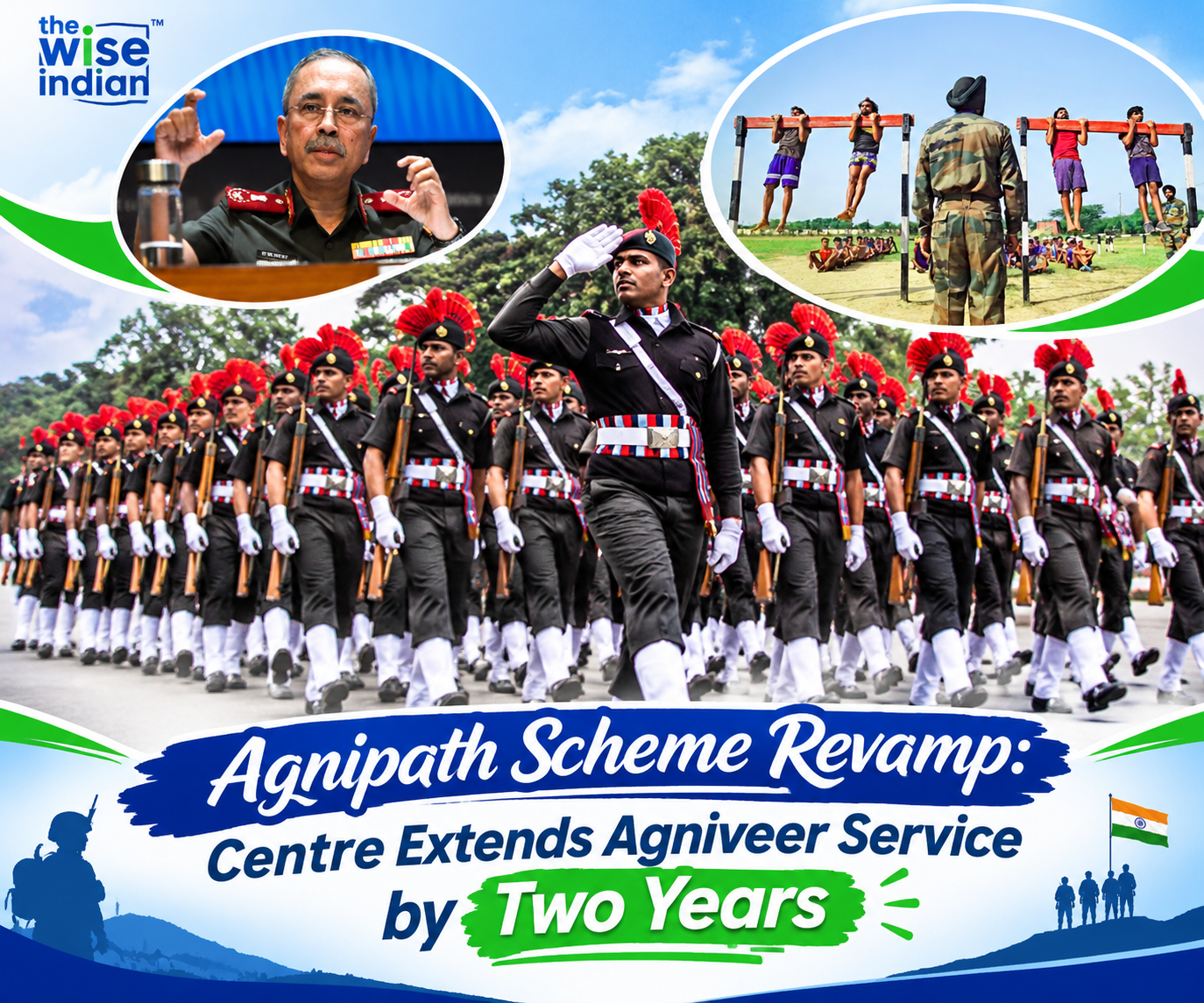
The Union Government has approved a significant change to the Agnipath recruitment scheme, offering thousands of Agniveers an additional opportunity to continue serving in the Indian Armed Forces. On November 4, 2026, Chief of Defence Staff General N S Raja Subramani announced that the Union Cabinet had approved a two-year service extension for the remaining 75% of Agniveers.
Previously, these personnel were expected to leave the armed forces after completing their initial four-year engagement. Under the revised arrangement, they can now serve for another two years and seek regular enrolment afterwards. However, permanent military service will depend on willingness and prescribed selection criteria. The announcement comes as the first batch approaches the completion of its original service period. It also marks an important development in India’s military recruitment framework.
Centre Approves Two-Year Extension Under the Agnipath Scheme
The Union Cabinet has approved an additional two-year engagement period for Agniveers who are not selected for regular enrolment after their initial four-year service. Chief of Defence Staff General N S Raja Subramani announced the decision during a media briefing in New Delhi on November 4, 2026. Under the revised arrangement, the remaining 75% of Agniveers will receive an opportunity to continue their military service. Previously, these personnel were expected to return to civilian life after completing four years. However, the new provision allows them to remain associated with the armed forces for another two years. Their remuneration during this extended period will also be higher than their existing pay.
According to the Agnipath scheme announcement, the additional engagement will provide another opportunity to demonstrate their suitability for regular military service. Importantly, the extension does not guarantee permanent employment. Instead, eligible Agniveers must express their willingness and satisfy the prescribed selection requirements. The decision follows feedback received by the armed forces regarding Agniveers’ performance during their initial service. It also introduces a new stage into the original recruitment framework, giving personnel more time to develop their military experience and pursue continued service.
How the Original Agnipath Recruitment System Worked
The government introduced the Agnipath scheme on June 14, 2022, to recruit young personnel into the Indian Army, Navy and Air Force. Under its original structure, selected candidates joined the armed forces as Agniveers for four years. The programme aimed to create a younger military workforce while providing young Indians with an opportunity to experience military training and service. After completing four years, up to 25% of each batch could receive regular enrolment based on merit, performance and organisational requirements. The remaining 75% were expected to leave the armed forces and transition into civilian employment.
Meanwhile, those completing their engagement without regular enrolment would receive a Seva Nidhi package. The programme also included military training and skill development to support their future careers. The revised arrangement changes the opportunities available to the remaining 75%. Instead of leaving immediately after four years, they can now accept another two-year engagement. After completing this period, willing personnel can seek regular enrolment under the applicable selection criteria. Therefore, the original four-year recruitment structure has gained an additional service stage. This change creates a longer opportunity for military experience without removing the merit-based requirements for permanent enrolment.
Why the Decision Matters as the First Batch Completes Four Years
The Agnipath scheme announcement comes at an important time because the first batch of Agniveers is approaching the completion of its original four-year engagement. Recruitment under the scheme began in 2022, making 2026 the first major transition period for personnel inducted during its initial year. According to reports, approximately 24,400 personnel entered the first intake across the three services. More than 18,300 Agniveers were expected to complete their initial tenure and leave by December 2026. Their departures were scheduled in phases across the Army, Navy and Air Force.
Consequently, the revised decision changes the immediate career outlook for thousands of personnel. Instead of completing their service and returning to civilian life, those covered by the new arrangement will receive an opportunity to continue serving. The Chief of Defence Staff also referred to the positive feedback received about Agniveers’ performance during their initial four years. Their experience and assessments formed part of the discussions surrounding the scheme’s review. Furthermore, retaining trained personnel for another two years can provide the armed forces with additional continuity and experience. For Agniveers, the decision creates more time to demonstrate their capabilities before pursuing regular military enrolment.
Another Opportunity for Regular Military Enrolment and Career Development
A major feature of the revised arrangement is the opportunity to seek regular military enrolment after completing six years of engagement. Under the earlier framework, Agniveers who were not selected during the first assessment had to leave after four years. However, the new provision creates another assessment opportunity following the additional two-year service period. Personnel who wish to continue can seek enrolment under the prescribed selection criteria. Their willingness, performance and suitability for the requirements of the armed forces will remain important considerations. Therefore, the additional engagement should not be interpreted as an automatic guarantee of permanent military employment.
Defence Minister Rajnath Singh described the extension as a second tour of duty, highlighting its importance for serving Agniveers. The arrangement also allows the armed forces to retain trained personnel for a longer period. Meanwhile, the existing provision for selecting up to 25% of each batch for regular service after four years remains an important part of the recruitment framework. The revised pathway provides another opportunity for those outside that initial selection group. Consequently, the policy introduces greater flexibility into the transition between short-term engagement and regular military service.
Recruitment Process Changes and Recognition of Agniveers’ Skills
Alongside the service extension, the announcement included changes concerning recruitment procedures and skill recognition. One important adjustment involves the sequence of the Agniveer selection process. A written examination will now take place before the physical fitness test, reversing the earlier order. This change modifies how candidates progress through the recruitment stages. Additionally, Agniveers will receive skill certificates recognising the training and experience gained during their military engagement. These certificates can help personnel demonstrate their professional capabilities when exploring future employment opportunities.
Military training can develop several transferable skills, including discipline, teamwork, physical fitness and technical competence. Formal recognition can also help individuals communicate their experience to prospective employers. Meanwhile, the additional two-year engagement gives eligible personnel more time to strengthen their military capabilities. The armed forces can also continue evaluating their performance and suitability during this period. However, implementation will depend on the applicable service guidelines and recruitment requirements. Together, these measures introduce changes to recruitment, service opportunities and skill recognition. They also reflect the importance of professional development within the Agnipath framework.
The Wise Take
The two-year extension represents a significant change to India’s military recruitment framework and creates another opportunity for Agniveers approaching the end of their initial service. By extending the engagement period for the remaining 75%, the government has introduced an additional stage before their transition out of the armed forces.
The decision also provides more time for personnel to gain experience and demonstrate their capabilities. However, regular military enrolment will continue to depend on willingness and objective selection criteria. As the first batch approaches the end of its original tenure, the implementation of the revised arrangement will remain important. Ultimately, the policy expands the available service pathway while retaining performance-based requirements for permanent enrolment.
Also read our other article on CRPF Completes One Year Without Operational Fatalities for the First Time in 47 Years Across Major Security Operations
Follow The Wise Indian for regular updates on stories that shape India’s strategic future and global standing. Stay connected with us for sharp analysis, untold perspectives, and a closer look at the shifting legal landscapes, civic rights, and institutional frameworks defining our democratic fabric.