
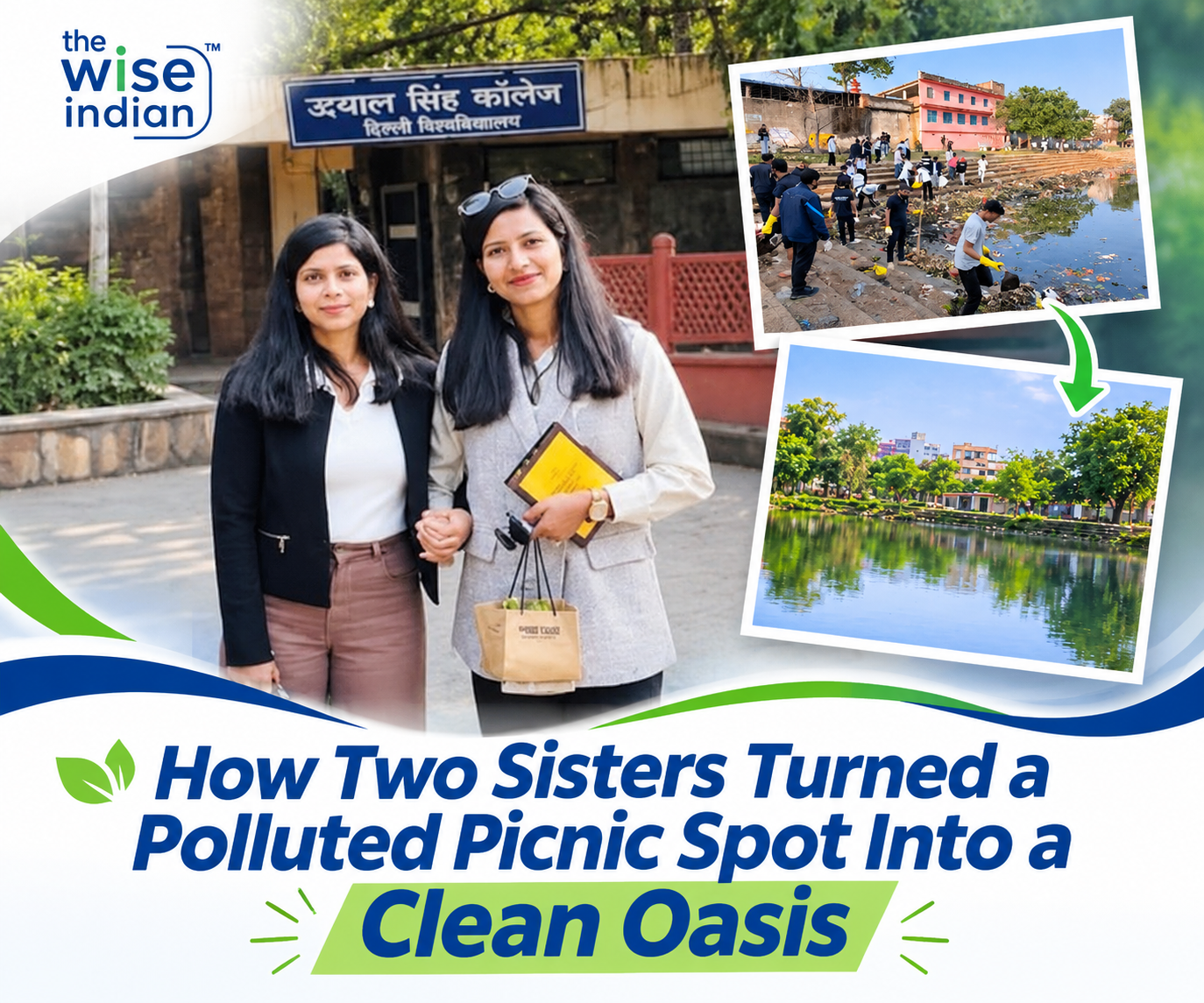
Sometimes, changing the world begins with refusing to accept something that everyone else has learned to ignore. For sisters Anjali and Ruchi Neeraj, that moment came when they noticed a favourite picnic destination in Hazaribagh, Jharkhand, slowly disappearing beneath plastic bottles, wrappers and discarded bags. Visitors continued enjoying the surroundings, yet many left their rubbish behind.
Instead of accepting this pollution as unavoidable, the sisters decided to take responsibility. Their determination eventually became a community movement that reached water bodies across Jharkhand. What began with a few people cleaning their surroundings has reportedly resulted in more than 80,000 kilograms of plastic waste being removed. Their story shows how one decision to act can inspire an entire community.
A Polluted Picnic Spot Became the Beginning of Something Bigger
The sisters could have treated the pollution around them as another everyday problem. However, watching familiar natural spaces become dumping grounds made them realise that something needed to change. Places that once attracted visitors for their beauty were increasingly surrounded by plastic bottles, food wrappers and other discarded materials. Instead of waiting for someone else to take responsibility, Anjali and Ruchi decided to begin themselves.
On July 16, 2023, they established the Vasudha Kalyan Foundation in Hazaribagh. Their initial objective was straightforward: bring people together, remove plastic waste and encourage residents to protect their surroundings. They started with limited resources and just seven volunteers. Nevertheless, the sisters believed that environmental protection should begin within one’s own community. Their first cleanup activities focused on nearby water bodies and popular tourist destinations. They collected discarded plastic and encouraged people to participate in restoring these spaces. Gradually, their small initiative started attracting attention. What began as two sisters trying to clean familiar surroundings was becoming a shared responsibility.
From Seven Volunteers to Hundreds of Changemakers
Building an environmental movement required patience, particularly when convincing people to participate consistently. The sisters understood that cleaning polluted locations would never be enough without changing public behaviour. Therefore, they began encouraging students and young residents to become part of their activities. Their approach gradually attracted volunteers from colleges and neighbouring districts.
According to a June 2025 report by The Times of India, Anjali Ruchi, the foundation had grown from seven volunteers to approximately 200 members. More recent coverage by The Better India described a network involving more than 300 volunteers. This growth demonstrated how an ordinary initiative could inspire people beyond its original community. Students who once walked past polluted surroundings began participating in restoring them.
Consistency became the foundation of their approach. Volunteers organised weekly cleanup drives, returning to polluted locations instead of treating environmental protection as a one-day activity. They collected plastic bottles, food packaging, disposable materials and other waste. Importantly, their activities also encouraged conversations about responsible waste disposal. Every volunteer brought another person into the movement, strengthening the sisters’ original mission.
More Than 80,000 Kg of Plastic Removed Across Jharkhand
The scale of their work becomes even more remarkable when considering the amount of waste collected. By June 2025, the foundation had reportedly removed approximately 50,000 kilograms of plastic waste from Hazaribagh’s reservoirs and tourist destinations. Its subsequent reported achievement crossed 80,000 kilograms, covering rivers, lakes, ponds and waterfalls across Jharkhand.
The campaign has expanded beyond Hazaribagh, reaching locations that attract visitors because of their natural beauty. These include Tamasin Waterfall, Tilaiya Dam and Hazaribagh Jheel. However, popular destinations often face considerable littering when visitors leave behind disposable items. The volunteers have repeatedly returned to locations that require attention, demonstrating why environmental protection needs consistency.
Individual cleanup activities reveal the effort behind this achievement. In February 2024, volunteers cleaned Chhath Talab and collected more than 100 kilograms of plastic waste. They also recovered approximately 90 liquor bottles during that particular drive. In March 2025, another campaign at Canary Hill collected more than 1,000 kilograms of non-biodegradable waste. These activities show how much rubbish can accumulate around places people visit for relaxation. Nevertheless, the foundation’s reported 80,000-kilogram achievement represents its cumulative figure, not an independently audited measurement.
The Real Challenge Is Changing People’s Habits
Collecting thousands of kilograms of plastic is an impressive achievement, but the sisters face another difficult responsibility. A location cleaned by volunteers can become polluted again when visitors continue littering. Sometimes, waste returns before volunteers have an opportunity to organise another cleanup. Consequently, the foundation understands that removing rubbish must go hand in hand with changing public behaviour.
Its activities therefore extend beyond collecting discarded materials. Volunteers encourage visitors to dispose of waste responsibly and explain why plastic pollution threatens natural surroundings. The organisation also works with students and local communities to spread environmental awareness. These conversations matter because lasting improvements depend on what people do after the volunteers leave. Their work has also received recognition beyond their immediate community.
During a World Environment Day programme in Ranchi in 2024, the United Nations Environment Programme appreciated their environmental efforts with a certificate of appreciation. Anjali works as an English lecturer, while Ruchi has pursued postgraduate studies in Botany. Their educational backgrounds complement their interest in environmental protection. Meanwhile, the foundation supports its activities by selling collected recyclable waste to scrap dealers. The proceeds help purchase protective equipment for volunteers. However, the sisters understand that volunteers cannot carry this responsibility alone. Visitors, institutions, local communities and authorities must all contribute.
The Wise Take
Anjali and Ruchi’s journey reminds us that meaningful change does not always begin with money, influence or institutional support. Sometimes, it begins with two people who care enough to act when everyone else walks past a problem. Their volunteers have reportedly removed more than 80,000 kilograms of plastic, but their greatest achievement may be the people they have inspired along the way.
Every student who joins a cleanup, every visitor who carries their rubbish home and every resident who protects a nearby pond becomes part of that change. Their journey also highlights an important truth: cleaning nature should never become a substitute for preventing pollution. A beautiful destination should remain beautiful even after visitors leave. The sisters started by refusing to ignore a polluted picnic spot. Today, their efforts encourage an entire community to understand that protecting nature is everyone’s responsibility.
Also read our other article on India and the UAE Hold Mountain Guardian 2026 in Uttarakhand, a 14-Day Army Exercise Focused on Mountain Warfare
Follow The Wise Indian for regular updates on stories that shape India’s strategic future and global standing. Stay connected with us for sharp analysis, untold perspectives, and a closer look at the partnerships driving our national security.