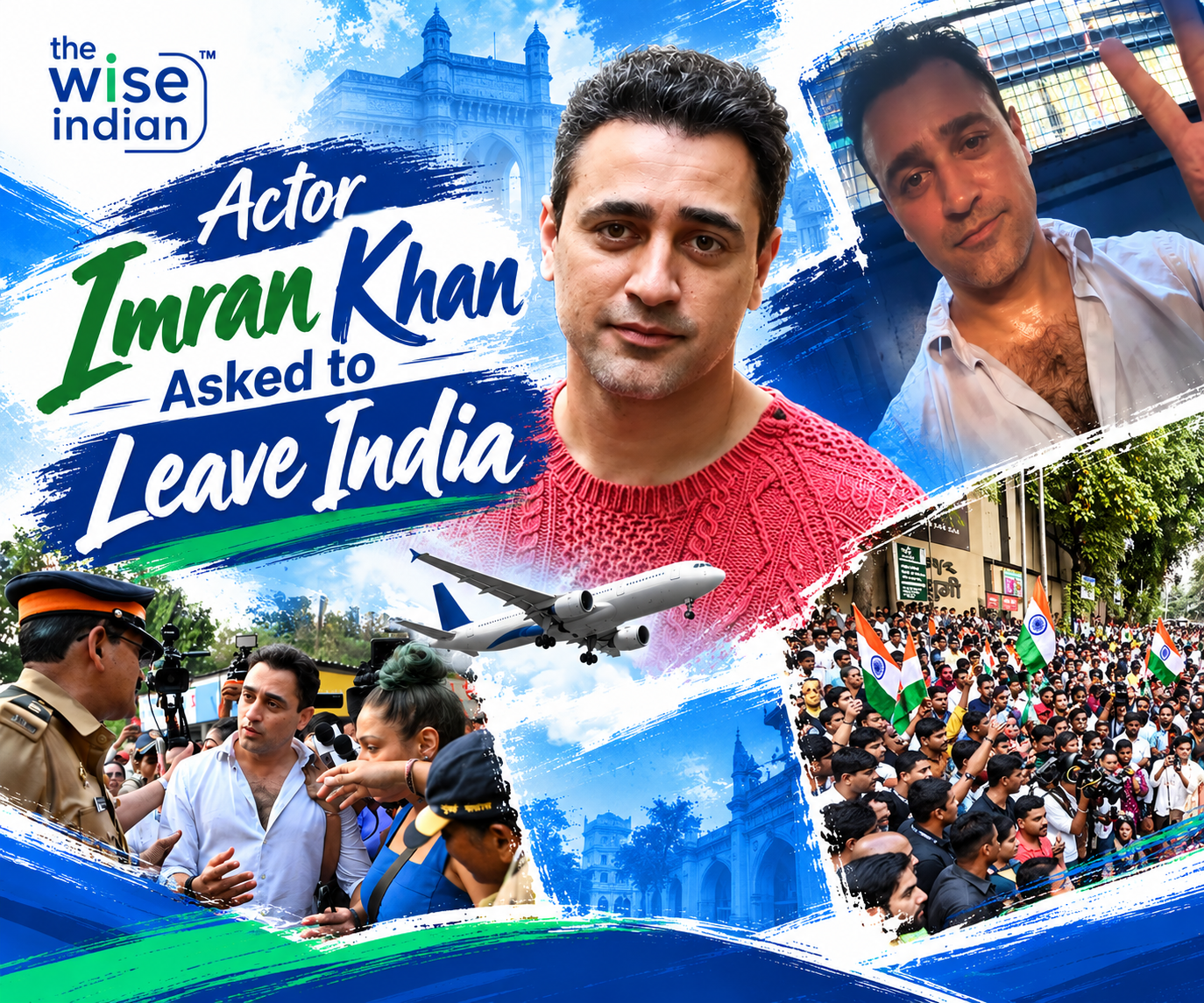
Bollywood actor Imran Khan has been asked to leave India by October 28, 2026. The notice was reported on October 15 and follows a protest in Mumbai. Officials say it relates to immigration rules for foreign nationals. Khan is expected to challenge the notice in the Bombay High Court.
What the Notice Says: Imran Khan and the October 28 Deadline
Mumbai Police have issued what they call a Leave India Notice to Imran Khan. It directs the actor to leave the country by October 28. Officials who spoke on Thursday said he allegedly violated provisions of the Immigration and Foreigners Act. PTI reported that a formal copy has reached him. Meanwhile, police added that further administrative procedures are underway. The deadline falls 13 days after media reported the notice. In addition, Khan’s lawyers plan to seek an urgent hearing. Reports differ slightly on which office issued the order. The Statesman said the Foreigners Regional Registration Office, or FRRO, acted after a complaint reached it. PTI credited the Mumbai Police.
Still, such differences are common in fast-moving stories. The notice text itself has not appeared in the reports reviewed. A police officer told ANI that the FRRO took the action and served the notice on Khan. A police official explained the reasoning behind the notice. “Foreign nationals are prohibited from participating in political protests or political activities on Indian soil,” the official said. According to police, the notice rests on his participation in the protest. Police say he took part despite not being an Indian citizen. These remain allegations at this stage.
The October 10 Protest at August Kranti Maidan
The protest took place on October 10 at August Kranti Maidan in Mumbai. Demonstrators backed the Cockroach Janta Party, or CJP, and its campaign in Delhi. Newsgram described the CJP as a youth-led satirical political movement. Protesters demanded the resignation of Chief Election Commissioner Gyanesh Kumar. Protesters linked the demand to concerns about the Special Intensive Revision, or SIR, of electoral rolls. The SIR is an exercise to update the electoral rolls. The event was scheduled for 3:30 pm. India TV said it took place under the banner “Hum Bharat Ke Log.”
India TV reported that security was tightened around the venue. Barricades went up, and police closed the roads leading to the ground. Soon after, police detained people arriving for the protest. The same report said police detained Imran Khan at about 5:20 pm. The Statesman put the number of detained people at about 400. Actor Lekha Washington was also among them. However, later reports said police released both.
Khan spoke in a video while police escorted him to their vehicle. “I have no demands. I am not part of any organisation,” he said. India TV added that he told ANI he attended as a resident of the city. He said he wanted to understand why people’s voices and movement were being restricted.
Who Is the Actor and What Does an OCI Card Mean?
Khan is 43 years old and the nephew of actor Aamir Khan. His films include I Hate Luv Storys in 2010 and Mere Brother Ki Dulhan in 2011. PTI noted his recent cameo in Happy Patel: Khatarnak Jasoos, a film that Aamir Khan backed In fact, he is a United States citizen who holds an Overseas Citizen of India card, known as an OCI card. The card is a long-term status for people of Indian origin who live abroad. It lets holders live and work in India. But it does not make them Indian citizens, and holders cannot vote.
The Complaint, the Response and the Court Plan
The notice followed a complaint by Kirit Somaiya, a BJP leader and former MP. He filed it at Gamdevi police station, which forwarded it to the FRRO, the Statesman said. Somaiya questioned whether a foreign national could join a political protest. He also asked authorities to check Khan’s citizenship status. ThePrint added that he approached immigration authorities and the Airport Authority as well. He urged Maharashtra Chief Minister Devendra Fadnavis to intervene. He also sought a report on how long Khan has held US citizenship. After authorities issued the notice, he welcomed the move. The reports reviewed carry no direct response from Khan to these claims.
Imran Khan’s side holds a different view. Deccan Chronicle, citing PTI, reported that he will move the Bombay High Court. His lawyers will likely file the petition on Friday or Monday. Advocate Zulfikar Memon of MZM Legal will likely represent him. Specifically, the plea reportedly argues that no law or rule bars an OCI cardholder from joining a protest. It calls the notice “drastic.” Lawyers will likely mention the plea before a division bench for an urgent hearing. The bench is likely to comprise Chief Justice Mahesh Chandra Tripathi and Justice Advait Sethna. PTI noted that Khan was unavailable for comment. Still, no court has ruled on the matter yet. Reports do not say what follows if the deadline passes.
The Wise Take
This story is still developing, and both sides have stated their positions. Police and the complainant describe the notice as a step under immigration law. Khan’s lawyers say existing rules do not prohibit such participation. No court has yet tested either claim. For readers, the key facts are simple. Authorities have issued a notice and set a deadline, and Khan plans a legal challenge. Everything else depends on the court process. Both sides deserve a fair hearing and accurate reporting.
The case raises a broader question. What rights do OCI cardholders have when it comes to public protests? Courts usually settle such questions through legal process. Readers should rely on official statements and court records as they emerge. Updates are likely after the High Court hearing.
Also read our other article on Air India Frankfurt-Delhi Flight Diverted to Jaipur After Hijack Alert and Bomb Threat Report: What We Know So Far
Follow The Wise Indian for regular updates on stories that shape India’s strategic future and global standing. Stay connected with us for sharp analysis, untold perspectives, and a closer look at the shifting legal landscapes, civic rights, and institutional frameworks defining our democratic fabric.