
Born in Manipur, Licypriya Kangujam began speaking about environmental problems when she was just six years old. Today, she is recognised internationally for campaigning against climate change, air pollution and plastic waste. Her journey began after witnessing the destruction caused by cyclones in Odisha and experiencing dangerous air pollution in Delhi.
Instead of treating these problems as distant concerns, she decided to raise her voice through public demonstrations and environmental initiatives. From demanding climate education in schools to creating a plastic exchange programme, her campaigns focus on practical solutions. Her story also carries a wider message: children deserve a voice in decisions that will shape their future.
The Childhood Experiences That Sparked Her Activism
Licypriya Kangujam was born on October 2, 2011, in Manipur, but she spent much of her childhood in Odisha before moving to Delhi. Her interest in environmental protection developed through experiences that exposed her to the consequences of natural disasters. Cyclone Titli in 2018 and Cyclone Fani in 2019 left a strong impression on her. She later explained that witnessing their destruction as a child changed how she viewed environmental problems. In 2018, she also attended a United Nations disaster-risk conference in Mongolia with her father.
The discussions introduced her to the challenges communities face during natural disasters and strengthened her interest in climate action. She began her activism that year and established the Child Movement, an initiative that encourages children to participate in environmental campaigns. As her activities expanded, she started speaking at public events and demanding stronger action from decision-makers. Her early experiences gave her a clear purpose: to make environmental protection a responsibility shared by everyone, not just scientists and governments.
Why She Wants Climate Education in Every School
Climate education remains one of her central demands. She believes students should learn about global warming, extreme weather, biodiversity, pollution and sustainable living as part of their regular education. According to her, children cannot respond effectively to environmental problems if they do not understand their causes and consequences. Therefore, she has urged governments and educational institutions to introduce climate change lessons into school curricula. In a 2020 interview with the Harvard International Review, she discussed positive responses from Rajasthan, Gujarat and Sikkim regarding climate education.
She also reported that more than 145,000 schools would include the subject. However, this was her account of the initiative at the time, rather than an independently verified nationwide implementation figure. In a June 2026 interview with Rediff, she described climate education as one of her biggest achievements and said more than 1.5 lakh schools were teaching it. These figures should be attributed to her statements rather than presented as confirmed government statistics. Nevertheless, her campaign raises an important educational question: should environmental awareness remain an occasional textbook topic, or should schools prepare students to understand and respond to a changing climate?
Protesting Against Air Pollution and Demanding Cleaner Air
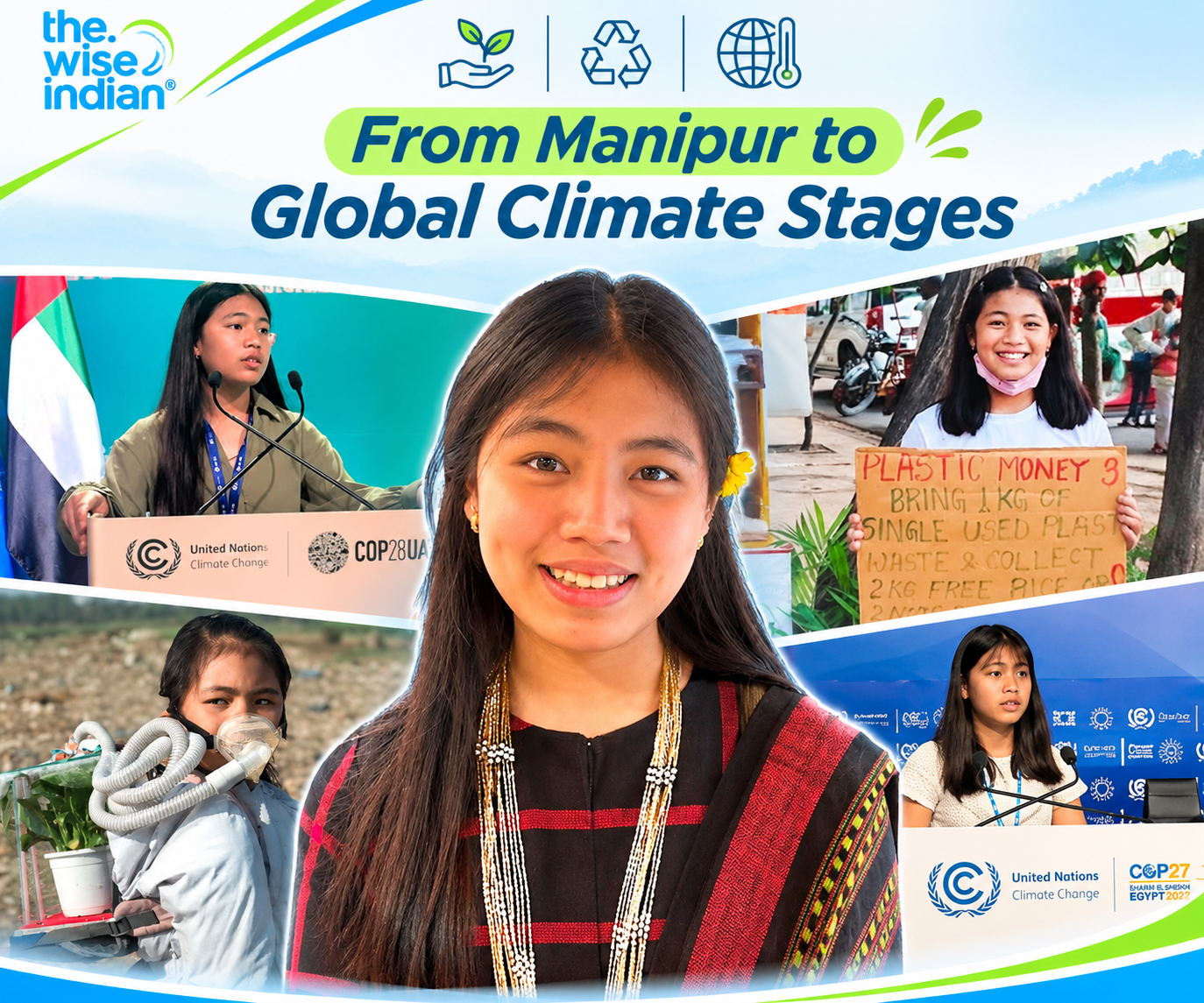
Air pollution became another major focus after she moved to Delhi, where she experienced hazardous air quality and intense heat. She began using public demonstrations to draw attention to the health and environmental risks of polluted air. In October 2019, she introduced SUKIFU, short for Survival Kit for the Future. The symbolic device featured a transparent backpack containing plants and a respirator-like arrangement made from recycled materials. It represented the kind of future children might face if governments failed to control pollution.
She also staged a protest near Rashtrapati Bhavan in October 2020, demanding stronger action against Delhi’s air pollution. Reports and her own account describe her detention by Delhi Police during that period. Her demonstrations highlighted a concern that affects ordinary families: children should not have to compromise their health because of the air they breathe. However, the SUKIFU backpack was an awareness symbol, not a scientifically functioning air purifier. Similarly, although she campaigned for stronger pollution controls, the air-quality legislation introduced in 2020 and subsequent legal framework cannot be attributed to her protest alone. Her campaign nevertheless helped bring children’s concerns into public discussions about air pollution.
Turning Plastic Waste Into Something Useful
Beyond protests and speeches, Licypriya Kangujam has promoted practical ways to address plastic pollution. In 2022, she launched the Plastic Money Shop, a mobile, solar-powered initiative that encourages people to collect single-use plastic waste. Participants can exchange collected plastic for useful items such as rice, school stationery or plant saplings. The initiative gives communities a direct incentive to collect plastic instead of discarding it in public spaces. Furthermore, the collected material can be recycled or upcycled into useful products, including school benches. This approach connects waste management with community participation and environmental education.
It also makes the problem easier for children and families to understand because they can take part in the solution themselves. The project earned international recognition when Action For Nature awarded her second place in its 2024 International Young Eco-Hero Awards, in the 8–12 age category. Her environmental advocacy has also reached international platforms. She addressed world leaders at the United Nations Climate Change Conference COP25 in Madrid in 2019 and later participated in other climate gatherings. Through these appearances, she has called for stronger climate commitments and greater attention to the needs of younger generations.
The Wise Take
The journey of this young activist shows how personal experiences can develop into a sustained public campaign. Her work connects three important environmental concerns: climate literacy, cleaner air and responsible plastic management. Each addresses a different part of the same challenge. Education helps children understand environmental risks, pollution campaigns demand accountability, and community projects encourage people to change everyday habits.
However, meaningful progress requires more than public attention or individual effort. Governments must introduce effective policies, schools must provide reliable environmental education, and communities must support practical waste-management systems. Her reported achievements also deserve careful examination, particularly when campaign figures or policy outcomes lack independent verification.
Recognising these distinctions does not diminish the importance of youth participation. Instead, it makes environmental reporting more responsible. Young people will experience the long-term consequences of today’s decisions, so their concerns deserve serious consideration. The message behind her activism is simple: children should not have to wait until adulthood to protect the planet. They can start raising questions, encouraging action and demanding accountability today.
Also read our other article on neha Sharma: The Indian Pilot and Formula Racing Driver Challenging Gender Stereotypes Through Two Demanding Careers
Follow The Wise Indian for more inspiring stories.