
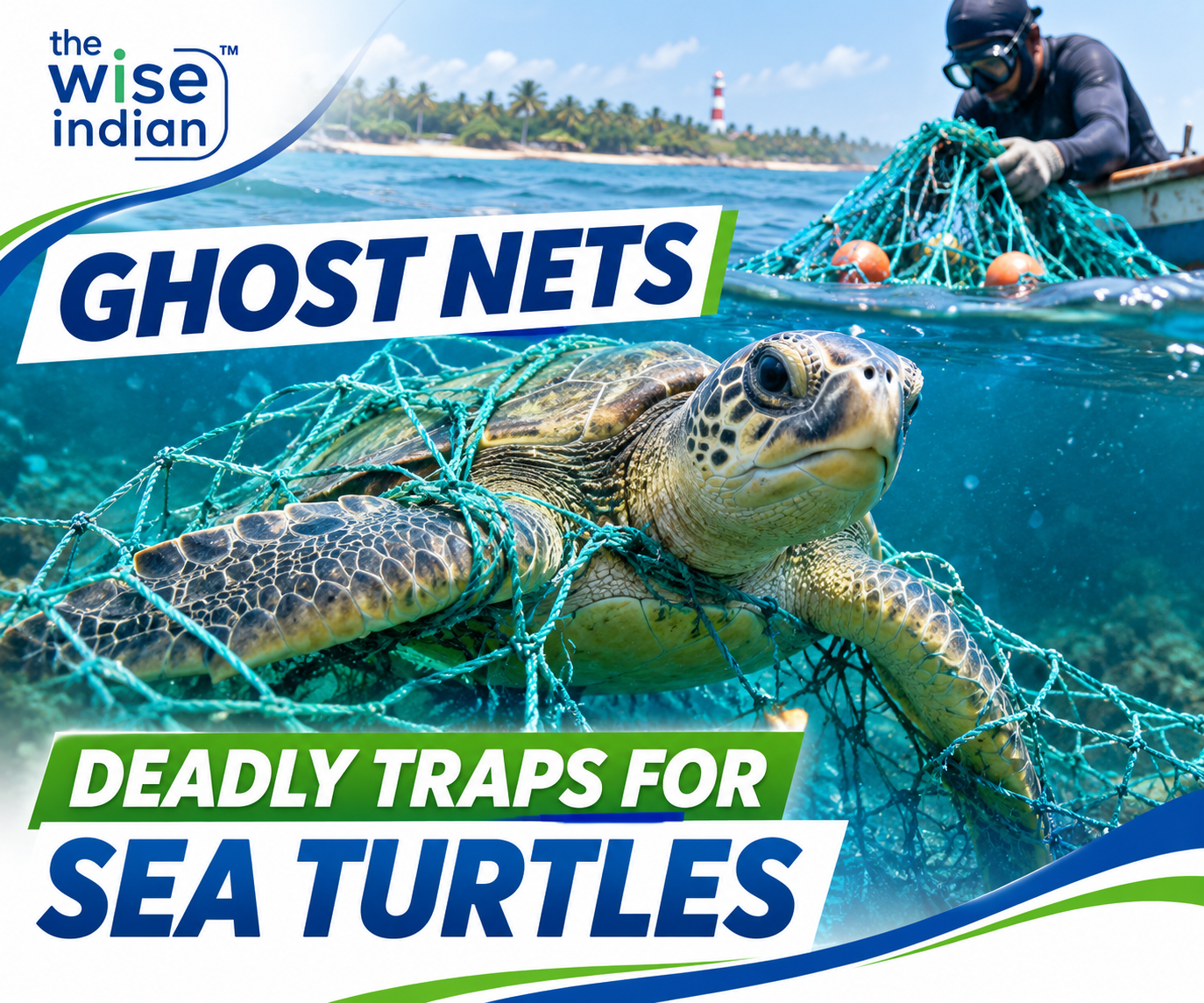
Ghost nets are a persistent hazard hidden beneath the ocean’s surface. They are fishing nets and other gear abandoned, lost or discarded in the water. Although fishers no longer operate them, they can continue trapping marine animals. Sea turtles, dolphins, sharks, fish and seabirds may become entangled, injured or killed. Moreover, ocean currents can carry lost equipment far from its original location. In India, TREE Foundation’s community-based recovery work shows how coastal fishers can help remove this threat.
What Are Ghost Nets and How Do They Enter the Ocean?
The term ghost nets refers to lost, abandoned or discarded fishing nets. The wider technical term is abandoned, lost or otherwise discarded fishing gear, shortened to ALDFG. This also includes ropes, lines, traps and other equipment. Gear can be lost when storms or currents pull it away, when it snags underwater, or when equipment breaks. It may also be discarded when damaged or when ports lack collection facilities. Therefore, not every lost net results from deliberate dumping. Once adrift, a net can travel with currents, become caught on reefs or settle on the seabed.
Some remain suspended in the water, where animals can swim into them. Many modern nets use durable synthetic plastics, including nylon and polyethylene. These materials can persist in marine environments and continue posing risks. The Food and Agriculture Organization calls the continued capture of animals by unattended gear ghost fishing. It identifies impacts on fish stocks, threatened species and seabed habitats. Its explanation also highlights why preventing fishing gear losses matters.
Why Sea Turtles, Dolphins and Sharks Are at Risk
Sea turtles can become caught by their flippers, necks or bodies in net mesh and ropes. Entanglement restricts swimming, causes cuts and injuries, and can leave animals exhausted. Turtles must surface to breathe air. If a net holds one underwater or blocks its route to the surface, drowning is possible. A trapped turtle may also struggle to feed or escape further danger. The severity depends on where the gear catches it and how long it remains trapped. Similarly, dolphins are air-breathing mammals, so entanglement is dangerous if it prevents surfacing. Nets and lines may wrap around their fins, tails or mouths.
This can cause wounds, infections and impaired movement. Sharks can also be caught by their fins, mouths or gill areas. Entanglement may interfere with swimming, feeding or water movement across the gills. However, outcomes vary by species; it is inaccurate to claim every entangled shark will drown. NOAA notes that entangled animals may drown or starve, or suffer trauma and infections. These effects demonstrate why abandoned fishing equipment presents a serious wildlife threat.
TREE Foundation’s Work to Retrieve Ghost Nets in India
In Tamil Nadu, TREE Foundation works with coastal communities on sea turtle and marine conservation. Its initiative, “Hunting the Ghosts That Haunt Our Oceans,” focuses on Chennai–Kancheepuram coastal and offshore areas. The organisation describes a community-based approach involving experienced fishers, professional sailors and its Sea Turtle Protection Force. Teams survey areas, document recovered gear and help rescue entangled animals. The programme also raises awareness about abandoned nets and safe disposal of damaged fishing equipment. An incentive programme is central to this work.
Fishers receive financial support for retrieving nets and handing them over to TREE Foundation. The organisation says corporate social responsibility contributions support this programme. Furthermore, fishers bring practical knowledge of local waters and can help locate gear underwater. TREE Foundation’s published achievements report approximately 217,655 kilograms of ghost nets retrieved and handed over through the programme. That equals about 217.7 metric tonnes.
The foundation also reports 995 sea turtles, sharks and marine mammals rescued, disentangled and released from fishing nets. These are the organisation’s reported figures, not independently audited totals. Nevertheless, the initiative demonstrates how community participation can contribute to marine conservation.
Preventing Ghost Fishing Requires More Than Clean-Up
Removing abandoned gear helps, but retrieval alone cannot prevent new losses. Prevention begins with responsible handling, maintenance and storage of fishing equipment. Marking gear can help identify its owner and support reporting when equipment goes missing. The FAO’s voluntary guidelines encourage gear marking as part of better management. Fishers should report lost equipment promptly. Meanwhile, ports and authorities can provide collection points for damaged or unwanted nets. T
rained teams should handle recovery because large or deeply snagged nets can be dangerous. Recovered material also needs responsible handling. Nets should not be moved from the sea and left where they could return to the water. Collection, sorting, reuse and recycling can reduce future marine debris. However, recycling options depend on the material and its condition. TREE Foundation combines retrieval with local participation and documentation. Its approach shows how conservation organisations can work alongside fishing communities.
In addition, better reporting systems and cooperation between authorities can help prevent further losses. These measures address the problem before abandoned equipment causes additional harm.
The Wise Take
Ghost nets are not simply discarded plastic; they are fishing equipment that can continue harming wildlife after being lost. Sea turtles, dolphins and sharks face different risks, including restricted movement, wounds and impaired feeding. Some animals may drown, while others suffer lasting injuries. The threat also extends to fish, seabirds and underwater habitats.
TREE Foundation’s reported recovery of approximately 217.7 tonnes demonstrates the contribution of organised retrieval along parts of India’s east coast. However, one programme cannot solve a problem that crosses borders and moves with currents. Better gear management, prompt reporting, safe disposal and coordinated recovery are essential. Ultimately, protecting marine life means preventing fishing equipment from becoming ghost gear in the first place.
Also read our other article on PhonePe Invest Opens New Doors for Indian Investors With ₹10 Daily SIPs for Everyday Savers
Follow The Wise Indian for clear, unbiased, and actionable guides that make personal finance simple.