
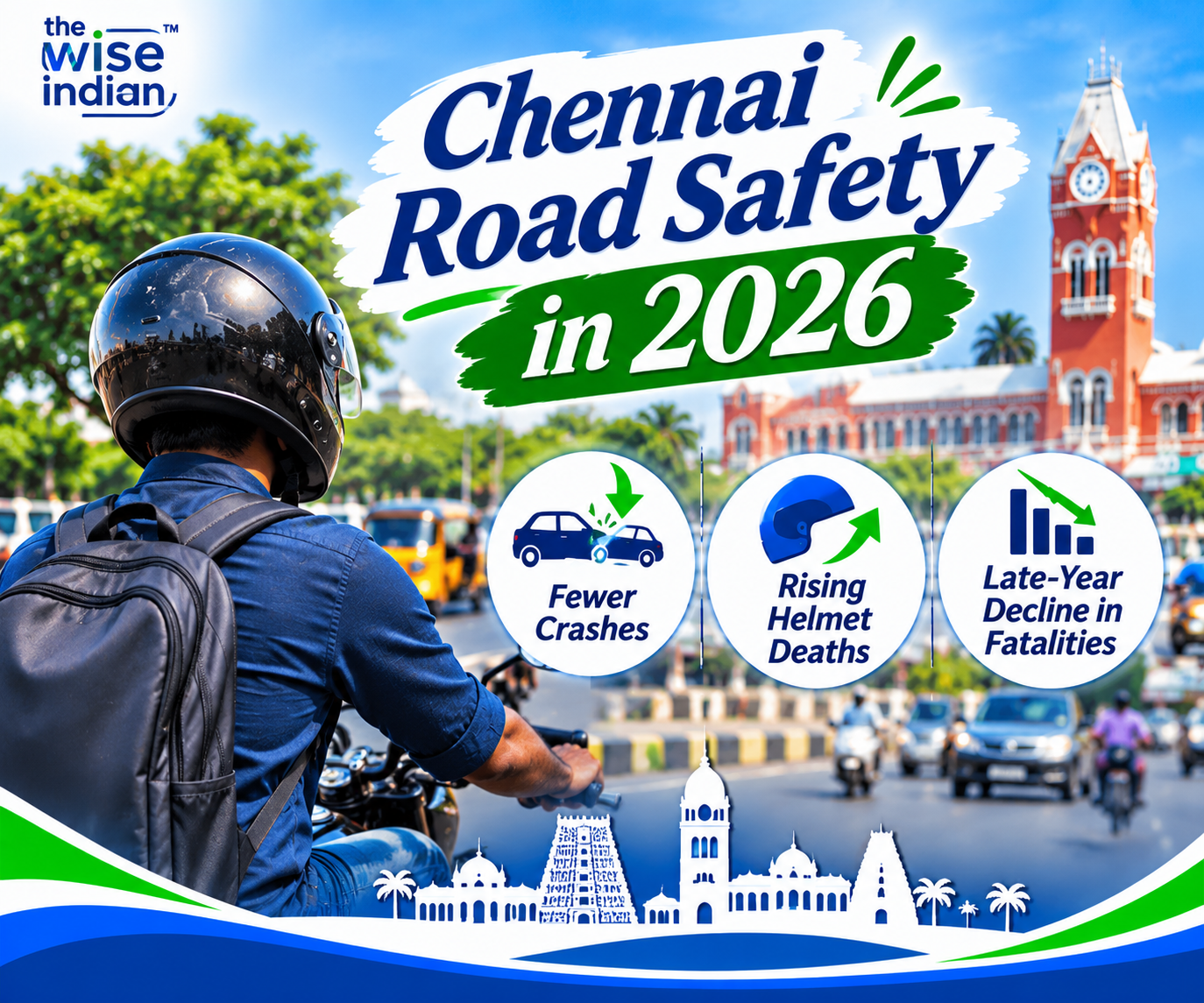
Chennai’s road safety figures in 2026 tell a story that changed over the year. During January–June, the city recorded fewer crashes but more deaths than in the same period of 2025. Across Tamil Nadu, helmet-related fatalities and village-road accidents also increased. However, figures released in October showed a later decline in Chennai’s road deaths and injuries. Fresh enforcement drives in late October and early November added another development. These figures show why Chennai road safety needs continuous monitoring.
Fewer Crashes, More Fatalities in the First Half
Provisional January–June data showed 1,996 Chennai accidents. That was 2.68% below the 2,051 recorded in 2025. Yet deaths increased from 237 to 257, a rise of 8.44%. A fall in reported crashes does not automatically mean fewer people lose their lives. By comparison, Tamil Nadu recorded 37,292 accidents during the same six-month period, compared with 35,226 in 2025. Consequently, that was an increase of 5.86%. However, statewide deaths edged down from 9,498 to 9,461, a decrease of 0.39%. As a result, Chennai’s trend therefore differed from the state’s overall fatality trend. Moreover, the analysis placed Chennai among the leading urban areas for accidents and deaths. Chennai road safety therefore needs separate assessment alongside statewide trends.
Helmet Use and Two-Wheeler Risks
Across the state, two-wheeler users accounted for 4,180 deaths across Tamil Nadu in January–June 2026. In total, that represented 44.18% of all road fatalities in the state. Of those deaths, 1,136 people were not wearing helmets. In fact, the increase was more than 41%. Specifically, in Chennai, officials recorded 25 such deaths, up from 21 a year earlier. Also, the figures underline how helmets can reduce serious head-injury risks.
Meanwhile, later enforcement data offered a more complicated picture. Recorded helmet violations fell from 41,540 in June to 39,320 in July. By August, recorded cases stood at 36,850. Cases involving pillion riders without helmets also declined, from 33,560 in June to 28,981 in August. Even so, fewer recorded cases do not prove that helmet use increased. On September 30, The Times of India reported fewer visible helmet checkpoints across several city areas. On October 8, it reported that police would intensify checks, including for women pillion riders. Also, officers could photograph violations and issue e-challans.
October Figures Show a Change in Chennai
A later update from the Greater Chennai Police provided a different picture from the first-half figures. On October 29, Police Commissioner A. Amalraj said Chennai recorded 402 deaths from January to October 2026. The comparable 2025 figure was 420. That was a decline of about 4.3%. In addition, the number of people injured also fell, from 2,997 to 2,865. Thus, the first-half increase did not continue through October.
Moreover, police reported 4.85 lakh helmet-violation cases in 2026 and urged motorists to follow traffic rules. Additionally, the city received 50 motorcycles and a light motor vehicle to strengthen enforcement and emergency response. For that reason, Chennai road safety remains a continuing public priority. Even so, these steps may support police operations, but do not prove what caused the decline. Also, comparable data will be needed to track Chennai road safety.
Drunk Driving, Rural Roads and Enforcement
For context, the first-half state analysis identified driver-related errors in 34,587 accidents, equal to 92.75% of reported crashes. It linked driver error to 8,746 deaths. At the same time, licence suspensions for six major offences fell 14.4%. They dropped from 48,358 in January–June 2025 to 41,402 in 2026. By contrast, drunk-driving suspensions rose 34.4%, from 6,120 to 8,223.
On November 1, The New Indian Express reported a citywide Zero Tolerance Day drive. During the drive, police booked 8,704 cases and collected ₹7.65 lakh in fines. Officers checked helmet use, drunk driving, speeding, signal violations and other offences. Nevertheless, the operation shows continued enforcement, although one drive cannot establish a lasting change in driver behaviour. Overall, enforcement trends differed by offence.
DT Next reported on October 10 that Chennai police booked 26,273 drunk-driving cases. Also, the period covered October 2025 to September 2026. Additionally, fines totalled ₹262.73 crore, while ₹120 crore had been collected by the time of the report. Furthermore, the police also discussed proposals to cancel licences and seize vehicles belonging to repeat offenders. At that point, these proposals were still under discussion. Separately, village-road accidents across Tamil Nadu rose 17.07% to 4,692 in January–June. Also, deaths on those roads increased 8.13% to 1,250. Meanwhile, highways also accounted for a large share of state crashes and deaths.
The Wise Take
Overall, the latest available figures show both improvement and continuing risk. Chennai’s January–October fatality total was lower than in 2025. However, state data showed more first-half accidents, helmet-related deaths and village-road crashes. In addition, the October–September drunk-driving figures show that dangerous behaviour remains a policing concern. Nevertheless, one positive city update should not hide wider challenges or erase earlier progress.
Above all, sustained action matters more than short campaigns. Riders and pillion passengers need certified helmets on every journey. Similarly, drivers must avoid speeding, alcohol and mobile-phone use. In practical terms, authorities can strengthen enforcement, junction design, speed management, road maintenance and emergency care. Finally, they should publish regular, comparable data so the public can see whether interventions work. Finally, regular publication of comparable figures will help assess progress. Ultimately, Chennai road safety depends on shared responsibility: safer decisions by road users and steady, evidence-led action by authorities.
Also read our other article on PM RAHAT Offers ₹1.5 Lakh Cashless Treatment to Road Accident Victims, but Strict Timelines and Hospital Rules Apply
Follow The Wise Indian for regular updates on stories that shape India’s strategic future and global standing. Stay connected with us for sharp analysis, untold perspectives, and a closer look at the shifting legal landscapes, civic rights, and institutional frameworks defining our democratic fabric.