

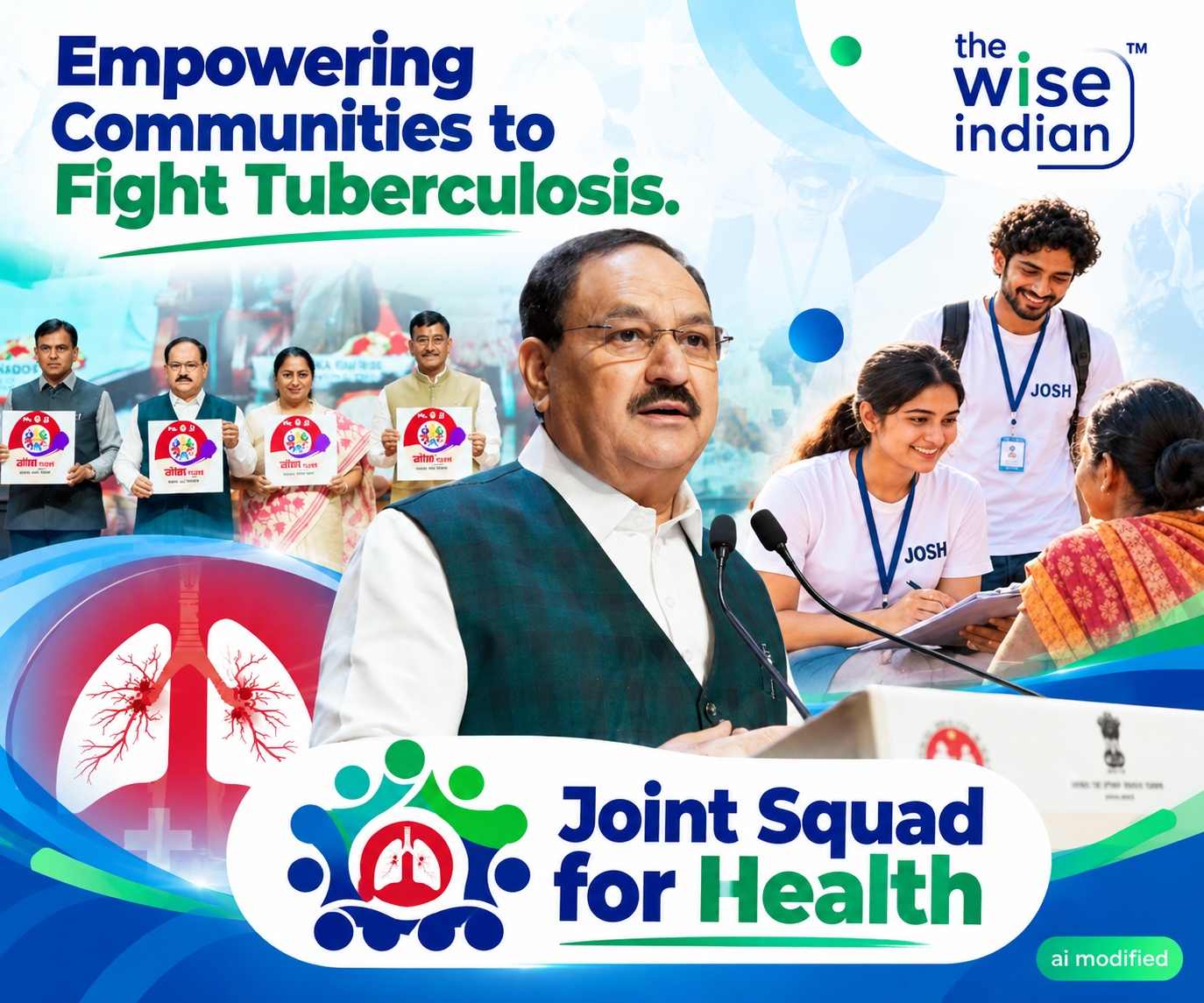
JOSH Teams are a new youth-led effort to fight tuberculosis in India. The Health Ministry launched them in New Delhi on 8 October 2026. More than 58,000 young volunteers will take part. Here is what they will do, and why it matters.
What JOSH Teams Are and Who Is Part of Them
JOSH Teams, short for Joint Squad for Health, were launched on Thursday, 8 October 2026. Union Health Minister J. P. Nadda launched them at Bharat Mandapam in New Delhi. The initiative is part of the TB Mukt Bharat Abhiyaan. The Health Ministry is implementing the initiative with the Ministries of Youth Affairs and Sports and Defence. The Delhi government also took part.
Delhi Chief Minister Rekha Gupta welcomed the launch. She described health, youth and defence as a Trishakti, meaning three powers. Three groups form the teams: MY Bharat volunteers, NCC cadets and designated Class-I officers. MY Bharat volunteers number 30,959, and NCC cadets number 27,147. Together, they total more than 58,000 young people. Public representatives and government officials also work alongside them.
What the Volunteers Will Do on the Ground
They will carry messages on TB prevention, early diagnosis, treatment adherence and stigma reduction. Treatment adherence means taking medicines regularly until the course is complete. Volunteers will also help identify TB patients. They will support nutritional care and counsel patients on regular medication. Nadda said the effort must go beyond awareness and screening. It must also cover diagnosis, treatment and treatment completion. He also spoke of active case finding and identifying people without symptoms.
Volunteers are asked to work with Nikshay volunteers, Nikshay activists and Nikshay Mitras. Nikshay is India’s official web-based system for managing and tracking TB patients. Nadda also pointed to new tools. Handheld X-ray machines with artificial intelligence can help spot people who need further tests. Molecular tests can detect TB and show whether the patient has drug-resistant disease. A shorter regimen called BPaLM can treat drug-resistant TB in six months.
He stressed that TB is not an incurable disease. The government provides ₹1,000 a month to each TB patient. Patients also receive free medicines. Earlier, the monthly nutrition support was ₹500. The teams are expected to help patients receive this support. Minister of State for Defence Sanjay Seth shared four simple messages. People should not hide symptoms or fear testing. They should also not abandon treatment or discriminate against patients.
Where the First Phase Begins and How Progress Is Tracked
In the first phase, the teams will work in 55 districts. These districts lie across 11 states and Union Territories. Nadda said the teams have a pilot task covering all blocks in these districts. Their work will be recorded in real time. A new JOSH Teams feature has been added to the TB Mukt Bharat app. Information will reach Class-I officers through the app. This allows digital monitoring of the teams’ activities.
The event also launched new informational material. It includes a JOSH Flipbook and a JOSH Brochure. The event also honoured TB Mukt Panchayats at the district level. In 2026, 67,933 gram panchayats across 697 districts were declared TB-free. Officials credited health workers, elected representatives, community members and volunteers. Youth Affairs Minister Mansukh Mandaviya said collective effort could help India eliminate TB before the global 2030 target. He also said TB was once a major social stigma. Advances in treatment have made it curable.
Why the Push Matters: India’s TB Numbers
India has made real progress, according to the WHO Global TB Report 2025. New cases fell from 237 to 187 per lakh people between 2015 and 2024. That is a 21 per cent fall, against 12 per cent globally. Treatment coverage rose from 53 per cent to over 92 per cent. The same report also shows the challenge ahead. India still accounts for about 25 per cent of global TB cases. India’s 21 per cent fall is well below the 50 per cent milestone set for 2025. That milestone comes from the WHO End TB Strategy.
At the JOSH Teams launch, Nadda said India is very close to its goal. He called for a last push. He also said treatment coverage is 92 per cent, against 78 per cent globally. Nadda said the work cannot succeed without volunteers and grassroots workers. The Health Ministry says treatment success is 90 per cent, against a global average of 88 per cent. TB deaths fell from 28 to 21 per lakh people over the same period. The ministry says missing cases have fallen sharply. Missing cases are people with TB who were not notified to the programme. They fell from 15 lakh in 2015 to under one lakh in 2024.
The Wise Take
JOSH Teams show that fighting a disease takes more than hospitals. It also takes young people willing to go from village to village. Early testing, regular medicines, and freedom from stigma all matter. These are simple actions, and every community can take them. The numbers show progress, but also a long road ahead. The initiative is in its first phase, in 55 districts. Its real impact will be known only with time and data. For now, one thing is clear. TB is curable, and early care saves lives.
If symptoms last, visit a government health centre for a TB test. Testing and treatment are free in government facilities under the national programme. Do not hide symptoms, and do not judge those who have TB. Every young volunteer and every neighbour can help end TB.
Also read our other article on An Overseas Citizen of India Card Is Not Citizenship. Families Usually Find That Out During an Inheritance
Follow The Wise Indian for more stories about the everyday heroes quietly shaping a better India



