

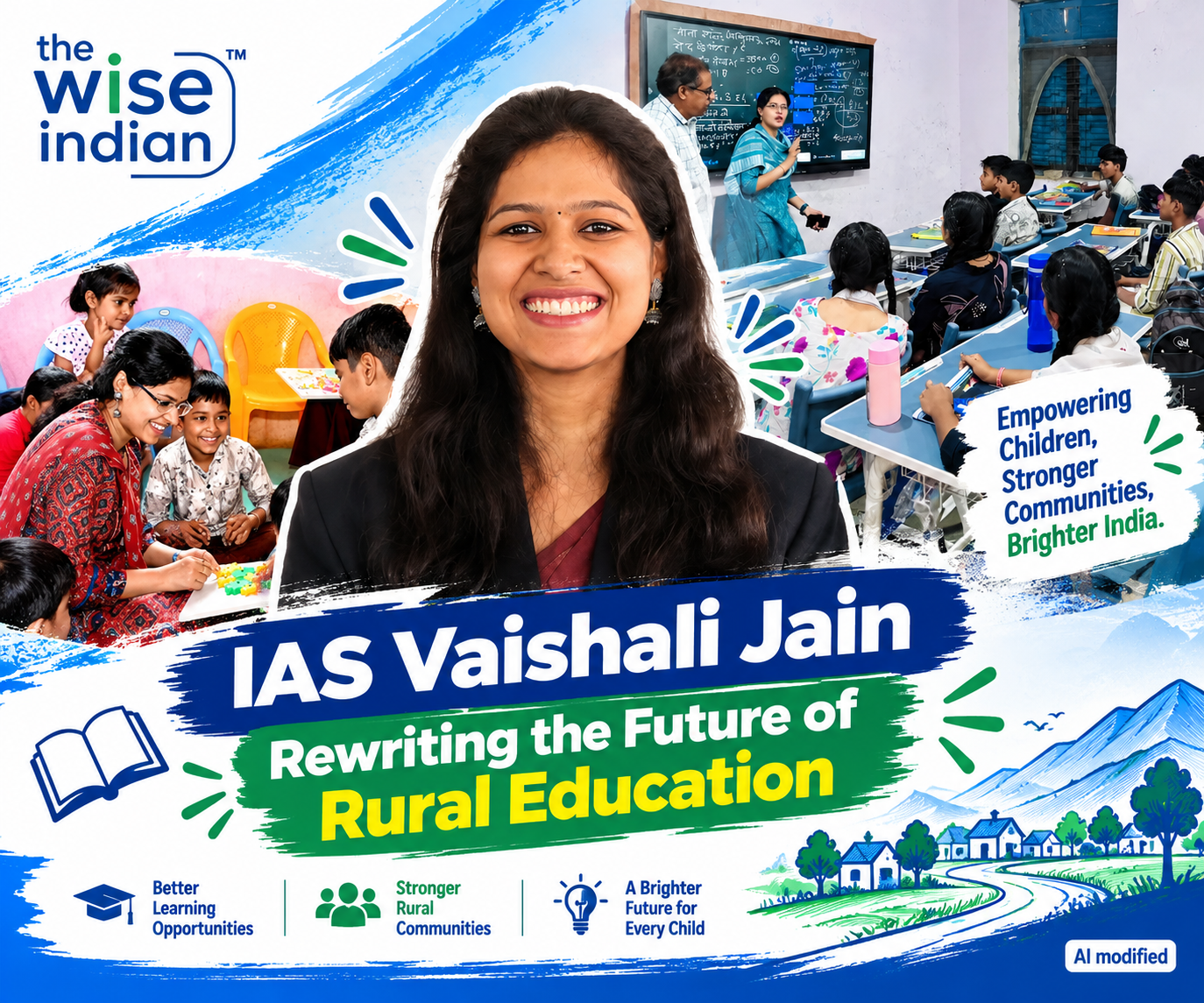
Vaishali Jain is a 2021-batch IAS officer serving in Ratlam, Madhya Pradesh. A district survey found that hundreds of primary schools lacked proper furniture. Her answer was a district-wide plan for benches, digital lessons, and libraries. Here is what has happened so far.
Vaishali Jain and the Survey Behind Ratlam’s Bench Drive
Vaishali Jain is the CEO of Ratlam Zila Panchayat and Additional Collector. Zila Panchayat is the district-level body of rural local government. She was transferred to Ratlam in October 2025. Before that, she served as a sub-divisional magistrate in Rewa. In Ratlam, she saw a simple problem. Hundreds of children in government primary schools sat cross-legged on bare floors. There were not enough desks to go around. Ratlam’s schools had smart boards but no benches or quality digital lessons.
That finding became Gyanodaya – Shala Unnayan Abhiyan. Gyanodaya roughly means the rise of knowledge. Shala Unnayan Abhiyan means school improvement campaign. The target is over 21,000 bench-desks across 1,011 government primary schools. That would reach more than 42,000 students. This is a target, not a finished job. By August 2026, around 200 schools had received benches. The benches serve children in Classes I to V. Nearly 100 schools had also been repaired. Some repaired schools also received rainwater harvesting structures to extend building life.
In those schools, the change is visible. As Jain said, “No student in these schools sits on the floor anymore.” For her, a bench tells a child that they matter. Her plan has three layers. First comes classroom dignity. Next comes better learning. Last comes a space where ambition can grow. Reports in August 2026 said she built this plan within nine months of taking charge. Indian Masterminds calls it one continuous journey linking infrastructure, technology and access.
How Villagers and Donors Joined the Bench Drive
Under Vaishali Jain, the administration invited the community to help rather than waiting only for government funds. Villagers were invited to adopt their own schools. CSR partners and pooled MLA funds also joined in. CSR stands for corporate social responsibility, money companies spend on community projects. Panchayat resources are being used as well. The system is transparent. It uses standard procedures, Google Forms, authorised vendor lists and a public helpline. Donors can choose the schools they want to support. This turns a government target into a shared community effort.
Her habit of fixing systems began earlier. As a magistrate in Rewa, she disposed of over 9,000 revenue court cases. She also made sure every petitioner was heard. She traced nearly 200 inactive bank accounts holding pending land compensation. That effort recovered close to ₹100 crore for farmers. She also helped identify almost ₹200 crore more that was owed. She believes one complaint can help fix the whole system. The work continues across Ratlam’s tribal blocks. Teams meet parents, track attendance and paint schools. Their goal is simple: government schools that children actually want to attend.
E-Gyan Setu: Digital Lessons for Remote Classrooms
Benches were only one part of the problem. Smart boards had reached secondary schools, but useful digital content had not. Vaishali Jain asked how remote students could get the same teaching as others. The answer was E-Gyan Setu, built for Classes IX and X. Setu means bridge in Hindi. Sixteen subject experts created video lectures, bridge courses, worksheets and revision modules. They also made AI-assisted learning content mapped to the curriculum.
The programme currently runs in 100 government schools. Fortnightly assessments flag weak areas for remedial support. Jain says the material supplements teachers so students stay more involved. It supports teachers rather than replacing them. Plans are underway for a recording studio. Lessons in local languages are also planned. Malvi and Bhili are local languages of the region.
Libraries for Students With Nowhere Quiet to Study
Jain believes that learning should not stop at the school gate. Many rural students preparing for competitive exams had no quiet place to study. Therefore, the administration launched a Public Rural Library Initiative. Unused government buildings are being turned into study centres. They will spread across the district’s six Janpad Panchayats. Fifteenth Finance Commission grants will fund the work.
Each library will offer seating, computers, internet access and a calm space. Students will pay a nominal hourly fee. Self-Help Group women will manage the centres and run adjoining Didi Cafes. This pairs education with livelihood opportunities. These centres give rural students a calm place to study after class. Aspirants can prepare for competitive exams there.
The Wise Take
Vaishali Jain’s story is inspiring, but it is not finished. Around 200 schools have benches so far, and the target is over 21,000. Jain herself says results may take a year or two. Still, the lesson is clear. Real change often begins with small basics. A bench, a lesson, and a quiet room can change a child’s day. When villagers adopt a school, they become partners in its future. As The Logical Indian notes, learning depends on the basics as much as technology. Her message is steady effort, not instant results. Her story also invites a question. Could other districts adopt a similar mix of benches, lessons and libraries? Every child deserves a seat, a good lesson and a place to dream.
Also read our other article on Ranjit Bajaj Built Minerva Academy in Mohali, and His Young Indian Footballers Beat Liverpool’s Youth Side 6-0 in Spain
Follow The Wise Indian for more inspiring stories.



