

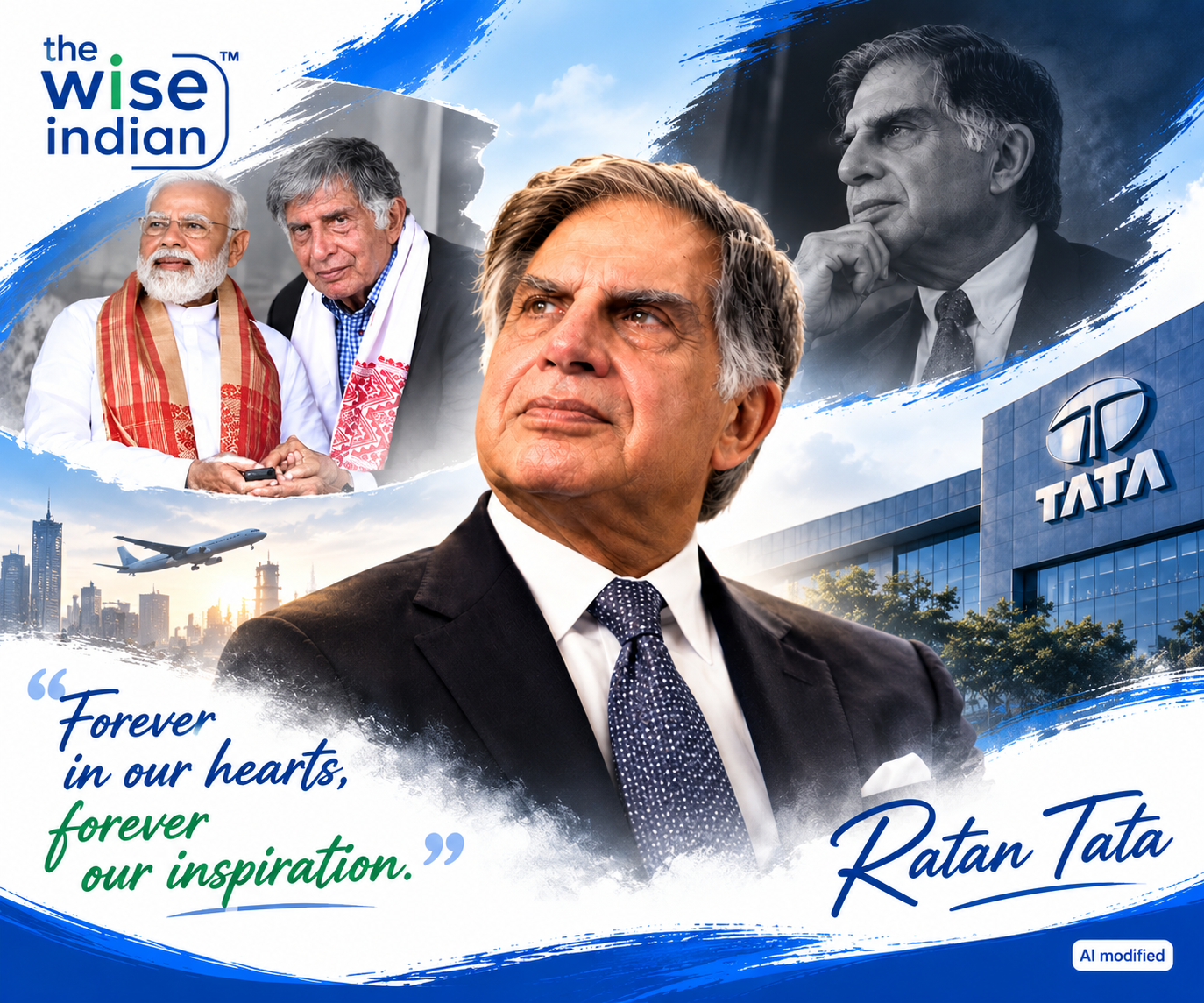
Two years ago today, India lost one of its most respected business leaders. Ratan Tata died on 9 October 2024 at the age of 86. This Ratan Tata death anniversary is a day to remember more than his wealth. It is a day to remember his values, courage, and kindness.
Ratan Tata Death Anniversary: From Shop Floor to the Chairman’s Chair
On the Ratan Tata death anniversary, India remembers a man who began his career on a factory floor. He was born in Mumbai on 28 December 1937. His parents separated when he was ten. His grandmother, Navajbai Tata, raised him afterwards. Ratan studied architecture at Cornell University and graduated in 1962. He worked briefly at an architecture firm in Los Angeles. He then returned to India and joined the Tata Group. His first job was on the shop floor of Tata Steel.
Few future chairmen begin there. Not every early effort succeeded. NELCO improved under his leadership but later struggled in an economic slowdown. Yet he kept learning and kept working. In 1991, he succeeded J.R.D. Tata as chairman of Tata Sons. At first, some company heads resisted his changes. He introduced a retirement age and made subsidiaries report to the group office. He also trusted younger talent with responsibility. That patient, steady style defined his 21 years at the top.
How Ratan Tata Took the Tata Group Global
During his 21 years as chairman, group revenue grew over 40 times. Profit grew over 50 times, Business Standard reports. The big leap began in 2000, when Tata Tea bought British brand Tetley. Britannica puts the price at about $431 million. In 2004, the group bought Daewoo’s truck-making business in South Korea. In 2007, Tata Steel acquired the Anglo-Dutch steelmaker Corus. Britannica calls it the biggest takeover by an Indian company at that time. In 2008, Tata Motors bought Jaguar Land Rover from Ford for $2.3 billion. Business Standard reports that over 65 percent of revenue later came from international operations.
He also dreamed of cars for ordinary Indian families. The Tata Indica arrived in 1998 as the group’s first passenger car. In January 2008, Tata Motors unveiled the Nano. It was aimed at a price of about ₹1 lakh. The Nano did not sell as hoped, and production stopped in 2018. Yet the project showed his wish to serve everyday families. Big dreams carry risk, and he accepted that. In 2007, he even co-piloted fighter jets at the Aero India air show, The Globalist reported. He stepped down from executive powers on 28 December 2012, when he turned 75. In 2016, he returned briefly as interim chairman. Natarajan Chandrasekaran took over in February 2017.
The Heart Behind the Business
Ratan Tata led the two main Tata trusts. Together, they hold a 66 percent stake in Tata Sons. The structure links one of India’s largest business groups to charity. His giving also reached classrooms and research labs. In 2008, he gifted Cornell $50 million. That made him the university’s largest international donor. In 2010, Tata companies and charities gave $50 million for an executive centre at Harvard Business School. In 2014, the group gave ₹95 crore to IIT Bombay for a technology and design centre.
Compassion showed in crisis too. After the 2008 attack on the Taj Mahal Palace Hotel, he stood outside for three days. He later helped restore the hotel and supported victims’ families. He even visited their homes personally. Later in life, he invested in over 40 start-ups, mostly in a personal capacity. He also launched Goodfellows, a companionship start-up for senior citizens. His love for animals was well known. In June 2024, he appealed on Instagram for blood donors for a sick stray dog at his Mumbai animal hospital. He also supported cancer care in Assam and received the Assam Baibhav award in 2021.
His Last Journey and Lasting Legacy
Ratan Tata died at Breach Candy Hospital in Mumbai on 9 October 2024. He was 86. Maharashtra declared a day of mourning. His mortal remains were kept at the NCPA lawns for public tribute. He received a state funeral on 10 October. He had received the Padma Bhushan in 2000 and the Padma Vibhushan in 2008. Reports on his will say he waived personal loans given to staff.
Today, tributes are pouring in again. Assam Chief Minister Himanta Biswa Sarma remembered him as a friend who chose Assam. He said the Tata semiconductor facility at Jagiroad should start operations by the end of 2026. The township around it is named Ratan Tata Electronics City, he added. Andhra Pradesh minister Nara Lokesh said Tata’s humility and integrity still inspire generations. In December 2025, an Air India Express Boeing 737 MAX 8 was registered VT-RNT in his honour, reports say.
The Wise Take
The Ratan Tata death anniversary is not only a day of sorrow. It is a day to ask how we measure success. His empire grew over 40 times in revenue, yet people remember his kindness. He built global companies without losing humility and took bold risks and accepted that some, like the Nano, did not work. He gave generously, often quietly. His story also proves that humility is not weakness. It is a strength that earns trust across generations. For young Indians, the lesson is simple. Start where you are, even on the shop floor. Work with honesty and care about people. Dream big, but never forget those you serve. That is how a leader becomes a legacy.
Also read our other article on Smit Machchhar: The Indian Flydubai Captain Who Fought Back After Being Stabbed in the Cockpit Mid-Air
Follow The Wise Indian for more inspiring stories.



