

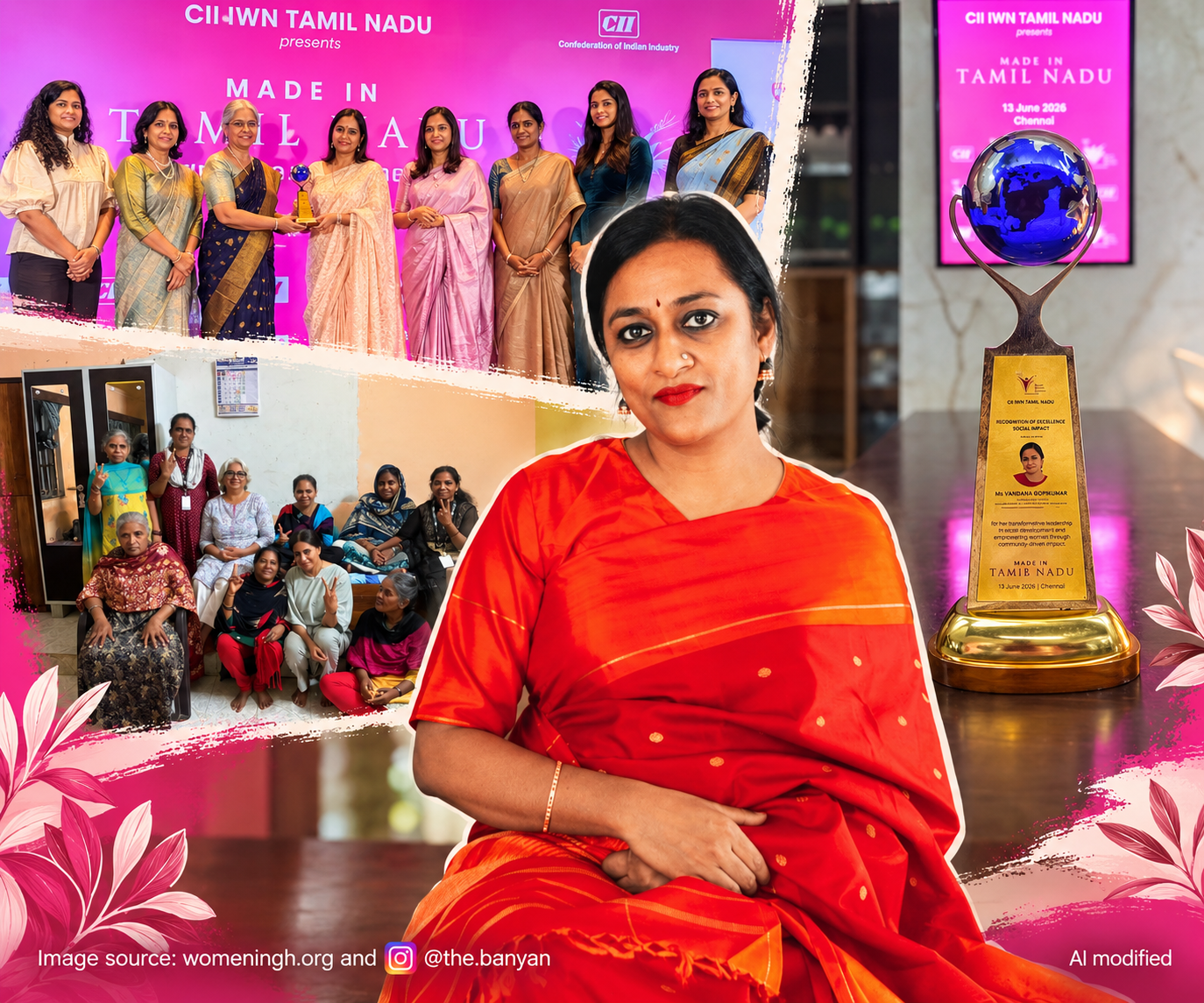
In 1993, on a busy road in Chennai, a woman was walking in the middle of traffic. She was homeless, living with a mental health condition. She was visibly distressed. Most people drove past. Two young women did not. Their names were Vandana Gopikumar and Vaishnavi Jayakumar.
They started looking for a safe place for her. They found nothing. No service in the city acknowledged the needs of a homeless woman with mental illness. Several more encounters over the following months left them deeply disillusioned. So they decided to do something about the problem themselves. On 27 August 1993, they founded The Banyan.
How Vandana Gopikumar and Vaishnavi Jayakumar Started The Banyan
The Banyan started as a small response to a very large problem. Vandana and Vaishnavi kept meeting more women like her. Each time, they saw the same gap. The system had no place for them. Their answer was to build what was missing, one relationship at a time.
At the time, they were up against a lot:
- Vandana and Vaishnavi were college students.
- They had no funding, no organisation
to fall back on. - There was no map to follow.
- No existing model to copy.
What they had was a rented three-bedroom house in Chennai, and the same question, again and again: what happens to the people everyone else walks past?
The two founders kept one idea at the centre:
- Care should be comprehensive, person-centred, and built for people living in poverty and homelessness.
- Not charity from a distance.
- Care shaped around the person in front of you.
From that first instinct, a much larger idea grew.
What Vandana Gopikumar – The Banyan Does Today
Three decades later, The Banyan runs several programmes. Each one targets a different part of the same problem. Its Emergency Care and Recovery Centres offer treatment and a way back to life. According to The Banyan, over 4,000 homeless people with mental illness have passed through them. The majority of them were women.
The Home Again programme is recognised by the WHO. It moves people out of institutions and into shared homes. There, they choose their housemates and shape their own daily life. More than 1,000 people have made that move so far. Sixty per cent of them are women. The NALAM programme works at the community level. Grassroots mental health mobilisers reach into villages and city neighbourhoods. Many of these workers have walked similar paths themselves. Together, they have supported over 10,000 people.
The model has travelled, too. The Banyan says its work has now been adopted across ten Indian states and two other countries. The Emergency Care and Recovery Centres now run across 19 locations in India, directly and through partners. Two out of five people supported by NALAM find paid work.
From a Chennai Roadside to National Policy
The work did not stay on the street. It also entered the policy room. Vandana Gopikumar went on to study the problem in depth. In 2014, she earned a PhD from Vrije Universiteit Amsterdam for her work on mental health and marginality. She also served on India’s first Mental Health Policy Group. There, she argued for the needs of people who are homeless and extremely vulnerable. People who usually have no voice in the room.
Her work has won international recognition as well. In 2018, she received the Penn Nursing Renfield Foundation Award for Global Women’s Health. She is also an Ashoka Fellow. None of this changed the core idea. Care for the most overlooked people, offered with dignity, and built on what they actually need. The Banyan itself started small too. It began in a rented three-bedroom house in Chennai, with no outside model to follow.
Vandana Gopikumar has also received several other honours over the years, including the Stree Shakti Puraskar in 2003, the G.D. Birla International Award in 2005 and the WHO Public Health Champion Award in 2017.
The Wise Take
The Banyan did not start with a policy or a large grant. It started with one woman on a busy road, and two young women who refused to look away. That is the lesson here. Big change often begins when someone stops walking past a problem. A system was missing, so they built one, one person at a time. It is also a reminder for the rest of us. Sometimes the smallest decision, to stop and help, is the one that grows the furthest.
Also read our other article on Bhavani Bompelly: The Telangana Teacher Who Turned a Shrinking School Into a Thriving One
Follow The Wise Indian for more stories about the changemakers, teachers and everyday heroes quietly shaping a better India.



