

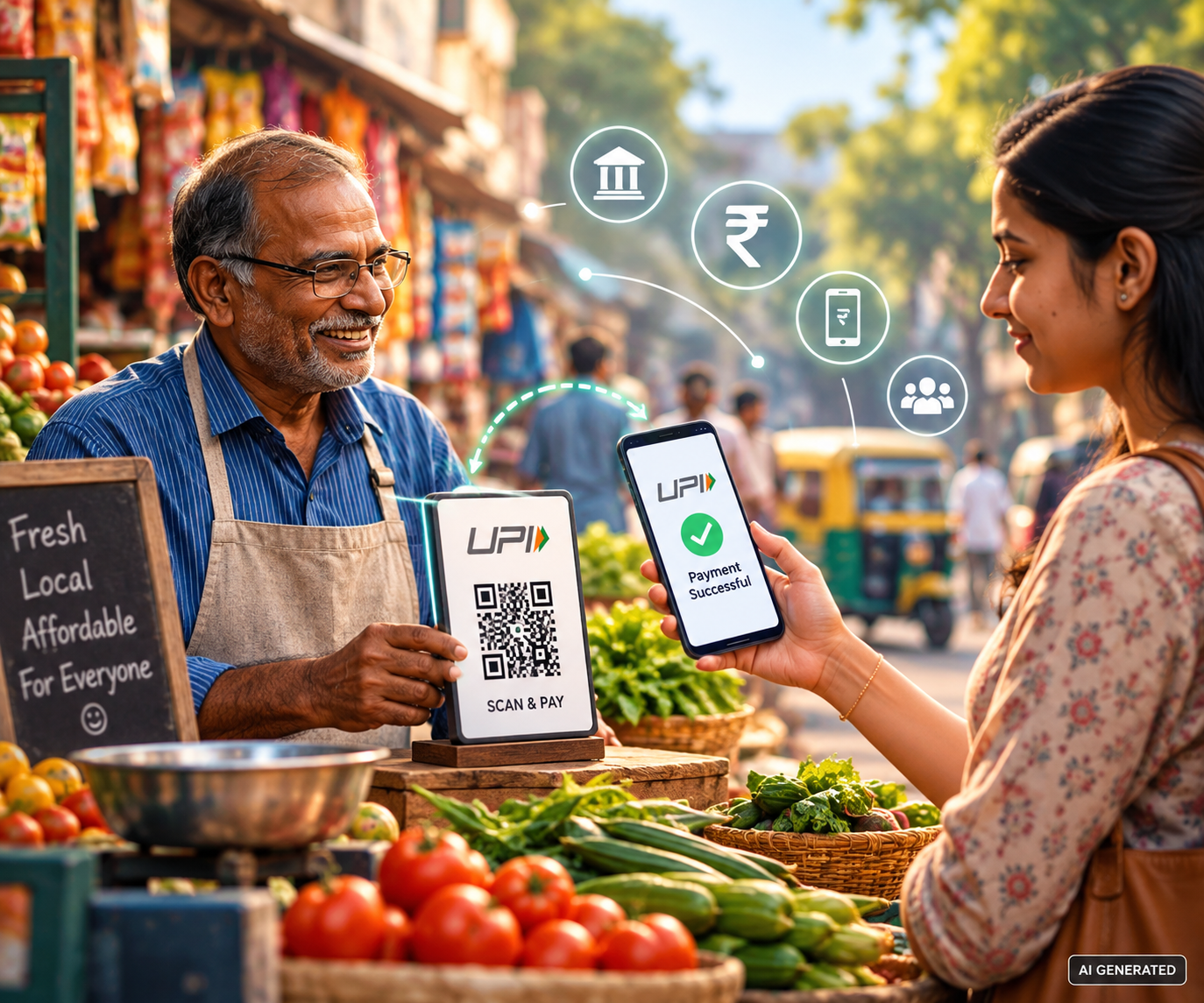
For years, the promise of UPI has been simple. Scan a QR code, pay, and move on. No UPI fee or friction, no fine print. That promise is about to change, though perhaps not in the way many feared.
Starting October 15, a 0.4% Merchant Discount Rate will apply to certain person-to-merchant UPI transactions above ₹2,000. The charge is capped at ₹300 for payments of ₹75,000 and above. For anyone who has watched the panic spread on social media over the past week, the news might have sounded like a new tax on digital payments. It is not.
Finance Minister Nirmala Sitharaman stepped in this week to clear the air. Her message was direct: this is not a tax, not a cess, not a surcharge, and the government will not receive the money. Instead, the payments ecosystem will charge the fee among its participants. Moreover, merchants will pay the fee, not consumers.
Who Actually Pays the UPI Fee?
The short answer is the merchant. The MDR is a fee that businesses pay for processing a digital payment, much like they already do for credit and debit cards. If a customer pays ₹10,000 to an eligible merchant through UPI, that merchant will pay an MDR of ₹40. The customer pays nothing extra.
The government has also directed banks to ensure that merchants do not pass the charge on to consumers. Therefore, for the vast majority of people, the experience of paying with UPI will remain exactly the same.
The Fine Print That Matters
Not every transaction will attract the UPI fee. Person-to-person transfers, the kind you make to a friend or a family member, remain free regardless of the amount. Similarly, merchant payments up to ₹2,000 stay outside the MDR framework. Small merchants with monthly UPI QR collections of up to ₹1 lakh are also exempt.
In fact, the government estimates that around 96% of all person-to-merchant UPI transactions will remain unaffected. As a result, most small businesses and everyday shoppers will see no change.
Where the UPI Fee Goes
The 0.4% does not vanish into a government vault. Instead, the payments ecosystem distributes it among the institutions that keep UPI running. Under the new framework, 40% of MDR collections go to the customer’s bank, 30% to payment gateways, 20% to the UPI app, and the remaining 10% to the sponsoring bank of the app.
Sitharaman framed this as a necessary step to sustain and improve the payments infrastructure. “It is a charge levied by service providers to improve the system and provide better service,” she said. The argument is straightforward: UPI has grown explosively, and the technology, cybersecurity, and backend systems that support it require funding. Until now, the ecosystem itself has absorbed much of that burden.
The Pushback
However, the clarification has not silenced all criticism. Petrol pump dealers have sought an exemption, arguing that the additional cost could squeeze already thin, regulated margins. Some merchant groups worry that even a 0.4% UPI fee adds up for businesses that run on high volumes and low margins.
Sitharaman also addressed allegations that external pressure, particularly from the United States, prompted the decision. “Absolutely baseless. And I totally deny it,” she said. She accused the Opposition of spreading misinformation and urged the public to remain vigilant.
The Wise Take
The introduction of MDR quietly admits that free infrastructure has a cost. UPI has become the backbone of India’s digital payments, processing billions of transactions every month. Keeping it free for consumers is a policy choice, not a natural state of affairs. Eventually, someone has to pay for the plumbing.
For now, that someone is the merchant. For the consumer, the QR code still works. The app still opens. The payment still goes through. However, behind the scenes, the economics of UPI are shifting, and the 0.4% is the first real test of how the system will fund its own future.
For more such informative articles, stay tuned to The Wise Indian.



