

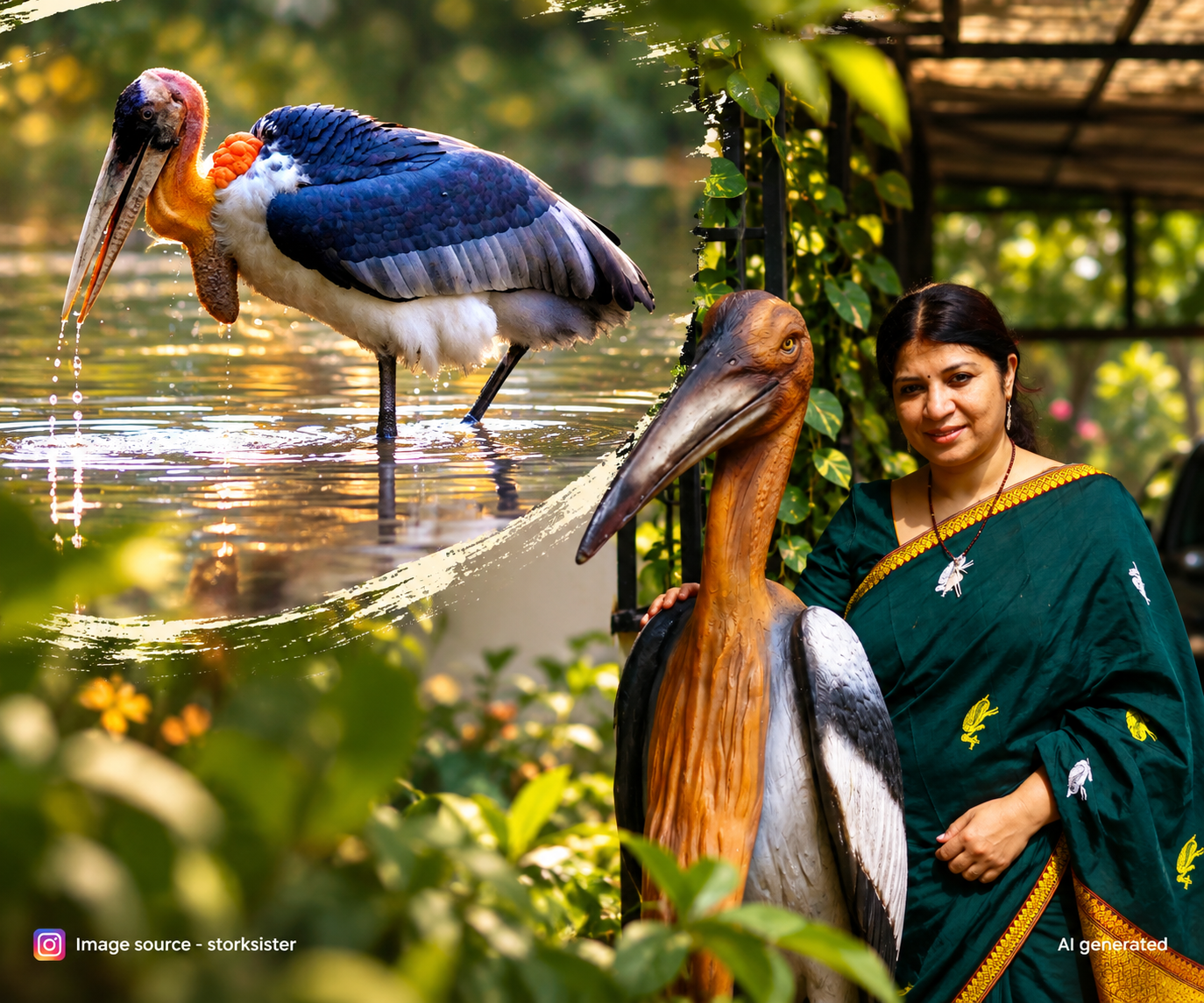
In Assam, a bird once seen as a bad omen now has thousands of women standing guard over it. The woman behind this change is wildlife biologist Purnima Devi Barman. She founded the Hargila Army, a women-led group that, according to Mongabay, now has thousands of members. Their mission is to protect the greater adjutant stork, which UNEP calls the second-rarest stork species in the world.
This is the story of how it began.
A Childhood Among Birds
When Purnima was five years old, she was sent to live with her grandmother on the banks of the Brahmaputra River. Separated from her parents and siblings, she was inconsolable, according to UNEP. Her grandmother, a farmer, began taking her to nearby paddy fields and wetlands to teach her about the birds there. Purnima learned bird songs and, in her own words, fell in love with the birds. That childhood bond became the focus of her career.
Why Purnima Devi Barman Chose to Protect a Bird Villagers Did Not Want
The greater adjutant stork is called the hargila in Assamese, which means “bone swallower”. Purnima started a PhD on the stork after her Master’s degree in Zoology. But she noticed that many of the birds she had grown up with were gone. So she delayed her thesis to focus on keeping the species alive. In 2007, she began her campaign in Kamrup district, where the storks were most concentrated and least welcomed.
UNEP reports that villagers disliked the storks for scavenging on carcasses and for their foul-smelling droppings. Many preferred to cut down nesting trees in their own backyards. Mongabay adds that some villagers attacked the birds with stones. Purnima herself was mocked for trying to save the nesting colonies.
The Moment a Baby Stork Fell From a Cut Tree in Assam
Mongabay reports that in the villages of Dadara, Singimari and Pachariya, a tree was cut down and a baby stork fell to the ground. Purnima said she felt torn as a mother, not just as a researcher. She realised the bird should become part of the community’s traditional culture. To do that, she knew she needed to bring in women and their traditional knowledge.
How Purnima Devi Barman Built the Hargila Army
Purnima started with a pitha (rice cake) competition to get people together. Soon, prayer songs about the hargila were being sung in local prayer houses. The women who joined became the Hargila Army. Many of them were homemakers.
Today, they do the daily work of conservation:
- They protect nesting sites.
- They rehabilitate injured storks that fall from their nests.
- They hold “baby showers” to celebrate newborn chicks.
- They plant saplings near nesting trees and wetlands.
- They clean plastic from riverbanks and wetlands.
They also weave stork designs into textiles, and UNEP says this helps the women earn their own income.
The Results
UNEP reports that in Dadara, Pachariya and Singimari, the number of nests rose from 28 to more than 250. This is now the largest breeding colony of greater adjutant storks in the world. In 2017, Purnima also began building tall bamboo nesting platforms.
A couple of years later, the first chicks hatched on them. UNEP also says communities have planted 45,000 saplings near nesting trees and wetlands. Mongabay adds that the stork has since moved from “Endangered” to “Near Threatened” on the IUCN’s list.
How the Hargila Army Is Changing the Lives of Women
For the women, the change goes beyond birds. Kamini Das of Dadara told Mongabay that she learned to use a sewing machine after joining, and her income has increased. Lubita Baishya of Pachariya said she could not have spoken so confidently before joining the group meetings.
From Assam’s Villages to the UN Champions of the Earth Award
In 2022, Purnima won the UN Champions of the Earth award for Entrepreneurial Vision. The head of the UN Environment Programme said her work has empowered thousands of women, created entrepreneurs and improved livelihoods, while helping bring the stork back from the brink of extinction. In February 2025, she was also named to TIME’s Women of the Year list, Mongabay reports.
The Wise Take
Purnima Devi Barman did not save the stork alone. She started by listening to the people who lived beside it and gave them a reason to care. The lesson is simple. If you want to protect something, help people feel proud of it.
Read our story on Eco-Friendly Ganpati Idol: How a Mumbai Mandal Has Built One for 19 Years
Follow The Wise Indian for more articles like this.



